


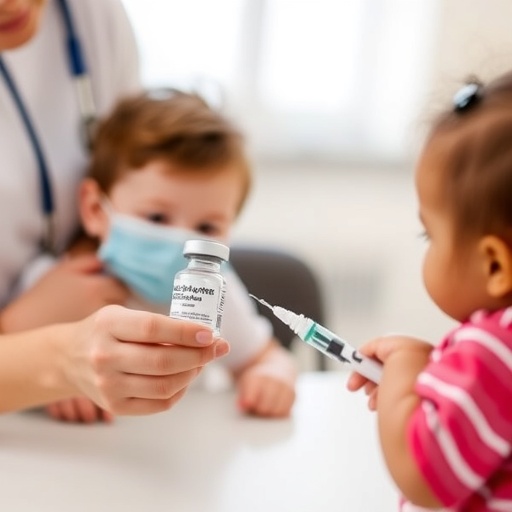
The White House executive order titled “Delivering Gold Standard Childhood Vaccine Recommendations for Americans” has drawn strong criticism from two leading US infection-control organizations, which say the measure departs from established scientific and public-health procedures for evaluating vaccines. In a statement issued after the order was signed, the Association for Professionals in Infection Control and Epidemiology (APIC) and the Society for Healthcare Epidemiology of America (SHEA) argued that the policy does not reflect current evidence or meet the standards implied by its title.
The organizations said the order circumvents the expertise and review systems traditionally used in the United States to assess vaccine safety, effectiveness, and appropriate administration schedules. Those systems involve multiple layers of clinical research, regulatory analysis, post-authorization surveillance, and expert consultation. Vaccine recommendations are generally based not on a single study or political decision, but on an evolving body of evidence that includes randomized trials, observational studies, adverse-event monitoring, immunological data, and real-world outcomes across different age groups and medical conditions.
At the center of the dispute is the scientific process used to determine when a vaccine should be recommended, for whom, and at what intervals. Immunization schedules are designed to match the development of immune memory with periods of highest infection risk. They also account for waning immunity, maternal antibodies, underlying disease, pregnancy, and the circulation of particular pathogens. Changing such recommendations without a transparent review of these factors can create uncertainty for clinicians and families, while potentially reducing protection against diseases that remain capable of spreading rapidly.
APIC and SHEA emphasized that the scientific evidence supporting FDA-authorized vaccines has not fundamentally changed. Over decades, vaccines have been tested before authorization and monitored after they enter widespread use. Their benefits are measured not only by the prevention of infection but also by reductions in hospitalization, severe complications, disability, and death. Safety surveillance systems continue to examine possible adverse events, distinguishing rare vaccine-associated reactions from medical events that occur coincidentally after vaccination. According to the organizations, this accumulated evidence demonstrates that recommended vaccines remain overwhelmingly safe and effective.
The warning comes as measles transmission accelerates across the United States. More than 2,400 measles cases have been recorded in 2026, according to the statement, exceeding the total reported during the previous year within the first seven months and making the year the worst for measles since 1991. More than nine in ten people infected were either unvaccinated or had an unknown vaccination status, while approximately two-thirds were 19 or younger. The figures illustrate how quickly a highly contagious virus can exploit gaps in population immunity.
Measles is among the most transmissible human infections. The virus spreads through respiratory droplets and airborne particles that can remain suspended in an indoor space after an infected person has left. A person can transmit measles before the characteristic rash appears, making containment difficult when vaccination coverage declines. The measles, mumps, and rubella vaccine stimulates immune responses that prevent most infections and sharply reduce the risk of severe disease. When coverage is high, indirect protection—often called herd immunity—helps shield infants too young to be vaccinated and people whose immune systems cannot mount a normal response.
A decline in coverage can therefore produce consequences beyond individual vaccine decisions. Once measles is introduced into a community, transmission is more likely when susceptible people are clustered in schools, households, healthcare facilities, or neighborhoods. Outbreaks can lead to pneumonia, dehydration, encephalitis, and, in rare cases, death. Even after an outbreak subsides, public-health agencies must devote substantial resources to laboratory testing, contact tracing, exposure notifications, isolation, and emergency vaccination campaigns. The resurgence also increases the likelihood that healthcare workers will encounter cases in settings where vulnerable patients may be exposed.
The organizations warned that the executive order could increase vaccine hesitancy by suggesting that long-established recommendations are unsupported or improperly developed. Vaccine confidence depends in part on public understanding that recommendations are reviewed by specialists who evaluate benefits and risks against the threat posed by infectious disease. If that process is replaced or weakened, clinicians may face more questions from patients and greater difficulty maintaining consistent immunization coverage. APIC and SHEA said the likely result would be reduced access to life-saving vaccines and poorer health outcomes for both children and adults.
APIC, the leading professional association for infection preventionists, describes its mission as creating a safer world through the prevention of infection. SHEA represents physicians and other healthcare professionals working in healthcare epidemiology, infection prevention, and antimicrobial stewardship. Together, the organizations called for vaccine policy to remain grounded in transparent review, high-quality evidence, and careful consideration of disease risk. Their intervention places the measles resurgence at the center of a broader debate over how the United States develops immunization guidance—and whether public trust can be maintained while vaccine recommendations are changed.
News Publication Date: 2026
Cite Scienmag News
Kristina Jarvis. (August 11, 2026). SHEA, APIC Respond to Executive Order on Gold-Standard Childhood Vaccine Recommendations. Scienmag. https://scienmag.com/shea-apic-respond-to-executive-order-on-gold-standard-childhood-vaccine-recommendations/
Kristina Jarvis. "SHEA, APIC Respond to Executive Order on Gold-Standard Childhood Vaccine Recommendations." Scienmag, 11 August 2026, https://scienmag.com/shea-apic-respond-to-executive-order-on-gold-standard-childhood-vaccine-recommendations/. Accessed 4 September 2026.
Kristina Jarvis. "SHEA, APIC Respond to Executive Order on Gold-Standard Childhood Vaccine Recommendations." Scienmag. August 11, 2026. https://scienmag.com/shea-apic-respond-to-executive-order-on-gold-standard-childhood-vaccine-recommendations/


