


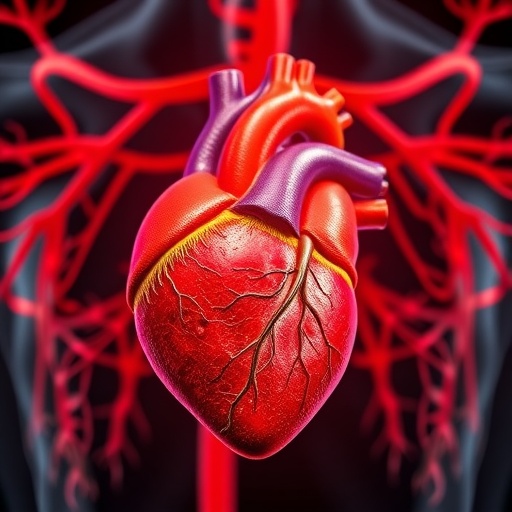
Melbourne researchers have grown human heart valve-like tissues from pluripotent stem cells, creating what they describe as a world-first laboratory platform for studying how valves form, mature and become diseased. The advance, led by the Murdoch Children’s Research Institute (MCRI), could help researchers investigate childhood heart disorders and accelerate the development of regenerative treatments for damaged valves. The findings were published in Cell Stem Cell.
Heart valves are thin, highly specialized structures that open and close in response to changes in pressure, ensuring that blood moves through the heart in one direction. When a valve fails to open fully or close properly, the heart must work harder to maintain circulation. Heart valve disease affects approximately 28 million people worldwide and can arise from congenital abnormalities, infection, inflammation or age-related degeneration. Current treatments generally rely on mechanical or biological valve replacement, neither of which fully restores a patient’s own growing and adapting tissue.
The new model was created using human pluripotent stem cells, which can generate many different cell types. By guiding these cells through developmental signals, the researchers produced tissues that resemble key molecular and structural characteristics of human heart valves. The engineered tissues contained cell populations and extracellular matrix components associated with valve development, allowing the scientists to examine biological processes that are difficult to observe directly in patients.
A major challenge in valve research has been the limited availability of accurate human models. Animal valves can differ from human tissue in their development, cellular composition and response to disease, while conventional laboratory cultures often lack the three-dimensional organization and mechanical properties of a functioning valve. The MCRI platform is designed to bridge that gap by producing valve-like tissues that can be generated consistently and studied at scale under controlled laboratory conditions.
The researchers also used the system to model inflammatory valve disease associated with rheumatic heart disease, a serious condition that can follow repeated or untreated infections. Australia has some of the highest recorded rates of rheumatic heart disease, which disproportionately affects Indigenous communities. When the engineered tissues were exposed to inflammatory proteins previously linked to the disease, they became stiffer and developed molecular markers resembling those observed in diseased human valves.
The increase in stiffness is significant because valve tissue must combine flexibility with mechanical strength. Healthy valves repeatedly open and close throughout a person’s lifetime, while inflammation can alter the extracellular matrix—the network of proteins that gives tissue its shape and physical properties. Changes in this matrix may reduce valve mobility, disrupt blood flow and promote further tissue damage. Reproducing these features in stem-cell-derived tissue gives researchers a way to test how inflammation changes valve biology over time.
Dr Holly Voges, an MCRI team leader in heart regeneration and an associate investigator at the Novo Nordisk Foundation Centre for Stem Cell Medicine, said the model addressed a major obstacle in heart valve biology. Rather than studying damage only after it has occurred, researchers can now investigate the molecular events that lead to tissue stiffening and dysfunction. The platform could eventually support the screening of potential medicines and the testing of strategies intended to stimulate repair.
Professor Enzo Porrello, director of the Melbourne node of the stem cell centre and an MCRI researcher, said the technology could also contribute to the development of replacement valves made from a patient’s own cells. Such valves remain a long-term goal of regenerative medicine because conventional replacements do not grow as children grow. A living, stem-cell-derived valve might one day adapt to a patient’s body, potentially reducing the need for repeated surgeries, although substantial research and clinical testing will be required before that possibility can be considered for patients.
The potential impact is illustrated by Emily, a seven-year-old with tetralogy of Fallot and an absent pulmonary valve, a rare congenital combination that affects blood flow between the heart and lungs. She underwent open-heart surgery within hours of birth and required another operation at five months of age. Because a child’s heart continues to grow, Emily may need another valve replacement during her teenage years. Her family has donated heart tissue to the Melbourne Children’s Heart Tissue Bank, where it is preserved for future research. The researchers say such contributions, combined with stem-cell-derived models, could improve understanding of congenital valve defects and inflammatory disease while supporting the search for treatments that grow with young patients.
News Publication Date: 11-Aug-2026
Web References: Murdoch Children’s Research Institute: https://www.mcri.edu.au/; Novo Nordisk Foundation Centre for Stem Cell Medicine: https://www.mcri-renew.org.au/; Cell Stem Cell: https://www.cell.com/cell-stem-cell/home
References: Voges HK et al., “Human heart valve-like tissues from pluripotent stem cells with enhanced maturation recapitulate inflammatory valve disease,” Cell Stem Cell. DOI: 10.1016/j.stem.2026.07.010
Cite Scienmag News
Drew Townsend. (August 11, 2026). Breakthrough Advances Heart Valve Disease Treatment. Scienmag. https://scienmag.com/breakthrough-advances-heart-valve-disease-treatment/
Drew Townsend. "Breakthrough Advances Heart Valve Disease Treatment." Scienmag, 11 August 2026, https://scienmag.com/breakthrough-advances-heart-valve-disease-treatment/. Accessed 4 September 2026.
Drew Townsend. "Breakthrough Advances Heart Valve Disease Treatment." Scienmag. August 11, 2026. https://scienmag.com/breakthrough-advances-heart-valve-disease-treatment/


