


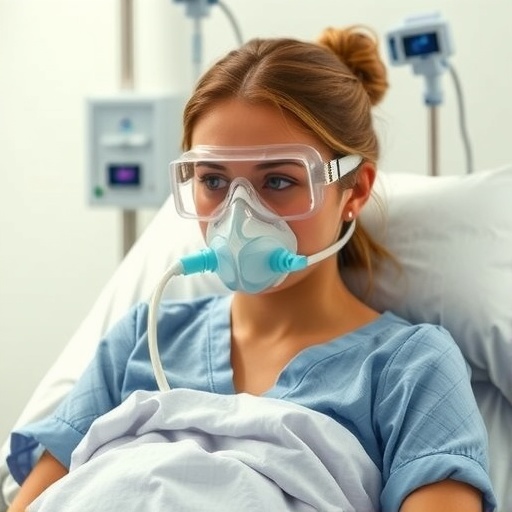
A new study in the Journal of Perinatology reports that a multimodal education bundle can help intensive care teams move neurally adjusted ventilatory assist, or NAVA, from a sophisticated concept on paper to a usable bedside technology. The investigation by Brei, Sharma, Mickas and colleagues examined whether structured education could improve clinicians’ objective knowledge, comfort, confidence and ability to recognize and overcome barriers associated with NAVA implementation. The researchers also looked for evidence that clinicians used the system in actual clinical care after completing the educational program.
NAVA is a form of mechanical ventilation designed to respond to a patient’s own respiratory drive. Unlike conventional modes that rely primarily on preset pressure, volume or flow targets, NAVA detects the electrical activity of the diaphragm, known as the electrical activity of the diaphragm, or EAdi. This signal is measured through specialized electrodes embedded in a nasogastric or orogastric catheter positioned near the diaphragm. The ventilator then delivers assistance in proportion to the patient’s neural breathing effort, creating a more direct connection between the patient and the machine.
That connection is intended to improve patient–ventilator synchrony. In conventional ventilation, a delay may occur between the patient’s attempt to inhale and the ventilator’s response. The machine may also continue delivering support after the patient has stopped inhaling, a mismatch known as delayed cycling. By using EAdi as a trigger and cycling signal, NAVA can theoretically respond more rapidly to changes in respiratory effort and reduce ineffective triggering, excessive assistance and other forms of asynchrony. The approach is especially relevant in intensive care, where rapidly changing physiology makes fixed ventilator settings difficult to maintain.
Yet NAVA is not simply a matter of connecting a catheter and selecting a mode on the ventilator. Clinicians must understand how the EAdi signal is obtained, how catheter positioning affects signal quality, how NAVA levels influence pressure delivery and how to interpret changes in the patient’s neural respiratory drive. They also need to distinguish an appropriate physiological response from a technical problem, inadequate sedation, worsening lung disease or patient fatigue. These requirements can make adoption challenging, even when a technology is available within an intensive care unit.
The study addressed this implementation challenge through an education bundle combining multiple forms of learning. Although education in critical care often consists of a single lecture or brief equipment demonstration, multimodal programs can reinforce knowledge through different channels, including explanation of underlying physiology, practical instruction, guided review of ventilator waveforms and opportunities to apply new skills. Such an approach is designed to reach clinicians with varied learning preferences while connecting theoretical understanding to decisions made at the bedside.
The investigators evaluated objective knowledge acquisition as well as clinicians’ subjective experiences. Objective knowledge measures can reveal whether participants understand the technical and physiological principles needed to operate NAVA safely. Comfort and confidence provide a different perspective: a clinician may answer examination questions correctly but remain hesitant when selecting settings, troubleshooting alarms or interpreting a patient’s response. Assessing both dimensions allows educators to identify whether a program produces genuine readiness or merely short-term familiarity.
The project also examined barriers to implementation, an important element often overlooked in technology adoption. Obstacles may include limited exposure to NAVA cases, uncertainty about patient selection, difficulty maintaining catheter position, inconsistent staff training, concerns about workflow and a lack of institutional protocols. Even highly motivated clinicians may struggle to use a mode reliably if equipment access, staffing patterns or team communication do not support it. Identifying these barriers can help hospitals tailor training and develop practical systems for continued competency.
A crucial feature of the evaluation was the search for clinical use after education. Demonstrating that clinicians can describe NAVA is not the same as demonstrating that it has entered routine practice. Post-education use provides a more meaningful test of whether learning has transferred to patient care. In this setting, clinical application would require teams to place and verify the specialized catheter, obtain a usable EAdi signal, select appropriate ventilator parameters and monitor both conventional respiratory measures and neural effort over time.
The findings position education as a central part of NAVA implementation rather than an optional supplement to equipment acquisition. The study suggests that successful adoption depends on more than technical availability: teams need a shared understanding of the physiology, repeated opportunities to practice, confidence in troubleshooting and a plan for addressing local workflow barriers. As intensive care increasingly adopts technologies that personalize support according to real-time biological signals, the experience described by the researchers offers a broader lesson. Translating innovation into safer clinical care requires not only advanced machines, but also education designed to make those machines understandable, usable and visible in everyday practice.
Cite Scienmag News
Courtney Benton. (August 10, 2026). Implementing an ICU education bundle for neurally adjusted ventilatory assist. Scienmag. https://scienmag.com/implementing-an-icu-education-bundle-for-neurally-adjusted-ventilatory-assist/
Courtney Benton. "Implementing an ICU education bundle for neurally adjusted ventilatory assist." Scienmag, 10 August 2026, https://scienmag.com/implementing-an-icu-education-bundle-for-neurally-adjusted-ventilatory-assist/. Accessed 3 September 2026.
Courtney Benton. "Implementing an ICU education bundle for neurally adjusted ventilatory assist." Scienmag. August 10, 2026. https://scienmag.com/implementing-an-icu-education-bundle-for-neurally-adjusted-ventilatory-assist/


