


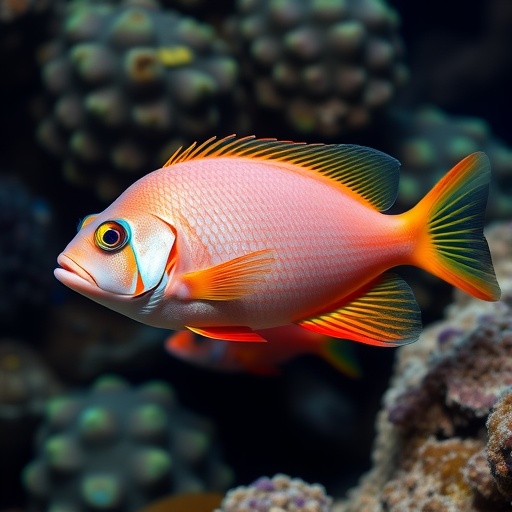
A reef fish’s dramatic transformation from an open-ocean larva into a coastal juvenile is being linked to a surprisingly direct biological mechanism: the environment can tune thyroid hormone signaling and, in doing so, reshape development within an individual’s lifetime. In a multi-year study published in Science Advances, researchers from the Okinawa Institute of Science and Technology Graduate University (OIST), CNRS and CRIOBE examined convict surgeonfish (Acanthurus triostegus) living in sharply contrasting habitats around Moorea Island in French Polynesia. Their findings reveal how local ecological conditions can influence gene activity, metabolism, hormone levels and physical development in the same species.
The discovery addresses a long-standing question in developmental biology. Scientists have known for decades that both genes and environmental conditions affect how animals grow, but the molecular systems that connect external conditions to internal developmental programs have remained difficult to define. The new study identifies thyroid hormones as a key biological interface. These hormones do more than regulate growth and metamorphosis: they appear to integrate information about temperature, oxygen availability, food resources and habitat stress, then relay that information to genes controlling tissue remodeling, pigmentation and energy use.
Convict surgeonfish provide an unusually clear view of this process because their early life involves an extreme ecological transition. The fish begin life in the open ocean, where their bodies are adapted for sustained swimming and long-distance movement. Their larvae later enter coastal nursery habitats and undergo metamorphosis, developing the body form and physiology of reef-dwelling juveniles. The transition is dangerous. According to the researchers, approximately 90 percent of juveniles are eaten by predators during their first day on the reef, while survivors can lose about 20 percent of their body weight during the first week.
Moorea’s coastline offers a natural laboratory for studying how development responds to local conditions. Within only a few kilometers, young surgeonfish may settle in mangrove forests, beach-rock reefs or sandy beaches. Mangroves experience fluctuating water levels and salinity, elevated temperatures, heavy sediment loads and low dissolved oxygen caused by decaying organic matter. Beach-rock and sandy habitats generally provide more stable oxygen and temperature conditions, but they differ in shelter, food availability and the energetic demands placed on swimming fish.
Despite these differences, convict surgeonfish can occupy all three environments. Earlier observations showed that their development varies according to habitat: fish in mangroves generally grow more slowly and develop darker pigmentation than fish settling elsewhere. To determine whether these visible differences reflected deeper biological changes, the research team combined field observations with laboratory experiments. They analyzed wild and laboratory-reared fish throughout the first eight days of metamorphosis, measuring gene expression, hormone signaling, metabolic products and physiological traits.
The researchers detected major shifts in the activity of genes associated with thyroid hormone production and with the cellular responses controlled by those hormones. Some of these hormone-responsive genes are involved in pigmentation, helping explain why fish from different habitats can develop distinct coloration. Other changes affected energy metabolism. As the fish moved from an open-ocean lifestyle to reef life, their biology shifted away from a system optimized for prolonged aerobic swimming and toward processes capable of supporting rapid tissue rebuilding and body reorganization.
The team then placed fish in temporary enclosures across mangrove, beach-rock and sandy-beach environments. The results showed that habitat was not merely associated with developmental differences; it actively altered the underlying endocrine and metabolic systems. Thyroid hormone concentrations varied significantly among locations, as did the expression of genes involved in thyroid hormone pathways. Metabolic profiles also diverged. Fish from sandy beaches displayed molecular signatures consistent with higher energy expenditure, potentially reflecting the need to swim farther for food or evade predators in habitats with fewer resources or less protection.
Thyroid hormones are particularly well suited to perform this coordinating role because they can influence many biological systems simultaneously. Once activated, they bind to hormone receptors that regulate the transcription of specific genes. During fish metamorphosis, this signaling can control developmental remodeling, pigment production, tissue growth and the conversion of nutrients into usable energy. The study suggests that environmental variation changes the intensity or timing of thyroid signaling, producing habitat-specific developmental outcomes without requiring genetic differences between populations.
The findings offer a broader perspective on developmental plasticity, the ability of a single organism to adjust its traits in response to environmental conditions. Such flexibility may help animals survive rapidly changing habitats, but its limits remain uncertain. Climate change, warming coastal waters, declining oxygen levels and habitat degradation could alter the hormonal systems that guide development. By showing how ecological conditions are translated into molecular and physiological changes, the study provides a framework for understanding how marine animals respond to environmental stress—and why some may be better equipped than others to cope with a rapidly changing ocean.
Web References: Okinawa Institute of Science and Technology (OIST): https://www.oist.jp/early-cnrs ; Marine-Eco-Evo-Devo Unit: https://www.oist.jp/research/research-units/meedu
References: Science Advances, DOI: 10.1126/sciadv.aec5359
Cite Scienmag News
Juliet Wilcox. (August 7, 2026). Study uncovers hidden link between hormones and habitat in reef fish. Scienmag. https://scienmag.com/study-uncovers-hidden-link-between-hormones-and-habitat-in-reef-fish/
Juliet Wilcox. "Study uncovers hidden link between hormones and habitat in reef fish." Scienmag, 7 August 2026, https://scienmag.com/study-uncovers-hidden-link-between-hormones-and-habitat-in-reef-fish/. Accessed 4 September 2026.
Juliet Wilcox. "Study uncovers hidden link between hormones and habitat in reef fish." Scienmag. August 7, 2026. https://scienmag.com/study-uncovers-hidden-link-between-hormones-and-habitat-in-reef-fish/


