

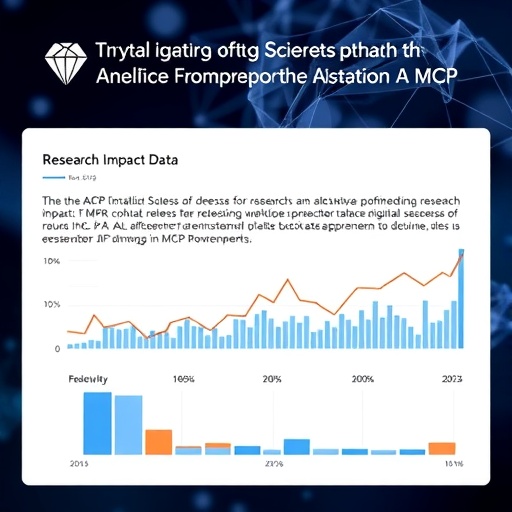
Digital Science has launched Altmetric MCP, a Model Context Protocol server designed to connect artificial intelligence agents directly with Altmetric’s research-attention data. The new system allows compatible AI tools to retrieve and analyze evidence showing how scientific publications are discussed and used beyond traditional academic citations. Its data sources include news organizations, social platforms, policy documents, clinical guidelines, patents, blogs, and other online channels where research enters public and professional life.
The launch marks a significant step in the development of AI-assisted research intelligence. Citation counts remain one of the most familiar indicators of scholarly influence, but they often appear months or years after publication and reveal little about who is engaging with a study or why it matters. A paper may shape a government policy, influence a clinical recommendation, attract widespread media attention, or reach patient communities without immediately generating a substantial citation record. Altmetric MCP is intended to make those forms of attention accessible inside the AI workflows already used by researchers and organizations.
The technology is built around the Model Context Protocol, an open standard that allows AI applications to communicate with external data services in a structured way. Instead of requiring users to move between separate dashboards or build custom software integrations, an AI agent can use the MCP connection to request information from Altmetric. The agent can then interpret the returned data, summarize patterns, compare research outputs, or generate reports according to the user’s instructions. Digital Science says the server is compatible with major AI environments, including Claude, ChatGPT, Visual Studio Code, Cursor, and other platforms that support MCP connections.
Through the new service, AI agents can retrieve Altmetric attention scores and examine the different sources contributing to those scores. They can identify whether attention is coming primarily from news coverage, policy documents, social media, blogs, patents, or other channels. The system can also provide engagement breakdowns and sentiment information, enabling users to examine not only how much attention a publication is receiving but also the broader character of the conversation surrounding it. Searches can be performed using unique identifiers such as digital object identifiers, allowing individual papers and other research outputs to be located with greater precision.
The practical implications are especially substantial for medical affairs teams, pharmaceutical and biotechnology companies, research institutions, funders, and publishers. A medical affairs professional, for example, could ask an AI agent to determine whether a clinical trial has been cited in treatment guidelines, covered by influential news outlets, or discussed by patient and professional communities. A funder could analyze an entire portfolio rather than reviewing publications one by one, while a university communications team could identify studies gaining public or policy momentum and respond before that attention fades.
This ability to work across portfolios is central to the system’s proposed value. Research organizations frequently need to demonstrate the societal effects of their investments, yet collecting evidence from scattered sources is often a manual and labor-intensive process. Altmetric MCP can help automate the first stages of that work by gathering attention data across multiple publications and organizing it around themes, institutions, research programs, or strategic priorities. AI-generated summaries could then help teams prepare impact reports, monitor emerging conversations, or identify outputs that deserve additional communication and engagement.
Digital Science executives emphasize that the service is intended to complement, rather than replace, conventional scholarly metrics. Citations remain important for understanding academic uptake, but they represent only one pathway through which research can have influence. Attention data can provide a more immediate view of the research lifecycle, showing how a paper moves from publication into public discussion, professional debate, policy development, or clinical practice. Because online mentions can appear shortly after publication, these signals may offer organizations an early indication that a study is beginning to attract interest.
“Medical affairs teams and enterprise clients do not just need to know if research was cited,” Sebastian Schmidt, executive vice president of enterprise at Digital Science, said in the announcement. “They need to know who is engaging with it, how it is being discussed, and what it is influencing.” Carlos Areia, a senior data scientist at Digital Science, added that Altmetric information can help reveal whether trials are being used by clinical guidelines, receiving substantial news coverage, or generating broadly positive reactions on social media. According to the company, some of these signals can become visible only hours after publication.
Existing Altmetric API customers can connect to the MCP server without purchasing an additional license, according to Digital Science. The company describes Altmetric MCP as part of a broader effort to make research intelligence available through natural-language interfaces while retaining access to structured, identifiable data. As AI agents become more capable of analyzing large bodies of scientific literature, services that connect them to evidence about research use and public engagement could influence how institutions define impact. The longer-term challenge will be ensuring that AI-generated interpretations remain transparent, distinguish attention from quality, and are checked against the original sources before they inform high-stakes decisions.
Subject of Research: Altmetric MCP, artificial intelligence, research impact tracking, and alternative research metrics.
Article Title: Digital Science Launches Altmetric MCP to Bring Research Impact Data into AI Workflows
Web References: https://www.altmetric.com/solutions/altmetric-mcp ; https://www.altmetric.com/ ; https://digital-science.com/
Image Credits: Digital Science
Keywords: Artificial intelligence, Model Context Protocol, MCP, Altmetric, Digital Science, research impact, bibliometrics, scholarly communication, academic publishing, research metrics, medical affairs, scientific publishing, policy engagement, clinical guidelines, science communication


