

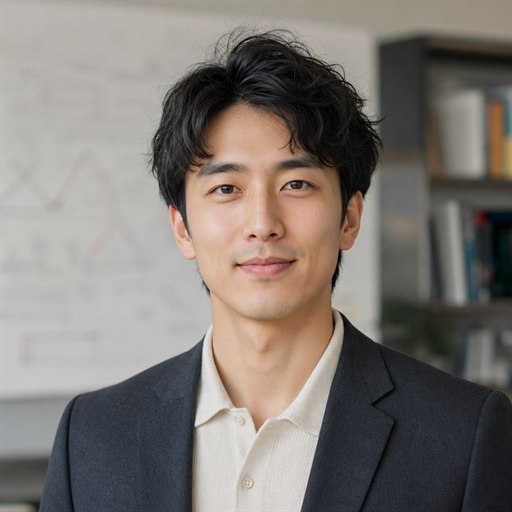
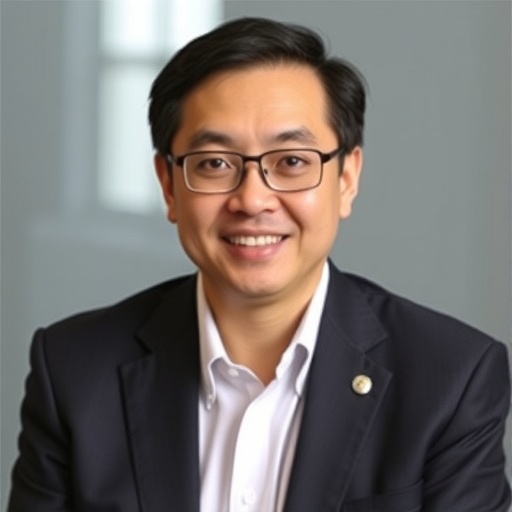
Professor Xuhua He, Chair Professor in the Department of Mathematics at The University of Hong Kong (HKU), has been elected Vice President of the International Mathematical Union (IMU), placing one of China’s most influential mathematicians at the centre of global mathematical leadership. The appointment was formally announced on 21 July during the IMU General Assembly in New York, where representatives of mathematical organisations from around the world gathered to determine the Union’s future leadership. At 47, He is the youngest person to become an IMU vice president in nearly two decades and only the second Chinese mathematician to hold the position since the organisation was founded.
The IMU is the world’s leading international organisation for mathematics and represents national and regional mathematical societies from more than 80 countries and regions. As a member of the International Science Council, it plays a central role in coordinating research, supporting mathematical education and strengthening international collaboration. The Union also organises the International Congress of Mathematicians, held every four years, and is involved in awarding some of the discipline’s most prestigious honours, including the Fields Medal, often described as the highest distinction available to mathematicians under the age of 40.
As a member of the IMU’s Executive Committee, He will help shape international strategies for mathematical research and development. The vice president’s responsibilities include contributing to decisions about global research programmes, supporting mathematical capacity-building in regions with fewer resources and helping oversee the planning of the International Congress of Mathematicians. The role also involves participating in the complex process through which major international awards are evaluated, requiring a broad understanding of research across pure and applied mathematics.
He’s election has attracted particular attention because of his work across several technically demanding areas of modern mathematics. He is internationally recognised for contributions to Lie theory, arithmetic geometry and representation theory, fields that connect abstract algebraic structures with geometry, number theory and mathematical physics. Lie theory investigates continuous symmetries and the algebraic systems used to describe them, while representation theory studies how abstract groups and algebras can be expressed through transformations of vector spaces. These ideas are fundamental to the classification of symmetries in geometry and physics.
Arithmetic geometry, another of He’s major research areas, examines geometric objects defined by polynomial equations whose solutions are constrained by arithmetic properties. One important subject in this field is the study of Shimura varieties, highly structured spaces that link algebraic geometry, number theory and the theory of automorphic forms. Shimura varieties provide geometric settings in which researchers can investigate deep questions about rational points, Galois representations and the arithmetic behaviour of modular forms. Progress in their study has implications for some of the most important conjectures in contemporary number theory.
He has also made influential contributions to the theory of Hecke algebras, algebraic structures that encode symmetries and correspondences arising in number theory. Hecke operators act on spaces of modular and automorphic forms, allowing mathematicians to translate complicated arithmetic information into questions about eigenvalues and representations. These tools are closely related to the broader Langlands programme, an ambitious network of conjectures seeking relationships between number theory, harmonic analysis and representation theory. Although much of this work is highly abstract, it provides a conceptual framework for understanding connections between seemingly unrelated mathematical objects.
In 2013, He received the Morningside Gold Medal of Mathematics, widely regarded as the Chinese equivalent of the Fields Medal. He was later invited to speak in a sectional programme at the 2018 International Congress of Mathematicians, an honour reserved for researchers whose work has made a significant impact in their fields. In 2022, he received the Chevalley Prize in Lie Theory, considered the highest international award in that area. He is reportedly the only mathematician based in China to have received the distinction. He also serves as President of the Hong Kong Mathematical Society and is a Fellow of The Hong Kong Academy of Sciences.
He’s research career began with an early achievement that brought him national attention. Born in Chongqing in 1979, he won a gold medal for China at the International Mathematical Olympiad in 1996. He subsequently studied at Peking University and the Massachusetts Institute of Technology, developing a research programme focused on some of pure mathematics’ most difficult frontier problems. His work has addressed Shimura varieties and Hecke algebras, as well as major questions connected with Serre’s conjecture II and Lusztig’s positivity conjecture concerning canonical bases.
Serre’s conjecture II concerns the structure of certain Galois representations and their relationship to algebraic groups, while Lusztig’s positivity conjecture predicts that particular coefficients associated with canonical bases should be non-negative. Canonical bases are specially constructed algebraic bases that reveal hidden structure in representations and quantum groups. Results involving these conjectures can influence several branches of mathematics at once, because they provide links between geometry, combinatorics, algebra and number theory. He’s election therefore reflects not only personal recognition but also the growing international influence of mathematical research conducted in China and Hong Kong.
HKU President and Vice-Chancellor Professor Xiang Zhang said that He’s appointment demonstrated the academic strength of Hong Kong and the wider nation. He described pure mathematics as a foundation for technological innovation and said the university’s Department of Mathematics was strengthening its position through the arrival of world-class scholars, including a Fields Medallist. He said the achievement could encourage younger researchers to pursue difficult and unexplored problems. He, meanwhile, said he was deeply honoured and viewed the election as recognition of the rapid development of mathematical research in China. He pledged to promote open collaboration and international academic exchange while helping create broader opportunities for Chinese mathematicians to engage with the global research community.
News Publication Date: 21 July (year not specified in the source).
Cite Scienmag News
Reid Dalton. (August 5, 2026). HKU Professor Xuhua He Elected Vice President of International Mathematical Union. Scienmag. https://scienmag.com/hku-professor-xuhua-he-elected-vice-president-of-international-mathematical-union/
Reid Dalton. "HKU Professor Xuhua He Elected Vice President of International Mathematical Union." Scienmag, 5 August 2026, https://scienmag.com/hku-professor-xuhua-he-elected-vice-president-of-international-mathematical-union/. Accessed 3 September 2026.
Reid Dalton. "HKU Professor Xuhua He Elected Vice President of International Mathematical Union." Scienmag. August 5, 2026. https://scienmag.com/hku-professor-xuhua-he-elected-vice-president-of-international-mathematical-union/


