


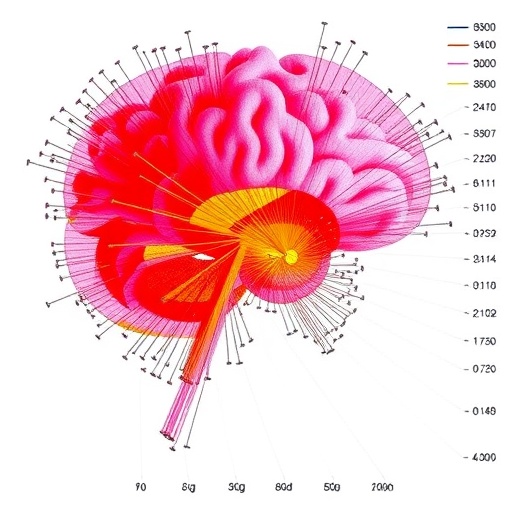
A new study published in Translational Psychiatry is placing two of psychiatry’s most powerful—and very different—treatments under the same molecular spotlight. Researchers led by A. Zavaliangos-Petropulu, G. Ghang and T. Boltz examined the transcriptional effects of ketamine and electroconvulsive therapy (ECT), two interventions known for producing antidepressant benefits that can emerge more rapidly than with many conventional medications. By investigating how treatment alters gene activity, the work addresses a central question in modern depression research: do apparently different therapies converge on shared biological pathways?
The study, titled “Transcriptional profiling of antidepressant ketamine and electroconvulsive therapy treatment,” focuses on transcription—the process through which information encoded in DNA is copied into messenger RNA. Messenger RNA serves as an intermediate blueprint for protein production, and changes in its abundance can reveal which cellular programs have been activated or suppressed. Transcriptional profiling therefore offers a molecular snapshot of how tissue responds to treatment, potentially exposing patterns that are invisible when researchers measure symptoms alone.
Ketamine and ECT are separated by decades of medical history and by radically different modes of action. Ketamine is an anesthetic and a non-competitive antagonist of the N-methyl-D-aspartate, or NMDA, receptor, a protein involved in glutamate signaling. At carefully controlled doses, ketamine can produce rapid reductions in depressive symptoms, including in some patients who have not responded to standard antidepressants. Its effects are thought to involve a cascade of downstream events affecting synaptic plasticity, the capacity of neural connections to strengthen, weaken or reorganize.
ECT, by contrast, uses a controlled electrical stimulus to induce a brief therapeutic seizure under general anesthesia. Although its public image remains controversial, ECT is one of the most effective treatments available for severe depression, particularly when illness includes psychosis, intense suicidality or profound functional decline. The treatment triggers widespread changes in brain activity and is believed to influence neurotransmitter systems, neurotrophic signaling and the growth or remodeling of synaptic networks. Its biological complexity makes it especially valuable for studies seeking broad molecular signatures of recovery.
By comparing transcriptional profiles associated with ketamine and ECT, the researchers are exploring whether the two treatments activate overlapping gene-expression programs despite their different immediate targets. Such convergence could help explain why both therapies can improve mood and cognition on a compressed timescale. Alternatively, distinct transcriptional signatures might reveal that the treatments reach clinical improvement through separate biological routes. The answer could help researchers distinguish mechanisms directly linked to antidepressant action from changes that simply reflect anesthesia, seizure activity, stress responses or other treatment-related effects.
A key concept in this type of research is differential gene expression. Investigators compare the abundance of RNA transcripts between treated and untreated conditions, then use statistical models to identify genes whose activity changes beyond what would be expected from normal biological variation. The affected genes can be organized into pathways, such as synaptic signaling, immune regulation, energy metabolism, stress responses or neuroplasticity. These analyses do not prove that a particular gene causes recovery, but they can identify networks that deserve further testing in cellular, animal and clinical studies.
The molecular data may also contribute to the search for biomarkers. A biomarker is a measurable biological feature that could help predict who will respond to a treatment, how quickly improvement might occur or whether adverse effects are likely. Depression is not a single biological disorder; patients with similar symptoms may have different underlying mechanisms. If ketamine and ECT produce distinguishable transcriptional patterns, those signatures could eventually support more individualized treatment decisions. However, such applications would require replication in larger and more diverse patient populations, as well as validation in samples that can be collected routinely in clinical practice.
The study’s importance extends beyond a simple comparison between two therapies. Conventional antidepressants often require weeks before their full effects become apparent, and many patients experience incomplete relief. Rapid-acting treatments have therefore become a major focus of neuroscience. Understanding their molecular consequences could reveal new drug targets capable of reproducing beneficial plasticity without requiring anesthesia, repeated infusions or electrically induced seizures. It could also clarify whether rapid symptom improvement depends on repairing disrupted neural circuits, recalibrating stress-related systems or reshaping communication between brain cells.
At the same time, transcriptional profiles must be interpreted with care. Gene activity varies according to cell type, brain region, treatment timing, age, sex, previous medication exposure and the severity of illness. Measurements taken from blood, for example, may not perfectly represent changes occurring inside neural circuits. RNA changes can also be consequences rather than causes of clinical improvement. The value of the new work will therefore lie not only in the genes it highlights, but in how convincingly those findings connect molecular shifts with treatment response and, ultimately, patient outcomes.
By placing ketamine and ECT within a shared molecular framework, the research offers a route toward understanding why some interventions can rapidly alter the course of severe depression. The findings may help transform treatments that are currently selected largely through clinical experience into therapies guided by measurable biology. For now, the study represents an important step in mapping the transcriptional landscape of rapid antidepressant action—and in identifying the cellular programs that could power the next generation of depression treatments.
Cite Scienmag News
Glenn Wilkins. (August 5, 2026). Gene Activity Profiles Reveal How Ketamine and Electroconvulsive Therapy Treat Depression. Scienmag. https://scienmag.com/gene-activity-profiles-reveal-how-ketamine-and-electroconvulsive-therapy-treat-depression/
Glenn Wilkins. "Gene Activity Profiles Reveal How Ketamine and Electroconvulsive Therapy Treat Depression." Scienmag, 5 August 2026, https://scienmag.com/gene-activity-profiles-reveal-how-ketamine-and-electroconvulsive-therapy-treat-depression/. Accessed 3 September 2026.
Glenn Wilkins. "Gene Activity Profiles Reveal How Ketamine and Electroconvulsive Therapy Treat Depression." Scienmag. August 5, 2026. https://scienmag.com/gene-activity-profiles-reveal-how-ketamine-and-electroconvulsive-therapy-treat-depression/


