


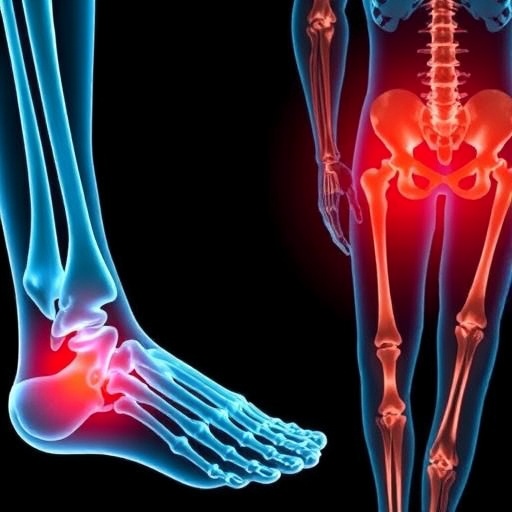
A large new study from UCLA Health is challenging fears that rapid weight loss caused by GLP-1 medications might leave bones more vulnerable to breaking. Instead, the research suggests that adults with type 2 diabetes who began taking a GLP-1 receptor agonist experienced a substantially lower risk of serious fragility fractures than similar patients who started a different class of diabetes medication. The findings, based on electronic health records from nearly 134,000 people in the United States, add an unexpected dimension to the rapidly expanding scientific debate over the effects of GLP-1 drugs on the skeleton.
Fragility fractures occur when bones break after relatively minor trauma, such as a fall from standing height. They are commonly associated with osteoporosis or other forms of reduced bone strength and can result in long-term disability, loss of independence and increased mortality, particularly among older adults. People with type 2 diabetes already face a complex pattern of skeletal risk. Although some individuals with diabetes have normal or even elevated bone mineral density, abnormalities in bone quality, altered balance, nerve damage and a higher likelihood of falling can increase the chance of fracture.
GLP-1 receptor agonists are widely used to improve blood-glucose control and promote weight loss. The medications mimic the action of glucagon-like peptide-1, a hormone released by the intestine after eating. By stimulating glucose-dependent insulin secretion, suppressing glucagon release and slowing gastric emptying, they help reduce blood-sugar levels and food intake. Their ability to produce substantial weight loss has transformed treatment for type 2 diabetes and obesity, but it has also raised questions about whether losing body mass quickly could reduce mechanical loading on the skeleton, diminish muscle mass or expose an underlying risk of bone loss.
To investigate that concern, UCLA researchers compared adults between 50 and 90 years old with type 2 diabetes who were new users of GLP-1 receptor agonists with new users of dipeptidyl peptidase-4, or DPP-4, inhibitors. DPP-4 inhibitors are another commonly prescribed group of glucose-lowering drugs and served as an active comparison treatment rather than a non-medicated control. Using health-record data allowed the researchers to examine fracture outcomes across a very large population while accounting for the real-world prescribing patterns of older adults with diabetes.
Over a three-year study period, GLP-1 receptor agonist use was associated with a 21 percent lower risk of fragility fracture compared with DPP-4 inhibitor use. The strongest reductions were observed in fractures involving the hip, femur and spine—injuries that are among the most clinically serious because they can require surgery, prolonged rehabilitation and extended periods of immobility. The scale of the study was important because fragility fractures, although devastating when they occur, are relatively uncommon events. A smaller investigation might easily fail to detect a meaningful difference between treatment groups.
The researchers also conducted a separate analysis involving a matched cohort of people without diabetes. The lower fracture risk was associated with GLP-1 treatment only among participants with type 2 diabetes, rather than appearing in the comparable non-diabetic group. That result suggests the relationship may depend on the biological or clinical conditions accompanying diabetes, rather than reflecting a universal bone-protective effect of GLP-1 receptor agonism. Diabetes-related metabolic disturbances, high blood-glucose exposure, inflammation, vascular disease and fall-related complications could all influence how the medications affect fracture risk.
The study does not establish why GLP-1 drugs were linked to fewer fractures. Several mechanisms are possible, but none was directly proven by the analysis. Better glucose control could reduce complications that contribute to falls or impaired bone remodeling. Weight reduction might improve mobility and physical function, potentially lowering fall risk, even if reduced body mass changes the forces placed on bone. GLP-1 signaling may also influence bone cells, including osteoblasts and osteoclasts, which build and break down bone, but the clinical importance of these pathways remains uncertain. Changes in muscle strength, nutritional intake and physical activity could also have affected the results.
Because the investigation was retrospective and observational, the findings must be interpreted cautiously. The researchers analyzed information already recorded in electronic health systems rather than assigning patients to treatments at random. Even with statistical matching and adjustment, the two groups may have differed in ways that were not fully measured, including frailty, exercise, diet, smoking, use of osteoporosis medications, kidney function or access to specialist care. Medication records also cannot guarantee that patients took their prescriptions consistently. These limitations mean the study demonstrates an association, not proof that GLP-1 receptor agonists directly prevent fractures.
“Fractures are relatively uncommon, so very large studies are needed to detect a meaningful difference,” said Dr. Christopher Hamad, emphasizing that the data from more than 133,000 patients provided unusual statistical power. The authors say prospective clinical studies and translational research are now needed to determine whether GLP-1 medications have direct effects on bone biology and whether the apparent reduction persists over longer periods. For now, the results offer reassurance that weight loss associated with GLP-1 therapy does not appear, in this large real-world population of adults with type 2 diabetes, to translate into a higher risk of major fragility fracture—and may be linked to a lower one.
News Publication Date: 24-Jul-2026
Web References: https://jamanetwork.com/journals/jamanetworkopen/fullarticle/2852068#251147399
References: Hamad CD, Wiener J, Golzar A, et al. “Glucagon-Like Peptide-1 Receptor Agonists and Fragility Fracture Risk in Type 2 Diabetes.” JAMA Network Open. 2026;9(7):e2625141. doi:10.1001/jamanetworkopen.2026.25141
Cite Scienmag News
Ophelia Keating. (August 4, 2026). GLP-1 drugs tied to fewer fractures in adults with type 2 diabetes. Scienmag. https://scienmag.com/glp-1-drugs-tied-to-fewer-fractures-in-adults-with-type-2-diabetes/
Ophelia Keating. "GLP-1 drugs tied to fewer fractures in adults with type 2 diabetes." Scienmag, 4 August 2026, https://scienmag.com/glp-1-drugs-tied-to-fewer-fractures-in-adults-with-type-2-diabetes/. Accessed 3 September 2026.
Ophelia Keating. "GLP-1 drugs tied to fewer fractures in adults with type 2 diabetes." Scienmag. August 4, 2026. https://scienmag.com/glp-1-drugs-tied-to-fewer-fractures-in-adults-with-type-2-diabetes/


