


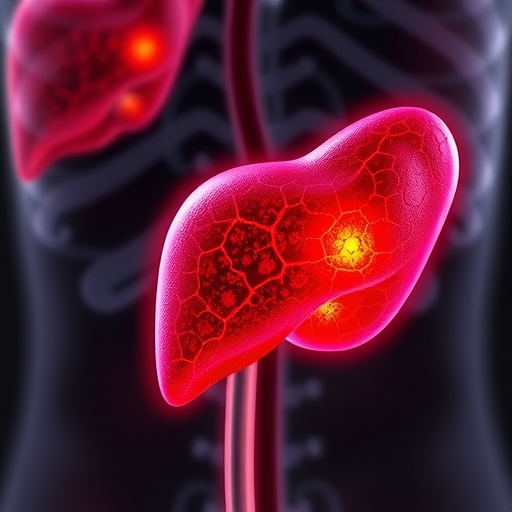
Li, G., Maeyens, L.T., Yin, J. and colleagues have identified a previously underappreciated connection between a liver protein called ABHD6 and the Akt–FoxO1 signaling axis, a molecular pathway that helps determine how the body handles glucose, lipids and energy. Published in Nature Communications in 2026, the study presents hepatic ABHD6 as a non-enzymatic regulator of metabolic health, suggesting that the protein may influence physiology not through chemical reactions, but through the way it interacts with other signaling components inside liver cells.
The finding is notable because ABHD6 belongs to a protein family commonly associated with enzymatic activity. The “ABHD” designation refers to an alpha/beta hydrolase domain, a structural feature often found in enzymes that break down lipids or other biological molecules. Yet the research focuses on a non-enzymatic role for ABHD6 in the liver. In this context, the protein appears to act as a molecular coordinator, helping organize or influence signaling events rather than functioning primarily as a catalyst. That distinction could reshape how scientists understand the biological importance of proteins traditionally classified according to their potential enzyme domains.
The liver is central to metabolic control. It stores glucose as glycogen, produces glucose when energy levels fall, processes dietary fats and synthesizes a wide range of essential molecules. When hepatic signaling becomes dysregulated, the consequences can extend throughout the body, contributing to insulin resistance, abnormal lipid accumulation and metabolic disorders. The new work places ABHD6 within this complex regulatory network and connects it to Akt and FoxO1, two proteins that serve as important decision-makers in the liver’s response to hormones and nutrients.
Akt, also known as protein kinase B, is activated downstream of insulin and other growth-related signals. Once switched on, Akt can modify target proteins by adding phosphate groups to them, changing their location, stability or activity. One of its important targets is FoxO1, a transcription factor that controls genes involved in glucose production. Under conditions in which insulin signaling is low, FoxO1 can promote the expression of genes that help the liver generate glucose. When insulin activates Akt, FoxO1 is typically phosphorylated and redirected away from the nucleus, reducing the transcriptional program associated with glucose output.
The study’s central message is that hepatic ABHD6 interacts with this Akt–FoxO1 axis to regulate metabolic health. This suggests that ABHD6 may influence whether insulin signals are effectively transmitted to FoxO1, thereby affecting the liver’s decision to produce or store glucose. The protein could also help coordinate related metabolic programs, although the precise molecular details and the relative importance of each interaction will depend on the experimental evidence presented in the full study. By describing ABHD6 as non-enzymatic, the researchers point toward a regulatory mechanism based on protein–protein interactions, cellular localization or signaling-platform assembly.
Such mechanisms are increasingly recognized as fundamental to biology. A protein does not always need to catalyze a reaction to have a powerful effect. Some proteins function as scaffolds, bringing signaling partners into proximity. Others act as adaptors, connecting separate molecular pathways, or as sensors that respond to changes in nutrients, hormones or cellular stress. If ABHD6 performs one or more of these roles in hepatocytes, even modest changes in its abundance or location could alter the strength and timing of Akt–FoxO1 signaling. This type of regulation may help explain why proteins with apparently similar enzymatic domains can have very different physiological effects.
The work also raises questions about the relationship between ABHD6’s enzymatic identity and its regulatory function. Proteins can retain a recognizable catalytic domain while using that structure for another purpose, such as binding to membranes or interacting with signaling partners. Alternatively, a protein may possess catalytic potential in some contexts but operate mainly through non-catalytic mechanisms in a particular tissue. The liver-specific focus of the research is therefore important: ABHD6 may behave differently depending on the cell type, nutritional state or metabolic environment in which it is expressed.
From a medical perspective, the findings could open a new route for studying metabolic disease. Many existing approaches target enzymes, receptors or hormones directly. A non-enzymatic regulator such as ABHD6 would present a different therapeutic challenge, because blocking or enhancing its activity might not be sufficient; researchers may need to disrupt or stabilize specific protein interactions instead. At the same time, targeting a signaling interface could offer precision, potentially adjusting the Akt–FoxO1 pathway without broadly suppressing every function of Akt or FoxO1 throughout the body. Any such strategy would require careful testing, since these proteins also participate in growth, survival and stress responses in multiple tissues.
The discovery places hepatic ABHD6 among a growing group of molecular regulators that influence metabolism by controlling communication inside cells. It does not simply add another protein to the long list of factors linked to glucose regulation; it suggests that the architecture of signaling itself may be a crucial part of metabolic health. Future studies will need to determine exactly where ABHD6 binds within the Akt–FoxO1 pathway, how its interaction changes during fasting or nutrient excess, and whether manipulating the protein can improve metabolic dysfunction in relevant disease models. For now, the study offers a striking new perspective on how a protein that does not need to act as an enzyme can still help decide how the liver manages energy.
Cite Scienmag News
Daisy Hatcher. (August 3, 2026). Liver ABHD6 Regulates Metabolic Health Through the Akt-FoxO1 Pathway. Scienmag. https://scienmag.com/liver-abhd6-regulates-metabolic-health-through-the-akt-foxo1-pathway/
Daisy Hatcher. "Liver ABHD6 Regulates Metabolic Health Through the Akt-FoxO1 Pathway." Scienmag, 3 August 2026, https://scienmag.com/liver-abhd6-regulates-metabolic-health-through-the-akt-foxo1-pathway/. Accessed 3 September 2026.
Daisy Hatcher. "Liver ABHD6 Regulates Metabolic Health Through the Akt-FoxO1 Pathway." Scienmag. August 3, 2026. https://scienmag.com/liver-abhd6-regulates-metabolic-health-through-the-akt-foxo1-pathway/


