


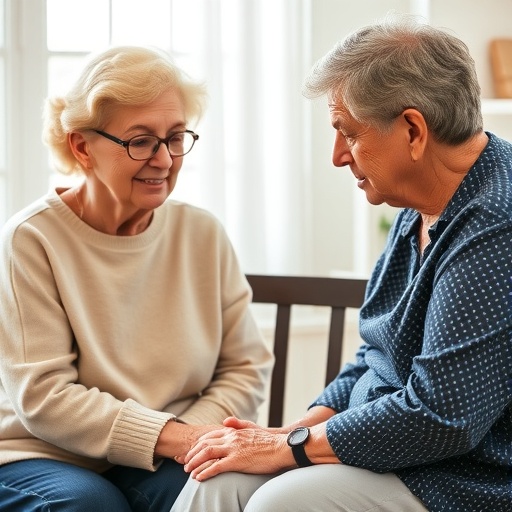
A new qualitative study is putting a human face on one of stroke recovery’s least visible complications: social isolation. Published in BMC Geriatrics, the research by Hui, Baoli, Qianqian and colleagues examines how older adults living with stroke experience disconnection from other people and what kinds of support they believe they need. The topic is increasingly important as populations age and survival after stroke improves, leaving more people living for years with physical, cognitive and emotional consequences.
Stroke is commonly discussed in terms of paralysis, speech difficulties or the risk of another vascular event. Yet recovery also depends on whether a person can continue participating in ordinary social life. A survivor who can no longer walk safely outside, communicate easily, use public transportation or manage daily tasks independently may gradually lose contact with friends, relatives and community activities. What begins as a practical limitation can develop into persistent isolation, a condition associated with poorer mental health, reduced motivation and lower participation in rehabilitation.
The study’s qualitative approach is particularly suited to this problem because isolation cannot be fully understood through numerical scores alone. Quantitative research can measure how often people leave home, how many social contacts they report or how lonely they feel on a standardized scale. Interviews and other qualitative methods can reveal the meanings behind those measurements: whether a person avoids conversation because of aphasia, stays home because of fear of falling, or feels excluded because others speak for them after the stroke. These details can expose barriers that may remain invisible in clinical assessments.
For older adults, the social impact of stroke often intersects with pre-existing vulnerabilities. Hearing loss, reduced vision, chronic disease, limited income and the death or relocation of friends can already narrow a person’s social network. Stroke may intensify those pressures by adding weakness, fatigue, impaired memory or difficulty organizing activities. Cognitive and communication changes can be especially disruptive. A survivor may understand a conversation but struggle to produce words, or may speak fluently while having difficulty processing rapid exchanges. Such problems can make social encounters exhausting and discourage future participation.
The researchers’ focus on “experience and needs” also shifts attention from describing isolation to identifying possible responses. A person may need accessible transportation, home-based rehabilitation, communication support or a more patient approach from family members. Another may benefit from structured peer groups where stroke survivors can interact without the pressure of explaining their condition. Digital communication could help some people maintain relationships, but technology is not automatically inclusive: devices, internet access, vision, dexterity and cognitive demands can all create new obstacles.
Social isolation is not identical to loneliness, although the two frequently overlap. Isolation generally refers to limited social contact or participation, while loneliness describes the distress that can arise when a person’s relationships do not meet their emotional needs. Someone may live with family and still feel lonely if communication has become strained or if they no longer feel capable of contributing. Conversely, a person with few contacts may not experience isolation as distressing if those relationships are meaningful. Understanding this distinction is essential for designing care that responds to individual priorities rather than assuming that every survivor needs the same solution.
The consequences can extend into the biology of recovery. Social engagement provides cognitive stimulation, emotional reinforcement and opportunities to practice movement and communication in real-world settings. When people withdraw, they may become less active, spend more time sedentary and lose confidence in their ability to perform everyday tasks. This can create a feedback loop: reduced activity contributes to deconditioning, deconditioning makes going out more difficult, and increasing difficulty reinforces withdrawal. Social disconnection may also amplify depressive symptoms and reduce adherence to rehabilitation, although the relationship is complex and can differ from one survivor to another.
For health systems, the study underscores why stroke care cannot end when a patient leaves the hospital or completes an outpatient therapy program. Screening for social isolation could become part of long-term follow-up, alongside assessments of mobility, mood, cognition and communication. However, screening alone is unlikely to be enough. Effective support may require coordination among neurologists, nurses, physiotherapists, occupational therapists, speech-language pathologists, psychologists, social workers and community organizations. The most useful intervention may not be a single treatment, but a tailored package that addresses transportation, communication, confidence, housing and social connection together.
The research also highlights the importance of listening directly to older adults with stroke. Caregivers and clinicians may observe that a survivor is rarely seen outside the home, but they may not know whether the main problem is physical access, embarrassment, fatigue, financial pressure or a sense of being misunderstood. Qualitative evidence can bring those explanations into view and help researchers develop interventions that are acceptable in everyday life. It can also challenge assumptions that social participation is simply a matter of personal motivation.
As stroke survival continues to rise, the definition of successful recovery is expanding. Preventing another stroke and improving physical function remain critical goals, but recovery also means being able to sustain relationships, make choices and take part in community life. By examining the lived experience and stated needs of older survivors, the study in BMC Geriatrics contributes to a broader view of rehabilitation—one in which connection is not an optional extra, but a central component of health, independence and quality of life after stroke.
Cite Scienmag News
Cassandra Pierce. (August 3, 2026). Study Reveals Isolation Experiences and Support Needs Among Older Stroke Survivors. Scienmag. https://scienmag.com/study-reveals-isolation-experiences-and-support-needs-among-older-stroke-survivors/
Cassandra Pierce. "Study Reveals Isolation Experiences and Support Needs Among Older Stroke Survivors." Scienmag, 3 August 2026, https://scienmag.com/study-reveals-isolation-experiences-and-support-needs-among-older-stroke-survivors/. Accessed 3 September 2026.
Cassandra Pierce. "Study Reveals Isolation Experiences and Support Needs Among Older Stroke Survivors." Scienmag. August 3, 2026. https://scienmag.com/study-reveals-isolation-experiences-and-support-needs-among-older-stroke-survivors/


