


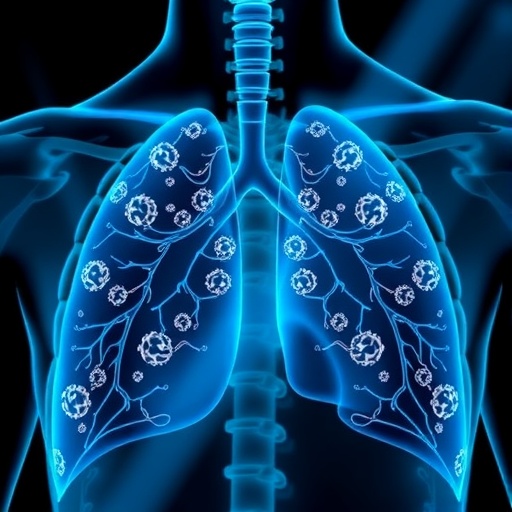
Cystic fibrosis is often described as a bacterial disease, but the airways of people living with the condition are home to far more than a single pathogen. They contain dynamic communities of bacteria, viruses and fungi whose interactions can influence inflammation, treatment response and the gradual loss of lung function. Researchers at Flinders University and collaborating institutions say DNA sequencing could transform how these infections are detected and managed, replacing a narrow focus on individual organisms with a detailed view of the entire airway microbiome.
Their analysis, published in Clinical Microbiology Reviews, examines how sequencing technologies are being applied to cystic fibrosis airways and what must happen before they become part of routine clinical care. The review, led by Flinders University bioinformatics researcher Professor Robert Edwards and research associate Dr Jessica Carlson-Jones, describes methods capable of identifying microbial species, tracking strain-level changes, detecting antimicrobial-resistance genes and revealing biological functions within complex respiratory communities.
Cystic fibrosis is caused by mutations in the gene encoding the cystic fibrosis transmembrane conductance regulator, or CFTR, a protein that controls the movement of salt and water across epithelial surfaces. When CFTR function is impaired, mucus in the lungs becomes unusually thick and sticky. Instead of being efficiently cleared by normal airway mechanisms, it accumulates and creates a nutrient-rich environment in which microbes can persist. Repeated infection and inflammation progressively damage the airways, while long-term antibiotic exposure can further reshape the microbial ecosystem.
Traditional diagnostic methods generally depend on culturing organisms from respiratory samples. Although culture remains clinically valuable, it cannot grow every organism present in an airway community and may overlook microbes that are difficult to maintain under laboratory conditions. DNA sequencing offers a broader alternative. By reading genetic material extracted from a sample, researchers can detect multiple organisms simultaneously, including bacteria, viruses and fungi, and estimate their relative abundance without requiring each microbe to grow in culture.
The technology can be used in several complementary ways. Targeted sequencing examines selected genetic regions, such as bacterial ribosomal RNA genes, to provide a broad survey of microbial composition. Shotgun metagenomic sequencing reads DNA from across the sample, allowing investigators to identify organisms with greater resolution and search directly for genes associated with antimicrobial resistance, toxin production and virulence. Where sufficient genetic material is available, these approaches may distinguish closely related strains and reveal whether a recurring infection represents persistence of an established population or acquisition of a new one.
The inclusion of viruses is particularly important because viral activity can alter the airway environment even when a virus is not the primary cause of disease. Bacteriophages, which infect bacteria, may influence the abundance and behavior of bacterial populations by killing susceptible cells or transferring genetic material between them. Human respiratory viruses can also intensify inflammation and disrupt airway defenses, potentially creating conditions that allow bacterial or fungal infections to expand. Sequencing strategies that include viral genomes therefore provide a more complete picture of the biological pressures acting inside CF lungs.
The arrival of CFTR modulator therapies has added urgency to this work. These medicines are designed to improve the function of the defective CFTR protein and have significantly improved health and quality of life for many people with cystic fibrosis. However, the long-term effects of these therapies on airway microbial communities are still being mapped. As mucus properties, inflammation and antibiotic exposure change, the organisms occupying the lungs may also change. Sequencing could help researchers follow those shifts and determine whether particular microbial patterns are associated with better or worse clinical outcomes.
The researchers say that rapid sequencing may eventually support more precise treatment decisions. A test that identifies a pathogen and its resistance genes could help clinicians select an effective antimicrobial more quickly than conventional testing, reducing reliance on broad-spectrum drugs. It could also indicate when a detected organism is present at low levels within a diverse community rather than acting as the dominant driver of disease. Such information may be especially valuable for patients with recurrent infections, whose microbial profiles can change over time and whose treatment histories may select for multidrug-resistant populations.
Portable sequencing devices are now being explored in South Australia and elsewhere, including instruments small enough to connect directly to a laptop. In principle, a respiratory sample could be processed near the point of care, with sequencing data generated in hours rather than days. Similar respiratory metagenomic approaches are already being introduced in intensive care settings in the United Kingdom to assist with severe infections. The Flinders researchers caution, however, that clinical adoption will require rigorous validation, standardized sampling and analysis methods, reliable interpretation of low-abundance organisms and clear evidence that sequencing improves patient outcomes.
The review also highlights practical and scientific challenges. Airway samples can contain human DNA that overwhelms microbial signals, while contamination introduced during collection or laboratory processing can complicate interpretation. Detecting a microbial genome does not automatically prove that the organism is alive, causing disease or responding to treatment. Clinicians will need agreed thresholds for distinguishing colonization from active infection, as well as databases capable of accurately identifying emerging strains and resistance mechanisms. Despite these limitations, the researchers argue that sequencing is moving toward a role in real-time pathogen surveillance and personalized antimicrobial therapy. For cystic fibrosis and other microbe-driven diseases, understanding the full community—including its viral members—could become as important as identifying any single pathogen.
Web References: Flinders Accelerator for Microbiome Exploration (FAME); Professor Robert Edwards, Flinders University; CFTR modulator therapies
References: Carlson-Jones, Jessica AP, et al. “DNA sequencing for microbial surveillance in cystic fibrosis airways: Advances, challenges, and clinical translation.” Clinical Microbiology Reviews. DOI: 10.1128/cmr.00352-25
Cite Scienmag News
Morgan Morrow. (August 3, 2026). Targeted Treatments Aim to Improve Outcomes for Serious Lung Infections. Scienmag. https://scienmag.com/targeted-treatments-aim-to-improve-outcomes-for-serious-lung-infections/
Morgan Morrow. "Targeted Treatments Aim to Improve Outcomes for Serious Lung Infections." Scienmag, 3 August 2026, https://scienmag.com/targeted-treatments-aim-to-improve-outcomes-for-serious-lung-infections/. Accessed 3 September 2026.
Morgan Morrow. "Targeted Treatments Aim to Improve Outcomes for Serious Lung Infections." Scienmag. August 3, 2026. https://scienmag.com/targeted-treatments-aim-to-improve-outcomes-for-serious-lung-infections/


