


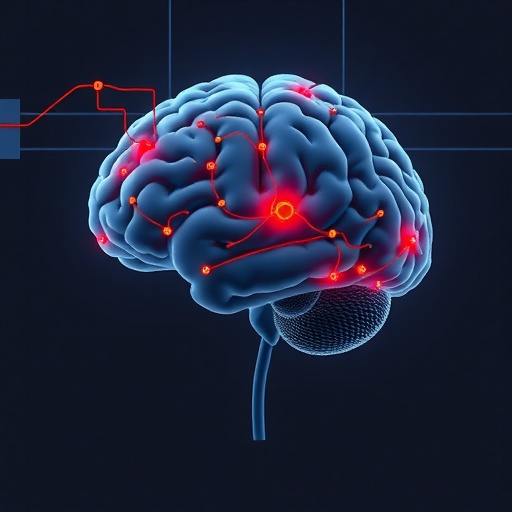
A new study suggests that deep brain stimulation may do more than control movement disorders: it could also help repair social behavior disrupted by pain experienced early in life. In research published in Translational Psychiatry, Wan, Du, Yang and colleagues report that stimulating the brain’s anterior cingulate cortex alleviated social deficits associated with early-life pain. The proposed mechanism is a restoration of the balance between excitatory and inhibitory neural signals, a fundamental process that determines how brain circuits respond, adapt and communicate.
Early-life pain has effects that can extend far beyond the moment of injury or medical treatment. During development, the nervous system is rapidly building connections, refining sensory pathways and establishing the networks that support emotion and social behavior. Excessive or poorly regulated pain signals during this period may alter that process. Instead of remaining confined to pain-processing circuits, these changes can influence stress responses, emotional regulation and the ability to interact with other individuals later in life.
The anterior cingulate cortex, or ACC, is particularly important in this story. Located in the frontal region of the brain, it helps integrate emotional information with attention, motivation and decision-making. It is also involved in processing the unpleasantness of pain and in evaluating social experiences. Because the ACC sits at the intersection of pain, emotion and social behavior, disturbances in its activity could provide a neural explanation for why early-life pain is linked to later difficulties with social interaction.
At the cellular level, the brain depends on a delicate equilibrium between excitation and inhibition. Excitatory neurons generally increase the likelihood that neighboring cells will fire, while inhibitory neurons suppress or constrain that activity. This excitatory/inhibitory, or E/I, balance allows neural circuits to remain flexible without becoming either silent or excessively active. If excitation dominates, networks may become unstable and hypersensitive; if inhibition dominates, communication and behavioral responses may be weakened. The study connects social deficits after early-life pain with disruption of this balance in the ACC.
Deep brain stimulation offers a way to influence such malfunctioning circuits directly. The technique uses electrical pulses delivered through precisely positioned electrodes to modify activity in targeted brain regions. Although DBS is best known clinically for treating Parkinson’s disease, essential tremor and several other neurological conditions, researchers are increasingly investigating whether it can reshape circuits involved in mood, motivation and social behavior. The new findings place the ACC among the brain regions that may be responsive to this approach.
According to the study, stimulation of the ACC improved social abnormalities linked to early-life pain while also normalizing indicators of excitatory and inhibitory signaling. This is important because it suggests that the behavioral improvement was not simply a generalized effect of activating the brain. Instead, the intervention may have acted on a specific circuit-level disturbance. By bringing opposing neural forces back toward equilibrium, DBS could make the ACC more capable of processing social information and generating appropriate responses.
The result also highlights a shift in how scientists understand the consequences of pain during development. Pain is often treated as a temporary sensory event, but developing neural systems can interpret repeated or intense pain as an organizing signal. That signal may alter synaptic strength, neuronal excitability and communication between brain regions. Over time, these changes could become embedded in circuits that regulate social engagement. The study’s emphasis on E/I balance suggests that developmental pain may produce lasting behavioral effects through measurable changes in network physiology rather than through an unexplained psychological process.
The findings are likely to attract attention because social deficits are difficult to treat and can appear across many neurological and psychiatric conditions. However, DBS is an invasive therapy involving neurosurgical implantation, and the study does not mean that the treatment is ready for routine use in people affected by early-life pain. Translating a circuit-level discovery into a safe human therapy requires extensive work, including confirmation in independent models, determination of the most effective stimulation parameters and careful assessment of possible side effects. The ACC is involved in many functions, so altering its activity could influence emotion, attention or pain perception in unwanted ways.
Even with those limitations, the research offers a potentially powerful framework for future therapies. If social difficulties can be linked to a specific imbalance between excitation and inhibition, treatments might eventually be designed to correct that imbalance with greater precision. DBS is only one possibility. Noninvasive stimulation, pharmacological treatments that selectively influence inhibitory or excitatory signaling, and therapies combining behavioral training with neuromodulation could also emerge from the same biological insight.
The study’s central message is that the developing brain may retain a capacity for repair, even after early adverse experiences have changed its circuitry. By targeting the ACC and restoring the neural balance that supports its function, deep brain stimulation improved social behavior in the reported research. The work does not erase the complexity of developmental pain, but it identifies a concrete biological pathway connecting early injury, altered brain networks and later social difficulties. That connection could help move the field closer to treatments that address not only pain itself, but also the long-term social consequences it can leave behind.
Cite Scienmag News
Cassandra Pierce. (August 2, 2026). Deep brain stimulation restores social behavior after early-life pain by rebalancing circuits. Scienmag. https://scienmag.com/deep-brain-stimulation-restores-social-behavior-after-early-life-pain-by-rebalancing-circuits/
Cassandra Pierce. "Deep brain stimulation restores social behavior after early-life pain by rebalancing circuits." Scienmag, 2 August 2026, https://scienmag.com/deep-brain-stimulation-restores-social-behavior-after-early-life-pain-by-rebalancing-circuits/. Accessed 4 September 2026.
Cassandra Pierce. "Deep brain stimulation restores social behavior after early-life pain by rebalancing circuits." Scienmag. August 2, 2026. https://scienmag.com/deep-brain-stimulation-restores-social-behavior-after-early-life-pain-by-rebalancing-circuits/


