


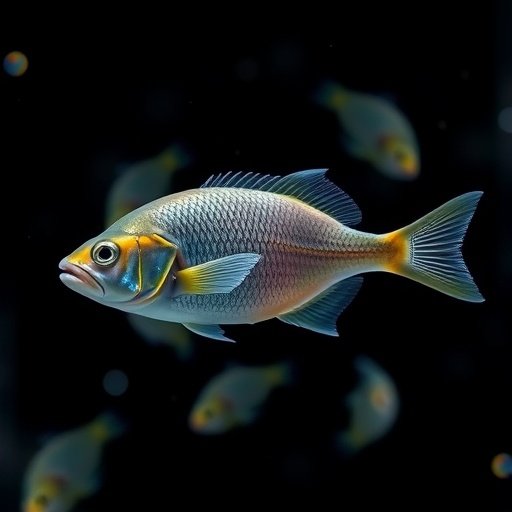
Brazilian aquaculture has revealed an unexpected bacterial threat that could reshape disease management in one of the world’s fastest-growing food sectors. Scientists have identified, for the first time in Brazil, several species of Flavobacterium associated with columnaris disease, a rapidly progressing infection capable of killing farmed fish within days. The discovery extends the known geographic range of pathogens previously reported mainly in Asia and the United States and shows that they are established in Brazilian production systems.
The disease is particularly important because it affects Nile tilapia (Oreochromis niloticus), also known commercially as Saint Peter, Brazil’s most widely farmed fish and one of the world’s dominant aquaculture species. It can also strike native species raised for human consumption, including tambaqui, pacu, lambari and Amazon spotted catfish. Columnaris disease is not a human infection, but outbreaks can cause severe economic losses by killing larvae, fry and juvenile fish before they reach market size. Its characteristic symptoms include pale or whitish lesions on the skin and fins, tissue destruction and necrosis of the gills, which compromises breathing.
The study, conducted by researchers at the Aquaculture Center of São Paulo State University and collaborators at Zambeze University in Mozambique, analyzed 11 bacterial strains isolated from Brazilian aquaculture fish. Six belonged to Flavobacterium oreochromis, a species previously known in Brazil primarily as a pathogen of tilapia. The researchers also detected Flavobacterium davisii in an Amazon spotted catfish (Pseudoplatystoma punctifer), marking the first reported observation of this bacterium in Brazil and demonstrating that it can infect Siluriformes, the fish order that includes catfish.
Until relatively recently, four distinct bacteria were grouped under the name Flavobacterium columnare. Advances in molecular biology have shown that the organisms responsible for columnaris disease comprise multiple species with different physiological characteristics, host preferences and environmental tolerances. Identifying them accurately is therefore essential for disease surveillance and vaccine design. The Brazilian researchers combined molecular identification with phenotypic tests, examining how the isolates grew, moved through culture media and produced biofilms under different temperature conditions.
The first stage of detection can be deceptively difficult. Flavobacterium colonies may glide across a culture surface, but their appearance varies according to the medium used. Some colonies become thin, transparent and almost invisible, making them easy to overlook during routine laboratory examination. This unusual motility is linked to the bacteria’s ability to move across surfaces without conventional flagella, allowing them to spread over fish tissues and laboratory media. The researchers emphasize that visual inspection must be supported by molecular methods if closely related species are to be distinguished reliably.
The experiments also showed that these bacteria are well suited to Brazil’s warm inland waters. F. davisii and Flavobacterium inkyongense displayed optimal growth at approximately 28 degrees Celsius, close to the average temperature of many Brazilian freshwater production environments. F. oreochromis and Flavobacterium indicum favored even warmer conditions, with F. indicum reaching peak growth at 35 degrees Celsius. These results raise concerns that rising water temperatures could increase the risk posed by some strains, particularly during heat waves or in poorly managed ponds.
Temperature influenced not only bacterial growth but also the production of biofilms—dense communities enclosed in a protective matrix that adheres to living or nonliving surfaces. Biofilms can shield bacteria from environmental stress and allow them to persist in a dormant state before resuming active multiplication when conditions improve. At 28 degrees Celsius, the Brazilian isolates showed high levels of biofilm formation, suggesting that nets, tanks, pipes and other equipment could become long-term reservoirs of infection if they are not thoroughly cleaned and disinfected between production cycles.
One strain, F. davisii, continued to produce substantial biofilm even at 35 degrees Celsius, although its ability to move was reduced. The researchers interpret this as a metabolic trade-off: under stressful conditions, the bacterium may invest less energy in movement and more in building a protective structure that improves survival. Such flexibility could help explain why the pathogen is capable of colonizing different fish species and persisting under changing environmental conditions. It also highlights why simply raising or lowering water temperature is unlikely to provide a reliable disease-control strategy.
The findings point toward two practical approaches: improved farm hygiene and the development of targeted vaccines. Previous studies suggest that Flavobacterium bacteria tolerate salt poorly, so controlled increases in water salinity may help limit colonization in some species. However, the appropriate concentration must be determined carefully, because fish differ in their ability to withstand salt and excessive levels can create additional stress. The researchers are now examining the genomes of the Brazilian isolates to identify molecules that could serve as vaccine targets. They envisage autogenous vaccines tailored to the strains circulating at individual farms, potentially delivered as a bath treatment to large numbers of young fish whose immune systems are still developing. The study was published in Microbial Pathogenesis and provides the first detailed evidence that several columnaris-associated bacteria are not only present in Brazil but are physiologically adapted to its aquaculture environment.
News Publication Date:
10 May 2026
Web References:
https://siencedirect.com/science/article/abs/pii/S0882401026002627
https://doi.org/10.1016/j.micpath.2026.108536
References:
Microbial Pathogenesis, DOI: 10.1016/j.micpath.2026.108536
Cite Scienmag News
Alan Morgan. (August 1, 2026). Brazilian study detects serious disease-causing bacteria in farmed fish for first time. Scienmag. https://scienmag.com/brazilian-study-detects-serious-disease-causing-bacteria-in-farmed-fish-for-first-time/
Alan Morgan. "Brazilian study detects serious disease-causing bacteria in farmed fish for first time." Scienmag, 1 August 2026, https://scienmag.com/brazilian-study-detects-serious-disease-causing-bacteria-in-farmed-fish-for-first-time/. Accessed 3 September 2026.
Alan Morgan. "Brazilian study detects serious disease-causing bacteria in farmed fish for first time." Scienmag. August 1, 2026. https://scienmag.com/brazilian-study-detects-serious-disease-causing-bacteria-in-farmed-fish-for-first-time/


