



view more
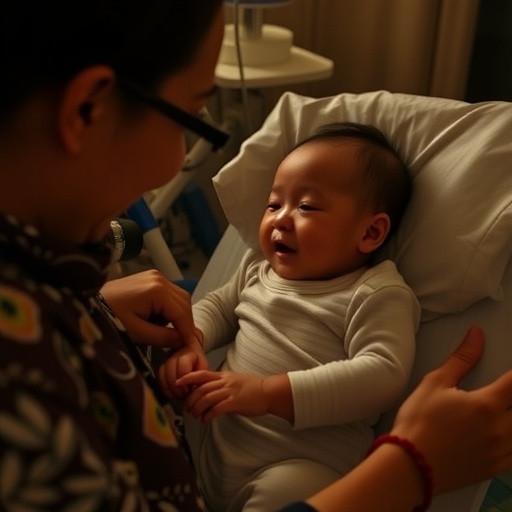
Credit: University of Houston
Key Takeaways:
- National Institute of Child Health and Human Development awards $2.8 million to the University of Houston to lead the first clinical trial evaluating the remotely delivered PALS parenting program to support healthy brain development in infants born preterm.
- Researchers will examine whether online support after NICU discharge strengthens brain development linked to emotional and mental health.
- Research advances UH Health’s mission to improve lifelong health through interdisciplinary research and innovative care.
HOUSTON, July 29, 2026 — A University of Houston psychologist has received a $2.8 million grant from the National Institute of Child Health and Human Development to lead the first randomized clinical trial testing whether a remotely delivered parenting program can improve healthy infant brain development to support long-term mental health outcomes for babies born prematurely.
Researchers will examine whether providing parents with web-based support during the critical weeks and months after premature infants leave the hospital strengthens early brain development linked to emotional and mental health.
In the United States, more than one in 10 babies are born prematurely each year and the rate of mental health disorders among youth and adults born preterm is rising, posing substantial burden to individuals, families and society. Texas has some of the highest rates of preterm birth in the country.
While advances in neonatal medicine have dramatically improved survival rates, babies born prematurely remain at greater risk for developmental and mental health disorders.
The scalable intervention could transform how families receive support after discharge from the neonatal intensive care unit, bringing evidence-based support into the home. The research aligns with UH Health’s mission to advance innovative, accessible solutions that improve health outcomes and reduce disparities for vulnerable populations.
Johanna Bick, associate professor of psychology and director of the Laboratory of Early Experience and Development at UH, will lead the trial of a remotely delivered version of Play and Learning Strategies (PALS), a parenting program that has been adapted for parents of prematurely born infants. PALS is an evidence-based parenting intervention program designed to strengthen parent-child bonds and stimulate early cognitive, language and social-emotional development.
“The field is beginning to understand how preterm birth can alter the development of neural circuits that underlie long-term mental health,” said Bick. “This study will allow us to test whether increased support during one of the most sensitive periods of brain development can help place infants on a more typical developmental trajectory.”
Many effective parenting programs end when babies leave the NICU, missing a critical period when parents need support most and babies’ brains are developing rapidly. Because the program is delivered online, it has the potential to reach families regardless of where they live while engaging multiple caregivers during this critical period.
Parents or caretakers of prematurely born infants will be randomly assigned to either the remotely delivered PALS program or a comparison program. Researchers will evaluate how the intervention affects parental responsiveness, infant social and emotional development, emotion regulation and brain development using behavioral assessments and advanced neuroimaging and neurophysiological measures.
Laurie Fickman
University of Houston
lafickman@uh.edu
Office: 713-743-8454
Tags
Cite Scienmag News
Harold Sullivan. (July 29, 2026). UH receives $2.8 million NIH grant to test remote parenting program’s impact on premature infant mental health. Scienmag. https://scienmag.com/uh-receives-2-8-million-nih-grant-to-test-remote-parenting-programs-impact-on-premature-infant-mental-health/
Harold Sullivan. "UH receives $2.8 million NIH grant to test remote parenting program’s impact on premature infant mental health." Scienmag, 29 July 2026, https://scienmag.com/uh-receives-2-8-million-nih-grant-to-test-remote-parenting-programs-impact-on-premature-infant-mental-health/. Accessed 5 September 2026.
Harold Sullivan. "UH receives $2.8 million NIH grant to test remote parenting program’s impact on premature infant mental health." Scienmag. July 29, 2026. https://scienmag.com/uh-receives-2-8-million-nih-grant-to-test-remote-parenting-programs-impact-on-premature-infant-mental-health/

