


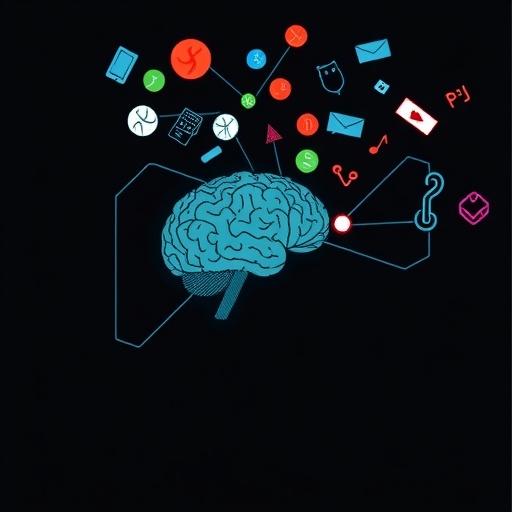
A new analysis suggests that psychological research is rapidly moving from journals into the machinery of U.S. governance, with findings increasingly cited in policy documents addressing education, health, and social justice. The trend highlights how behavioral science is becoming a preferred source for guidance that aims to be evidence-based, testable, and actionable across institutions.
Researchers reviewed how a broad set of psychological studies is referenced in government policy materials and found that citations are not uniformly distributed. Instead, the most frequent appearances cluster around topics where human behavior, motivation, and learning processes can be translated into measurable outcomes, such as classroom achievement, public health adherence, and interventions aimed at reducing inequities.
The study emphasizes that psychology’s influence often comes through research that offers clear mechanisms—how thoughts, beliefs, and social contexts shape behavior over time. In policy language, these mechanisms become frameworks for designing programs, evaluating impact, and justifying resource allocation, even when the original work is not a “policy trial” per se.
A key technical takeaway is the role of systematic constructs from psychology—such as expectancy, self-efficacy, stigma dynamics, and behavioral choice architectures—being mapped onto policy levers. By linking experimental or observational findings to specific policy implementations, document authors can argue that interventions should work for defined populations under defined conditions.
The authors also note that citation patterns can reflect more than scientific quality. They may signal changing editorial norms within policy agencies, increased availability of review literature, and the growing use of structured evidence standards that encourage referencing peer-reviewed work.
Beyond what is cited, the analysis points to how psychological research can travel: through policy briefs, synthesis reports, and cross-disciplinary writing that converts statistical results into guidance. This translation step matters, because policy documents prioritize clarity and generalizability, while academic papers emphasize boundaries and uncertainty.
In a viral science-news moment for researchers, the findings suggest psychology is not merely being used—it is being “operationalized.” That means researchers’ results are increasingly treated as building blocks for frameworks that guide interventions, performance metrics, and stakeholder communication.
Importantly, the researchers call attention to the potential risks of citation without careful fit. If a policy references a study whose populations, settings, or effect sizes differ from the target context, implementation may underperform or misestimate benefits. The work therefore implicitly argues for tighter alignment between evidence and local decision-making.
Overall, the analysis positions psychological science as an expanding influence in U.S. policy, especially where behavior is central and where policymakers want interventions grounded in empirically tested models. As the citation footprint grows, so does the need for rigorous evidence translation and scrutiny.
Cite Scienmag News
Courtney Benton. (July 29, 2026). Psychological Research Rises in U.S. Policy Documents on Education, Health, Justice. Scienmag. https://scienmag.com/psychological-research-rises-in-u-s-policy-documents-on-education-health-justice/
Courtney Benton. "Psychological Research Rises in U.S. Policy Documents on Education, Health, Justice." Scienmag, 29 July 2026, https://scienmag.com/psychological-research-rises-in-u-s-policy-documents-on-education-health-justice/. Accessed 4 September 2026.
Courtney Benton. "Psychological Research Rises in U.S. Policy Documents on Education, Health, Justice." Scienmag. July 29, 2026. https://scienmag.com/psychological-research-rises-in-u-s-policy-documents-on-education-health-justice/


