


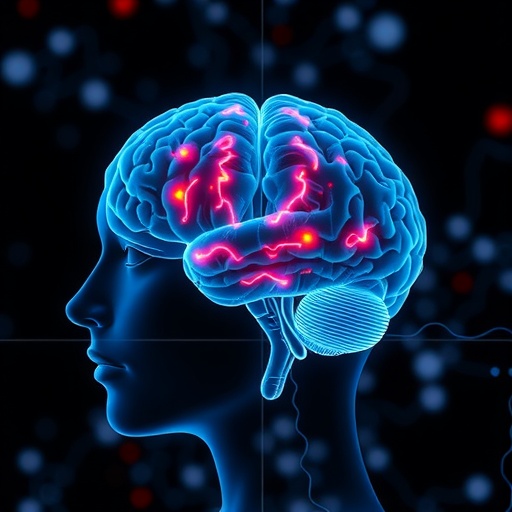
A new study published in Translational Psychiatry reports that psychological stress can trigger measurable mitochondrial changes in humans—and that a signal captured from the medial prefrontal cortex tracks with the intensity of this cellular response. The findings help bridge the gap between brain-level stress experiences and the energy-management machinery that powers our cells.
Researchers investigated how stress reshapes mitochondrial function, focusing on systems that regulate oxidative metabolism and cellular resilience. Mitochondria are dynamic organelles that adjust to changing demands by altering respiratory activity, energy output, and stress-response signaling. When psychological pressure rises, these adjustments may become detectable both at the organ-organ communication level and within brain circuits that govern emotion and threat processing.
Using human data and biomarker analyses, the team examined whether individual differences in stress physiology correspond to mitochondrial signatures. They report that stressed participants showed patterns consistent with a mitochondrial response—suggesting that stress is not only a psychological experience but also a driver of cellular bioenergetic reprogramming.
Crucially, the study identifies a medial prefrontal biomarker that correlates with the mitochondrial signal. The medial prefrontal cortex is strongly implicated in appraisal, self-referential processing, and regulation of affect. Its involvement provides a mechanistic link: stress-related computations in the brain may influence downstream metabolic programs that mitochondria execute.
The authors interpret the correlation as evidence for a brain–mitochondria coupling pathway. In this view, neural stress processing could modulate metabolic demand and stress-defense pathways, leading to mitochondrial shifts that reflect the biological “load” imposed by chronic or acute psychological strain.
Because mitochondria participate in pathways linked to inflammation and oxidative stress, the results also raise the possibility that mitochondrial alterations may contribute to the long-term vulnerability seen in stress-associated disorders. If confirmed across populations, the approach could refine how clinicians gauge biological impact rather than relying solely on symptom reports.
The work’s translational tone is strengthened by the biomarker correlation, which could serve as an objective readout for stress biology. Such markers may eventually help stratify patients, monitor risk, and guide interventions aimed at restoring metabolic stability.
Overall, the study suggests that psychological stress leaves a cellular footprint—and that the medial prefrontal cortex can mirror its mitochondrial consequences, turning an abstract experience into quantifiable biology.
Cite Scienmag News
Drew Townsend. (July 29, 2026). Psychological Stress Alters Human Mitochondria; Medial Prefrontal Biomarker Tracks Effects. Scienmag. https://scienmag.com/psychological-stress-alters-human-mitochondria-medial-prefrontal-biomarker-tracks-effects/
Drew Townsend. "Psychological Stress Alters Human Mitochondria; Medial Prefrontal Biomarker Tracks Effects." Scienmag, 29 July 2026, https://scienmag.com/psychological-stress-alters-human-mitochondria-medial-prefrontal-biomarker-tracks-effects/. Accessed 3 September 2026.
Drew Townsend. "Psychological Stress Alters Human Mitochondria; Medial Prefrontal Biomarker Tracks Effects." Scienmag. July 29, 2026. https://scienmag.com/psychological-stress-alters-human-mitochondria-medial-prefrontal-biomarker-tracks-effects/


