

Wednesday, July 29, 2026
Science
No Result
View All Result
  • Login
  • HOME
  • SCIENCE NEWS
  • CONTACT US
  • HOME
  • SCIENCE NEWS
  • CONTACT US
No Result
View All Result
Scienmag
No Result
View All Result
Home Science News Psychology & Psychiatry

Lithium’s Cognitive Potential in Alzheimer’s Reassessed: Cholinergic System and Connectivity

July 29, 2026
in Psychology & Psychiatry
Reading Time: 2 mins read
0
Lithium’s Cognitive Potential in Alzheimer’s Reassessed: Cholinergic System and Connectivity

Lithium’s Cognitive Potential in Alzheimer’s Reassessed: Cholinergic System and Connectivity

65
SHARES
587
VIEWS
Share on FacebookShare on Twitter
ADVERTISEMENT

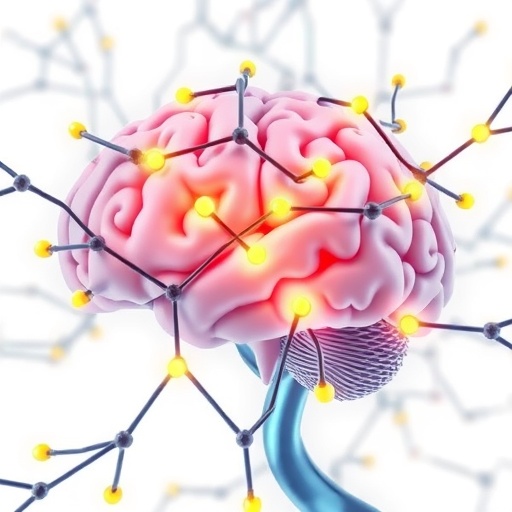
Lithium, a well-known treatment in psychiatry, is re-entering the Alzheimer’s debate with fresh mechanistic insight. In a new study published in Translational Psychiatry, researchers revisit whether lithium could help preserve cognition in Alzheimer’s disease—and, crucially, explore how its effects may depend on the brain’s cholinergic circuitry and large-scale connectivity.

The work centers on the cholinergic system, which relies on acetylcholine signaling and is strongly impaired in Alzheimer’s. Rather than treating lithium’s potential as a single-target phenomenon, the authors frame it as a systems-level intervention that could modulate signaling pathways tied to memory, attention, and network stability.

To understand how this might work, the study emphasizes brain connectivity—how distant regions communicate through functional networks. Alzheimer’s is characterized not only by local pathology but also by disruptions in network organization. The researchers investigate whether lithium’s cognitive potential aligns with patterns of connectivity that support resilient information processing.

The analysis also underscores the possibility that lithium’s benefits may involve restoring or compensating for cholinergic dysfunction. This could mean improving the functional environment in which cholinergic neurons operate, potentially boosting downstream communication across key cortical and subcortical regions.

Importantly, the authors do not present lithium as a universal cure, but as a candidate that may exert measurable cognitive effects only under specific neurobiological conditions. That distinction matters for designing future trials, including how participants are stratified by disease stage, cholinergic integrity, and connectivity profiles.

The study’s framing supports a more targeted approach to repurposed drugs in neurodegeneration. Instead of relying solely on clinical outcomes, it argues for embedding biomarkers and network readouts into therapeutic evaluation—turning “can it work?” into “for whom might it work, and why?”

With Alzheimer’s research increasingly focused on precision neuroscience, the findings add momentum to theories linking cholinergic signaling, neurochemical modulation, and network-level dysfunction. If validated in additional cohorts and experimental settings, the cholinergic-connectivity lens could guide better interpretation of lithium-related signals.

Overall, the paper positions lithium as a neurobiologically plausible candidate whose cognitive potential may be mediated by the cholinergic system and reflected in brain connectivity changes—offering a clearer map for future translational efforts.

Subject of Research: Alzheimer’s disease; lithium’s cognitive potential
Article Title: Revisiting the cognitive potential of lithium in alzheimer’s disease: the role of cholinergic system and brain connectivity.
Article References: Pini, L., Imbimbo, B.P. & Pomara, N. (2026). Translational Psychiatry. https://doi.org/10.1038/s41398-026-04307-9
DOI: https://doi.org/10.1038/s41398-026-04307-9
Image Credits: AI Generated

Tags: Alzheimer’s disease mechanisms and therapeutic targetsbrain connectivity and functional networks in Alzheimer’scholinergic dysfunction in Alzheimer’scholinergic system and acetylcholine signalinglarge-scale brain network modulationLithium in Alzheimer’s disease treatmentlithium’s impact on memory and attentionneural circuitry and cognitive resilienceneuropharmacology of lithiumpotential of lithium to restore neural connectivitysystems-level intervention for cognitive preservation
Share26Tweet16
Previous Post

Molecular Rotors Map the 3D Viscous Habitat of Mucus-Gliding Bacteria

Next Post

Early psychosis shows reduced low-frequency sensorimotor fluctuations tied to dexterity

Related Posts

Brain criticality variability explains why ADHD symptoms differ across individuals
Psychology & Psychiatry

Brain criticality variability explains why ADHD symptoms differ across individuals

July 29, 2026
Peripheral Blood Mononuclear Cell Deformability Reduced in Major Depressive Disorder
Psychology & Psychiatry

Peripheral Blood Mononuclear Cell Deformability Reduced in Major Depressive Disorder

July 29, 2026
Temporal Interference Stimulation Advances Noninvasive Deep Brain Stimulation Paradigm
Psychology & Psychiatry

Temporal Interference Stimulation Advances Noninvasive Deep Brain Stimulation Paradigm

July 29, 2026
Cholinergic Basal Forebrain Control of Glymphatic Flow May Affect Depression
Psychology & Psychiatry

Cholinergic Basal Forebrain Control of Glymphatic Flow May Affect Depression

July 28, 2026
Mechanisms Connecting Gut Microbiome to Causality in Psychiatric Disorders
Psychology & Psychiatry

Mechanisms Connecting Gut Microbiome to Causality in Psychiatric Disorders

July 28, 2026
Study Uncovers Neuroinflammation Mechanisms, Biomarkers, and Treatments for Long COVID
Psychology & Psychiatry

Study Uncovers Neuroinflammation Mechanisms, Biomarkers, and Treatments for Long COVID

July 28, 2026
Next Post
Early psychosis shows reduced low-frequency sensorimotor fluctuations tied to dexterity

Early psychosis shows reduced low-frequency sensorimotor fluctuations tied to dexterity

  • Mothers who receive childcare support from maternal grandparents show more

    Mothers who receive childcare support from maternal grandparents show more parental warmth, finds NTU Singapore study

    27656 shares
    Share 11059 Tweet 6912
  • University of Seville Breaks 120-Year-Old Mystery, Revises a Key Einstein Concept

    1061 shares
    Share 424 Tweet 265
  • Bee body mass, pathogens and local climate influence heat tolerance

    682 shares
    Share 273 Tweet 171
  • Researchers record first-ever images and data of a shark experiencing a boat strike

    546 shares
    Share 218 Tweet 137
  • Groundbreaking Clinical Trial Reveals Lubiprostone Enhances Kidney Function

    531 shares
    Share 212 Tweet 133
Science

Embark on a thrilling journey of discovery with Scienmag.com—your ultimate source for cutting-edge breakthroughs. Immerse yourself in a world where curiosity knows no limits and tomorrow’s possibilities become today’s reality!

RECENT NEWS

  • RHOT1/2 Mitochondrial Vesicles Target Tumors and Enable In Situ Vaccination
  • Early psychosis shows reduced low-frequency sensorimotor fluctuations tied to dexterity
  • Lithium’s Cognitive Potential in Alzheimer’s Reassessed: Cholinergic System and Connectivity
  • Molecular Rotors Map the 3D Viscous Habitat of Mucus-Gliding Bacteria

Categories

  • Agriculture
  • Anthropology
  • Archaeology
  • Athmospheric
  • Biology
  • Biotechnology
  • Blog
  • Bussines
  • Cancer
  • Chemistry
  • Climate
  • Earth Science
  • Editorial Policy
  • Marine
  • Mathematics
  • Medicine
  • Pediatry
  • Policy
  • Psychology & Psychiatry
  • Science Education
  • Social Science
  • Space
  • Technology and Engineering

Subscribe to Blog via Email

Enter your email address to subscribe to this blog and receive notifications of new posts by email.

Join 5,147 other subscribers

© 2025 Scienmag - Science Magazine

Welcome Back!

Login to your account below

Forgotten Password?

Retrieve your password

Please enter your username or email address to reset your password.

Log In
No Result
View All Result
  • HOME
  • SCIENCE NEWS
  • CONTACT US

© 2025 Scienmag - Science Magazine

Discover more from Science

Subscribe now to keep reading and get access to the full archive.

Continue reading
