


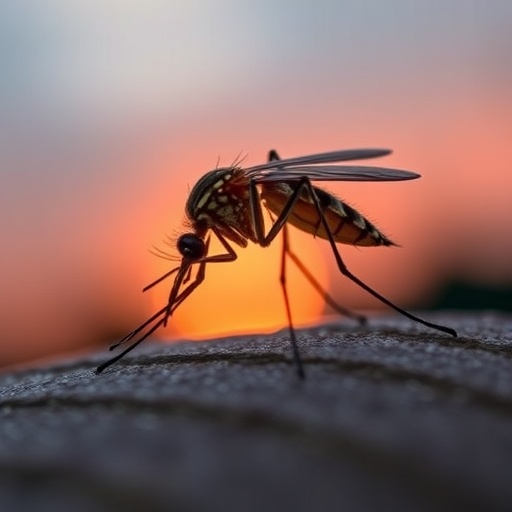
Chemical insecticides have long been the backbone of mosquito control, but the strategy is under pressure. As repeated exposures select for survival traits, some mosquito populations begin to withstand common compounds, making control programs progressively less effective.
A new study in Frontiers in Tropical Diseases from researchers in India investigates the early biological roots of tolerance to α-cypermethrin, a widely used insecticide. The work focuses on Aedes aegypti, a key vector for disease transmission, and asks which internal defenses are mobilized when mosquitoes encounter the chemical.
In laboratory tests, an Indian Ae. aegypti population showed a 97.91% mortality rate after exposure to the recommended diagnostic dose of α-cypermethrin. While this still indicates substantial insecticide killing, the finding is framed as an early warning that resistance mechanisms may be emerging.
To explain how mosquitoes survive at the molecular level, the team examined detoxification enzymes—proteins that respond rapidly to toxic threats. When insecticide molecules enter the mosquito body, they trigger cellular alarm pathways that increase production of defensive proteins.
The researchers then highlighted β-esterase as the most responsive enzyme. After exposure, β-esterase activity rose more than 21-fold, and molecular docking predicted strong binding between the enzyme and α-cypermethrin. Together, these results suggest β-esterase is likely the primary mechanism for detoxifying this insecticide.
Other enzyme families also contributed. Cytochrome P450 (CYP450), known for handling diverse foreign chemicals, and glutathione S-transferases (GST) showed the next strongest reactivity patterns, indicating a broader detoxification network is involved.
A key insight is that enzyme performance depends on fit and efficiency: generalist detoxification systems may show weaker action if they are not optimized for that specific insecticide structure. The study links differences in binding and biochemical responsiveness to why some enzymes react more dramatically than others.
Importantly, the authors emphasize that this is not evidence of stable, long-lasting resistance. Instead, it represents a biochemical “warning stage,” which matters because mosquitoes can develop cross-resistance when insecticides share similar chemical targets.
The work also notes that resistance varies across regions, depending on local exposure history and control practices. While β-esterase appears central here, future monitoring in other populations will be necessary to determine how widespread the biochemical pattern may be under field conditions.
Overall, the study argues that resistance management should begin early. By using molecular and biochemical evidence to anticipate failure, public health authorities may be able to adjust strategies—such as rotation of insecticides, disruption of breeding habitats, and targeted interventions—before α-cypermethrin becomes ineffective.
Cite Scienmag News
Courtney Benton. (July 29, 2026). Mosquitoes’ Potent Weapon Against Insecticide Discovery Reveals New Defense Mechanism. Scienmag. https://scienmag.com/mosquitoes-potent-weapon-against-insecticide-discovery-reveals-new-defense-mechanism/
Courtney Benton. "Mosquitoes’ Potent Weapon Against Insecticide Discovery Reveals New Defense Mechanism." Scienmag, 29 July 2026, https://scienmag.com/mosquitoes-potent-weapon-against-insecticide-discovery-reveals-new-defense-mechanism/. Accessed 4 September 2026.
Courtney Benton. "Mosquitoes’ Potent Weapon Against Insecticide Discovery Reveals New Defense Mechanism." Scienmag. July 29, 2026. https://scienmag.com/mosquitoes-potent-weapon-against-insecticide-discovery-reveals-new-defense-mechanism/


