


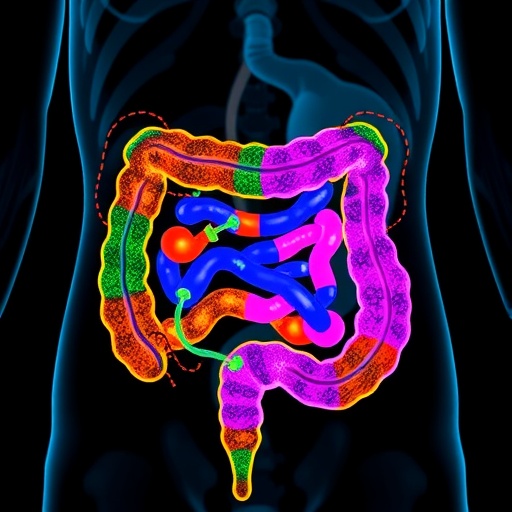
A new study published in Nature Communications reports that the gut microbiome can help flag colorectal lesions in people undergoing population-based fecal immunochemical testing (FIT). The work, led by Birkeland, Kværner, Avershina and colleagues, suggests that microbial community patterns measured from stool samples may complement FIT by improving lesion detection beyond blood-based signals alone.
FIT is widely used because it is noninvasive, yet it has limited sensitivity for certain lesions and can yield ambiguous results in practice. Researchers therefore explored whether distinct microbiome signatures—shifts in the composition and activity of gut microbes—associate with colorectal abnormalities detectable on subsequent clinical evaluation.
The team analyzed microbiome profiles from individuals enrolled in a FIT screening context, comparing stool-derived microbial features between participants with colorectal lesions and those without. Using high-dimensional statistical models, they searched for patterns that could distinguish lesion-bearing cases even when FIT outcomes were borderline or negative.
A key technical approach was feature-level modeling of microbial abundance together with machine-learning style classifiers. Instead of relying on a single taxon, the method captured multivariate “community fingerprints,” where combinations of taxa and related signals improved classification performance. This reflects the reality that colorectal pathology is not typically linked to one organism, but to coordinated ecological changes in the gut ecosystem.
The findings indicate that the microbial signature is informative for detection of colorectal lesions, including adenomas and other clinically relevant abnormalities. The study reports that microbiome-based predictions can retain discriminative power within the screening population, suggesting practical compatibility with real-world stool collection workflows.
Importantly, the researchers assessed whether microbiome patterns could add value relative to FIT alone. Their results point toward a potential risk-stratification pathway: using microbial signatures to prioritize which FIT participants might benefit most from downstream colonoscopy or further diagnostic workup.
The study also addresses confounding factors that commonly affect microbiome composition, such as diet-related variation and participant-level differences. By controlling for relevant covariates and validating across analytic splits, the researchers aim to ensure that the signal is not simply a reflection of unrelated lifestyle heterogeneity.
Overall, the work strengthens the case for multi-analyte screening strategies, where gut microbiome data operates alongside immunochemical testing. If confirmed in larger prospective cohorts, microbiome-informed models could reduce missed lesions and refine screening efficiency.
While the promise is substantial, the authors note that translation will require standardization of sampling, sequencing, and modeling pipelines. Future trials will likely determine how robust these signatures are across geographic cohorts and whether they generalize to diverse screening settings. For now, this report provides a technically grounded blueprint for viral-style “next-generation” screening news: microbiology as an additional lens on colorectal cancer prevention.
Cite Scienmag News
Morgan Morrow. (July 29, 2026). Gut Microbiome Signatures Enable Detection of Colorectal Lesions in FIT Screening. Scienmag. https://scienmag.com/gut-microbiome-signatures-enable-detection-of-colorectal-lesions-in-fit-screening/
Morgan Morrow. "Gut Microbiome Signatures Enable Detection of Colorectal Lesions in FIT Screening." Scienmag, 29 July 2026, https://scienmag.com/gut-microbiome-signatures-enable-detection-of-colorectal-lesions-in-fit-screening/. Accessed 3 September 2026.
Morgan Morrow. "Gut Microbiome Signatures Enable Detection of Colorectal Lesions in FIT Screening." Scienmag. July 29, 2026. https://scienmag.com/gut-microbiome-signatures-enable-detection-of-colorectal-lesions-in-fit-screening/


