


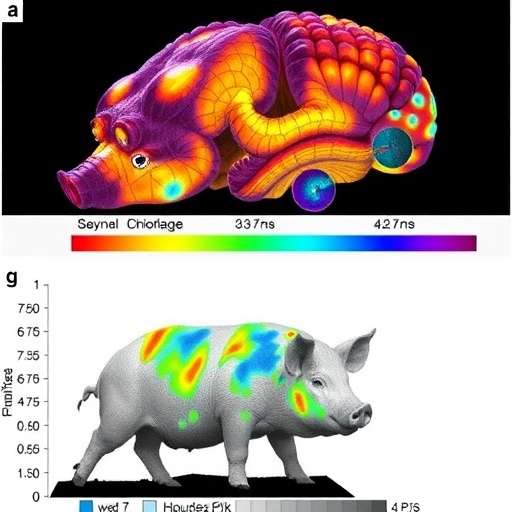
A new study published in Translational Psychiatry reports an integrated map of how animals adapt to chronic high-altitude stress in the brain. Focusing on the porcine cerebral cortex, the research combines single-cell long-read and short-read transcriptomics to resolve gene expression programs that would be blurred by sequencing depth or read length alone.
The team set out to overcome a central technical bottleneck in single-cell RNA analysis: short-read data excels at quantification, but it can miss isoform-specific regulation, while long-read sequencing can capture full-length transcripts yet often requires careful integration across cell states. By aligning these complementary technologies within a single framework, the investigators aimed to track both what genes turn on and which transcript variants they produce.
Using high-resolution cellular profiling, the researchers characterized cortex cell populations and compared their transcriptional landscapes under high-altitude conditions. The analysis revealed adaptive changes that involve not only canonical stress-response pathways, but also more nuanced programs tied to neuronal function and synaptic regulation.
Crucially, long-read sequencing enabled the study to distinguish isoforms that may respond differently to hypoxic or metabolic pressures. This transcript-level specificity is particularly important in the brain, where alternative splicing can reshape protein function, influence receptor composition, and alter how neural circuits process signals.
The authors also report that integrating long- and short-read evidence improves confidence in differential expression calls and refines cell-type annotation. This matters for viral-style science communication because it shifts the story from “which genes change” to “how regulatory architectures at the RNA isoform level shift across cell types.”
Together, these results suggest that high-altitude adaptation is implemented through layered regulation: at the level of gene activation, at the level of splicing and isoform selection, and at the level of cell-type specific transcriptional remodeling.
While the work is conducted in pigs, its implications extend beyond a single model organism. The cortex is a highly conserved structure across mammals, and adaptive signatures detected here may point to general mechanisms through which hypoxia influences neurobiology.
The study’s methodological contribution is likely to resonate widely. As sequencing platforms mature, hybrid long/short-read single-cell strategies could become a standard route for linking environmental challenges to transcript complexity in vivo.
In a field where single-cell studies often trade off coverage for read length, this report demonstrates that combining both can sharpen biological interpretation. For readers looking for a “viral” takeaway: altitude changes the brain not only by turning genes up or down, but by rewriting which RNA versions neurons use to survive.
Cite Scienmag News
Brooke Gardner. (July 28, 2026). Single-Cell Transcriptomics Reveals Cerebral Cortex Adaptations to High Altitude in Pigs. Scienmag. https://scienmag.com/single-cell-transcriptomics-reveals-cerebral-cortex-adaptations-to-high-altitude-in-pigs/
Brooke Gardner. "Single-Cell Transcriptomics Reveals Cerebral Cortex Adaptations to High Altitude in Pigs." Scienmag, 28 July 2026, https://scienmag.com/single-cell-transcriptomics-reveals-cerebral-cortex-adaptations-to-high-altitude-in-pigs/. Accessed 4 September 2026.
Brooke Gardner. "Single-Cell Transcriptomics Reveals Cerebral Cortex Adaptations to High Altitude in Pigs." Scienmag. July 28, 2026. https://scienmag.com/single-cell-transcriptomics-reveals-cerebral-cortex-adaptations-to-high-altitude-in-pigs/


