


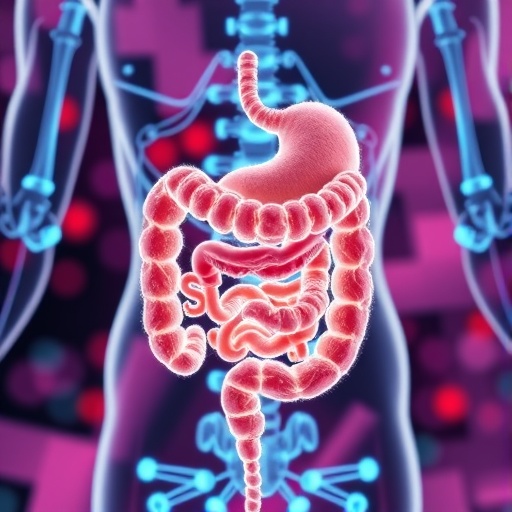
Duke University biomedical engineers have introduced a systematic way to design probiotic–prebiotic formulations that are more reliable for supporting gut health and addressing gastrointestinal disease. The core idea is to treat formulation as a design problem in a huge, uncertain biological landscape rather than as a one-shot selection of candidate microbes and dietary fibers.
The challenge is that the gut is never the same from one person to the next. Diet, medication history, living microbes, and host biology can all change the community structure and nutrient availability. As a result, probiotics that look promising in controlled settings often fail to deliver consistent benefits in real-world conditions.
In a proof-of-concept study, the team engineered tightly controlled communities by forcing 15 gut microbial species to coexist and consume six dietary fibers selected for their effects on butyrate production. But even with a limited set of variables, the number of possible microbe–diet combinations becomes astronomically large, making exhaustive testing impossible.
To navigate this complexity, researchers closed the loop between computation and laboratory experimentation. A machine-learning model guided “active learning” in the form of Bayesian optimization, selecting the next experiments to both reduce uncertainty in the model and move toward performance targets. High-throughput automation then ran thousands of conditions in batches, reaching up to 390 simultaneous experimental setups.
The approach uncovered interactions that were not predictable from prior assumptions. In particular, an inulin-based fiber feed paired with two inulin-hungry bacteria—Bacteroides uniformis and Anaerostipes caccae—worked together with Prevotella copri to produce the desired butyrate output. Importantly, the beneficial synergy persisted even when additional species and environmental factors were introduced.
These findings highlight how engineering both the microbial community and its nutrient environment can yield robustness rather than fragile, context-dependent results. The group is now evaluating whether the identified combination can improve outcomes in a mouse model of inflammatory bowel disease, with early results reported as promising.
Beyond this specific formulation, the researchers argue that the same experiment–model framework can accelerate the discovery of tailored microbiome interventions for a wide range of gut disorders, potentially reducing the unpredictability that has long limited the industry.
Keywords
Probiotics, microbiota, microbiome, artificial intelligence, machine learning, computer modeling
Cite Scienmag News
Denise Maddox. (July 28, 2026). AI and robotics speed search for improved gut microbiome therapies. Scienmag. https://scienmag.com/ai-and-robotics-speed-search-for-improved-gut-microbiome-therapies/
Denise Maddox. "AI and robotics speed search for improved gut microbiome therapies." Scienmag, 28 July 2026, https://scienmag.com/ai-and-robotics-speed-search-for-improved-gut-microbiome-therapies/. Accessed 4 September 2026.
Denise Maddox. "AI and robotics speed search for improved gut microbiome therapies." Scienmag. July 28, 2026. https://scienmag.com/ai-and-robotics-speed-search-for-improved-gut-microbiome-therapies/


