


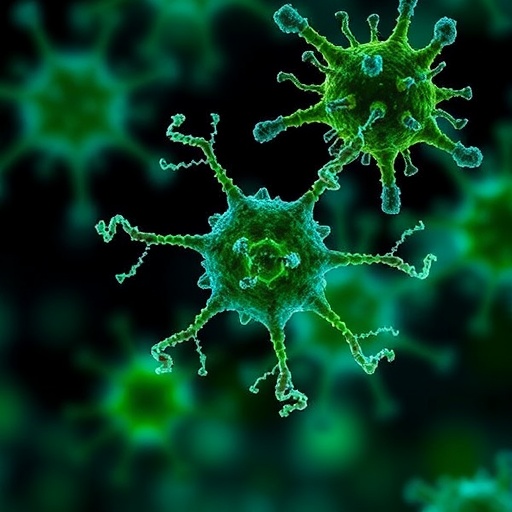
Bacteria face relentless pressure from bacteriophages, yet their protective arsenals include many partially independent defense modules. A central question has been how these modules coordinate rather than compete—especially when multiple innate immunity systems are arranged across the same genome. In a new study, researchers reveal a regulatory strategy in which CRISPR–Cas does more than target invaders; it supervises other anti-phage defenses that have been “embedded” within CRISPR-associated loci.
The team describes CRISIS, short for CRISPR-supervised immune system, a widespread paradigm found across bacterial lineages. In this model, type I CRISPR–Cas loci embed diverse innate defense cassettes directly in their genomic context. Crucially, the system does not silence these neighboring defenses completely. Instead, CRISPR activity transcriptionally modulates them to remain at a low, ready baseline—enough to support antiviral function but not enough to impose severe costs on the host.
Mechanistically, small non-canonical CRISPR RNA-like molecules are produced and loaded into the I-C CRISPR-associated complex for antiviral defense (Cascade). Cascade then represses promoters that control embedded immune cassettes. By tuning promoter activity across multi-system clusters, the authors show that CRISPR can coordinate layered immunity inside a single genomic neighborhood, even when the clustered defenses differ in targets and modes of action.
This arrangement addresses a long-standing dilemma in microbial immunity: stronger defense can reduce growth, trigger burdensome hyperactivation, or displace beneficial plasmids. The study suggests that CRISPR–Cas acts as an “immunity guard,” preventing the embedded systems from switching into an energetically costly, overly aggressive regime.
The implications become especially clear when CRISPR–Cas is disabled. Mutation of CRISPR components or the action of anti-CRISPR proteins causes a burst of transcription from the embedded defense modules. As a result, bacteria display higher-level innate immunity against phages—but pay with reduced fitness, consistent with the trade-off expected from uncontrolled defense expression.
Together, these findings recast CRISPR–Cas as a supervisory regulatory hub that integrates multiple innate immune systems into a coherent network. Rather than functioning as a standalone adaptive weapon, CRISPR–Cas emerges as a coordinator that balances protection and viability. For viral science news audiences, the work highlights how phages may benefit not only from escaping CRISPR recognition but also from indirectly derepressing entire defense neighborhoods.
Cite Scienmag News
Juliet Wilcox. (July 28, 2026). CRISPR-Cas Controls Expression of Integrated Anti-Phage Defense Genes. Scienmag. https://scienmag.com/crispr-cas-controls-expression-of-integrated-anti-phage-defense-genes/
Juliet Wilcox. "CRISPR-Cas Controls Expression of Integrated Anti-Phage Defense Genes." Scienmag, 28 July 2026, https://scienmag.com/crispr-cas-controls-expression-of-integrated-anti-phage-defense-genes/. Accessed 3 September 2026.
Juliet Wilcox. "CRISPR-Cas Controls Expression of Integrated Anti-Phage Defense Genes." Scienmag. July 28, 2026. https://scienmag.com/crispr-cas-controls-expression-of-integrated-anti-phage-defense-genes/


