

Monday, July 27, 2026
Science
No Result
View All Result
  • Login
  • HOME
  • SCIENCE NEWS
  • CONTACT US
  • HOME
  • SCIENCE NEWS
  • CONTACT US
No Result
View All Result
Scienmag
No Result
View All Result
Home Science News Psychology & Psychiatry

Brain Networks and Peripheral Biomarkers Identified for Major Depressive Disorder

July 27, 2026
in Psychology & Psychiatry
Reading Time: 2 mins read
0
Brain Networks and Peripheral Biomarkers Identified for Major Depressive Disorder

Brain Networks and Peripheral Biomarkers Identified for Major Depressive Disorder

65
SHARES
587
VIEWS
Share on FacebookShare on Twitter
ADVERTISEMENT

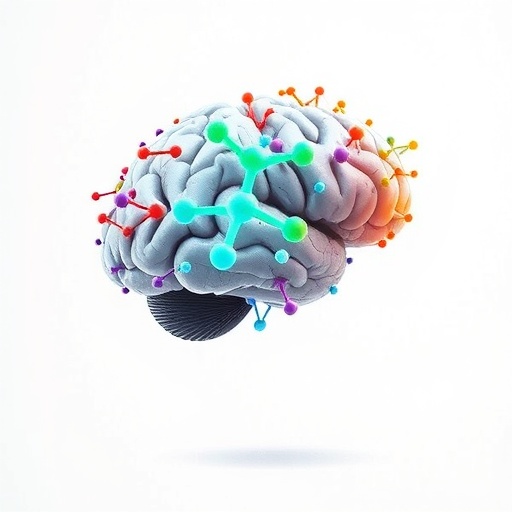
Major depressive disorder (MDD) has long resisted one-size-fits-all diagnostics, largely because its biological signatures are scattered across brain circuits, peripheral biology, and lifestyle-linked factors. Now, a new Translational Psychiatry study by Liu, Li, Yan and colleagues proposes a different route: instead of hunting for a single biomarker in isolation, the researchers connect large-scale brain network abnormalities to measurable peripheral signals.

The work is framed around the idea of “network-to-periphery” translation. In simple terms, alterations in functional connectivity—how brain regions coordinate over time—may leave downstream traces in blood-based or other peripheral readouts. Capturing that chain could improve both prediction and stratification, potentially identifying subtypes of depression that respond differently to treatment.

To build candidate biomarkers, the team leverages computational modeling to derive brain network features associated with MDD. These features are then paired with peripheral measurements, using statistical and machine-learning strategies to test which signals travel best from the neural domain to the body’s measurable state.

Technically, the study emphasizes feature selection and generalization, aiming to avoid the common pitfall of biomarkers that work only within a single dataset. By comparing model performance across cohorts and controlling for confounding variables, the authors attempt to isolate signals most robustly linked to depressive status rather than demographic or methodological artifacts.

A central outcome is the identification of peripheral candidates that align with specific network-level disruptions. This suggests that depression is not merely a mood disorder but a systems-level condition where communication patterns in the brain correspond to biological changes elsewhere.

If validated further, these biomarkers could help clinicians move toward mechanism-informed diagnostics—testing not only whether someone has MDD, but also which biological pathways are most active. That, in turn, may support more targeted treatment choices, including decisions about medication classes and adjunct interventions.

The authors also highlight translational relevance: peripheral biomarkers are easier to collect than neuroimaging, which often restricts clinical adoption. A future where patients can be assessed through minimally invasive tests could reduce barriers to early detection and monitoring.

Still, the study functions as an initial blueprint rather than a final clinical tool. Replication in independent populations and head-to-head comparisons with existing biomarker panels will be required before any routine use.

For now, the message is clear: the next wave of depression diagnostics may come from linking brain connectivity to measurable peripheral biology—turning complex neural dynamics into practical, testable signals.

Subject of Research: Major depressive disorder (MDD); brain networks and peripheral biomarkers
Article Title: From brain networks to peripheral signatures: candidate biomarkers for major depressive disorder
Article References: Liu, Y., Li, M., Yan, B. et al. (2026). Transl Psychiatry. https://doi.org/10.1038/s41398-026-04234-9
Image Credits: AI Generated
DOI: https://doi.org/10.1038/s41398-026-04234-9

Tags: blood-based biomarkers for mental healthbrain network abnormalitiesbrain-periphery signal integrationcomputational modeling of depression biomarkersfunctional connectivity in major depressive disordermachine learning for depression diagnosismulti-cohort validation of depression biomarkersnetwork-to-periphery translation in psychiatryneurobiological signatures of depressionperipheral biomarkers for depressionpredictive modeling in mental healthsubtype stratification in depression
Share26Tweet16
Previous Post

Ancient Seawater Groundwater Still Shapes Coastal Paleo-Estuary Legacy

Next Post

Structure Reveals How Crimean-Congo Hemorrhagic Fever Virus Polymerase Is Inhibited

Related Posts

Connectome gradient changes linked to rumination and altered in depression
Psychology & Psychiatry

Connectome gradient changes linked to rumination and altered in depression

July 27, 2026
Gut microbiome shift links anhedonia and sensation-seeking in prodromal Parkinson’s mice
Psychology & Psychiatry

Gut microbiome shift links anhedonia and sensation-seeking in prodromal Parkinson’s mice

July 27, 2026
Autism and social anxiety linked to submissive behavior and larger amygdala
Psychology & Psychiatry

Autism and social anxiety linked to submissive behavior and larger amygdala

July 27, 2026
Lifestyle Factors and BrainAGE Linked to Depression in Adults
Psychology & Psychiatry

Lifestyle Factors and BrainAGE Linked to Depression in Adults

July 27, 2026
Gene expression signatures forecast psychotherapy response in posttraumatic stress disorder
Psychology & Psychiatry

Gene expression signatures forecast psychotherapy response in posttraumatic stress disorder

July 27, 2026
Whole-Exome Sequencing and Structural Brain Imaging Reveal Bipolar Disorder Markers
Psychology & Psychiatry

Whole-Exome Sequencing and Structural Brain Imaging Reveal Bipolar Disorder Markers

July 27, 2026
Next Post
Structure Reveals How Crimean-Congo Hemorrhagic Fever Virus Polymerase Is Inhibited

Structure Reveals How Crimean-Congo Hemorrhagic Fever Virus Polymerase Is Inhibited

  • Mothers who receive childcare support from maternal grandparents show more

    Mothers who receive childcare support from maternal grandparents show more parental warmth, finds NTU Singapore study

    27656 shares
    Share 11059 Tweet 6912
  • University of Seville Breaks 120-Year-Old Mystery, Revises a Key Einstein Concept

    1061 shares
    Share 424 Tweet 265
  • Bee body mass, pathogens and local climate influence heat tolerance

    682 shares
    Share 273 Tweet 171
  • Researchers record first-ever images and data of a shark experiencing a boat strike

    546 shares
    Share 218 Tweet 137
  • Groundbreaking Clinical Trial Reveals Lubiprostone Enhances Kidney Function

    531 shares
    Share 212 Tweet 133
Science

Embark on a thrilling journey of discovery with Scienmag.com—your ultimate source for cutting-edge breakthroughs. Immerse yourself in a world where curiosity knows no limits and tomorrow’s possibilities become today’s reality!

RECENT NEWS

  • Microbial Carbon Metabolism Tied to Organic Matter Chemistry in Soils
  • Cavity-Assisted Nonlocal Metasurfaces Enable Efficient Broadband Optical Vortex Generation
  • Terrain diversity shapes carbon storage in Brazil’s Atlantic Forest
  • Bioengineer Wins CPRIT Grants to Develop Treatments for Rare Cancer

Categories

  • Agriculture
  • Anthropology
  • Archaeology
  • Athmospheric
  • Biology
  • Biotechnology
  • Blog
  • Bussines
  • Cancer
  • Chemistry
  • Climate
  • Earth Science
  • Editorial Policy
  • Marine
  • Mathematics
  • Medicine
  • Pediatry
  • Policy
  • Psychology & Psychiatry
  • Science Education
  • Social Science
  • Space
  • Technology and Engineering

Subscribe to Blog via Email

Enter your email address to subscribe to this blog and receive notifications of new posts by email.

Join 5,146 other subscribers

© 2025 Scienmag - Science Magazine

Welcome Back!

Login to your account below

Forgotten Password?

Retrieve your password

Please enter your username or email address to reset your password.

Log In
No Result
View All Result
  • HOME
  • SCIENCE NEWS
  • CONTACT US

© 2025 Scienmag - Science Magazine

Discover more from Science

Subscribe now to keep reading and get access to the full archive.

Continue reading
