


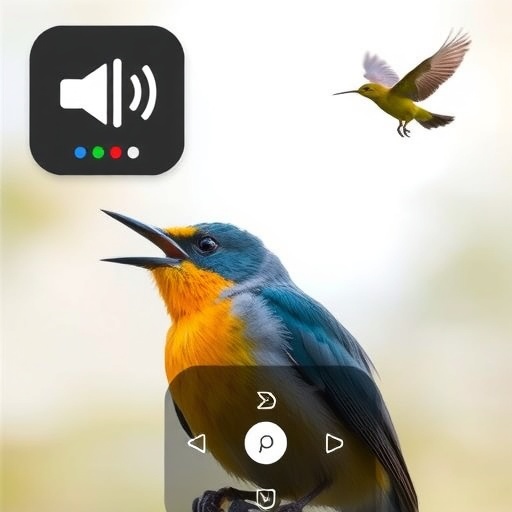
BirdNET Live, the newest evolution of the popular BirdNET bird-call identifier, is designed for one hard problem: getting reliable species recognition where internet is unreliable or absent. Traditional apps can work only when they can stream audio to the cloud, leaving rangers and field researchers without real-time help in forests and high mountains.
The breakthrough behind BirdNET Live is that its AI no longer needs an online connection. Developers optimized and streamlined the underlying models so they can run locally on the smartphone. That means audio can be processed directly on-device, enabling fully offline identification of animal calls.
The app currently covers nearly ten thousand species by sound. It can recognize 8,927 bird species, and it extends beyond birds by identifying 268 mammals, 254 insects, and 340 amphibians in real time—an unusually broad offline library compared with other tools in the same category.
BirdNET Live is an open-source project, built for both professionals and ambitious citizen scientists. Its interface is available in seven languages, while identified species names are translated into 25 languages, lowering the barrier for global field use.
For structured surveys, the app includes modes commonly used in scientific monitoring. It automatically records vocalizations with precise time and location metadata and stores recordings locally on the phone, supporting offline field workflows from start to finish.
After recording, users can review results, export data, or share audio for expert validation. The same workflow doubles as training: by listening to playback of their own recordings, people can repeatedly refine their identification skills.
The development was funded through the RangerSound project by the Deutsche Bundesstiftung Umwelt (DBU). Conservation biologists, park rangers, hardware specialists, and AI researchers collaborated to address weaknesses seen in everyday field conditions, from microphone setups to data handling in remote environments.
To keep recording stable during patrols, BirdNET Live can work with an external microphone. A smartphone can be carried and waterproofed in a rucksack while the app runs continuously in the background, capturing data without requiring network coverage.
Project leaders emphasize that “running AI locally” is more than convenience—it depends on major engineering progress in AI optimization. Universities plan to use BirdNET Live in teaching, and researchers expect it to be especially valuable in species-rich regions such as Ecuador’s rainforest, where mobile coverage can be nonexistent.
Cite Scienmag News
Margaret Porter. (July 27, 2026). AI app identifies birds offline by recording animal sounds on your phone. Scienmag. https://scienmag.com/ai-app-identifies-birds-offline-by-recording-animal-sounds-on-your-phone/
Margaret Porter. "AI app identifies birds offline by recording animal sounds on your phone." Scienmag, 27 July 2026, https://scienmag.com/ai-app-identifies-birds-offline-by-recording-animal-sounds-on-your-phone/. Accessed 3 September 2026.
Margaret Porter. "AI app identifies birds offline by recording animal sounds on your phone." Scienmag. July 27, 2026. https://scienmag.com/ai-app-identifies-birds-offline-by-recording-animal-sounds-on-your-phone/


