

Sunday, November 22, 2026
Science
No Result
View All Result
  • Login
  • HOME
  • SCIENCE NEWS
  • CONTACT US
  • HOME
  • SCIENCE NEWS
  • CONTACT US
No Result
View All Result
Scienmag
No Result
View All Result
Home Science News Marine

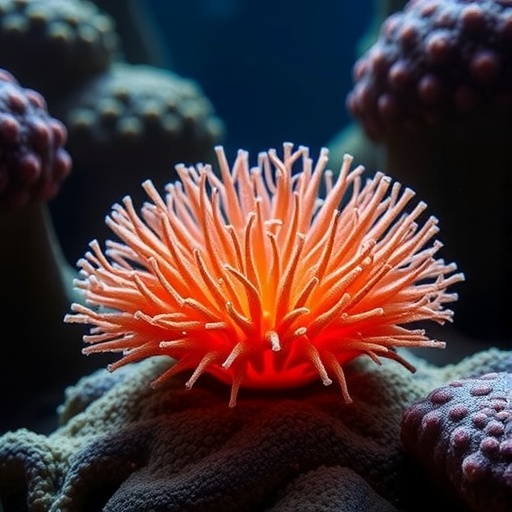
Coral’s Swiss Army Knife: How Cilia Enable Multiple Functions

July 27, 2026
in Marine
Gavin Prescott
By Gavin Prescott Scienmag Editorial Profile - Ecology and Ecosystem Dynamics
Reading Time: 2 mins read
0
Coral’s Swiss Army Knife: How Cilia Enable Multiple Functions

Coral’s Swiss Army Knife: How Cilia Enable Multiple Functions

65
SHARES
587
VIEWS
Share on FacebookShare on Twitter
ADVERTISEMENT

Black corals, belonging to the ancient group Antipatharia, may look like fragile ocean ornaments, but their true power lies at a scale far too small for the naked eye. Living fixed to the seafloor, these sessile animals rely on one critical resource: flowing water. When currents shift, black corals cannot relocate—they must make the surrounding seawater work for them, delivering oxygen, removing waste, and transporting larvae to new habitats.

A new study led by Mathilde Godefroid and Soeren Ahmerkamp asks a deceptively simple question: why do black corals evolve such dramatically different body shapes? Some species form broad, highly branched “forests,” while others grow slender whips or fan-like forms. The researchers suspected that geometry might alter how micro-scale flow behaves around and within the colony.

The team turned to the micro-environment of black corals, focusing on microscopic hair-like structures called cilia. These cilia beat continuously and in coordinated waves, generating miniature currents that hug the coral surface. Using an innovative imaging approach with microscopic tracer particles, they simultaneously visualized water movement and oxygen distribution while measuring metabolic activity.

Experiments used coral fragments collected from reefs off Gran Canaria and maintained in controlled aquarium conditions. By applying natural particle tracers, the researchers captured previously elusive, directly observed internal fluid motion within hexacorals—revealing how matter is taken up and processed at tiny scales.

Their results showed that coral morphology is not just appearance—it is function. Broad, densely branched forms use cilia-driven flows to capture and redistribute food across complex surfaces, supporting nutrient delivery to many polyps. Slender, whip-like corals, in contrast, rely on cilia to continuously ventilate tissues, stirring nearby water to sustain oxygen supply and clear metabolic waste even when external currents are weak.

Even more surprising, cilia activity was not confined to the outer surface. Tracking naturally occurring particles uncovered cilia-driven movement inside a hidden network of tiny channels that connect neighboring polyps. In effect, these flows link hundreds of individual animals into an integrated living system.

The study reframes black coral biology as a hydraulics problem governed by microscopic engineering. Cilia act like a Swiss Army knife: ventilating, distributing nutrients, transferring materials internally, and shaping the flow around the organism’s body.

More broadly, the findings suggest that microscopic structures and synchronized beating can influence how organisms feed, breathe, grow, and diversify over evolutionary time—hinting that similar “tiny engines” may have been underestimated drivers across the animal kingdom.

Subject of Research: Black corals (Antipatharia) and cilia-driven mass transport shaped by morphology

Article Title: Coral’s Swiss Army Knife: How Cilia Enable Multiple Functions

Article References: Original research article

Image Credits: AI Generated

DOI: Not provided

Keywords: black coral morphology, cilia coordination in sessile animals, cilia-driven water movement, coral adaptation to water currents, coral body shape evolution, Coral cilia functions, coral larval transportation, coral oxygen exchange mechanisms, coral waste removal processes, innovative imaging techniques in marine biology, micro-scale water flow in corals, microscopic imaging of coral environments

Cite Scienmag News

Gavin Prescott. (July 27, 2026). Coral’s Swiss Army Knife: How Cilia Enable Multiple Functions. Scienmag. https://scienmag.com/corals-swiss-army-knife-how-cilia-enable-multiple-functions/

Gavin Prescott. "Coral’s Swiss Army Knife: How Cilia Enable Multiple Functions." Scienmag, 27 July 2026, https://scienmag.com/corals-swiss-army-knife-how-cilia-enable-multiple-functions/. Accessed 22 November 2026.

Gavin Prescott. "Coral’s Swiss Army Knife: How Cilia Enable Multiple Functions." Scienmag. July 27, 2026. https://scienmag.com/corals-swiss-army-knife-how-cilia-enable-multiple-functions/

Tags: black coral morphologycilia coordination in sessile animalscilia-driven water movementcoral adaptation to water currentscoral body shape evolutionCoral cilia functionscoral larval transportationcoral oxygen exchange mechanismscoral waste removal processesinnovative imaging techniques in marine biologymicro-scale water flow in coralsmicroscopic imaging of coral environments
Share26Tweet16
Previous Post

Study Suggests Hawaiian Corals May Adapt Despite Approaching Heat Stress

Next Post

Moth Wings Detect Smells Using Specialized Chemosensory Structures

Related Posts

Parasite Genetics Reveal Diamondback Terrapin Population Structure
Marine

Parasite Genetics Reveal Diamondback Terrapin Population Structure

November 21, 2026
Microalgae Bioactive Production Advances Through Cultivation Tuning Synthetic Biology and Machine Learning
Biotechnology

Microalgae Bioactive Production Advances Through Cultivation Tuning Synthetic Biology and Machine Learning

November 20, 2026
Satellites Reveal Overlooked Wildfire Runoff Threats Degrading Vulnerable Coastal Waters Worldwide
Marine

Satellites Reveal Overlooked Wildfire Runoff Threats Degrading Vulnerable Coastal Waters Worldwide

November 20, 2026
Atmospheric Organic Nitrogen Supplies 12.8 Million Tonnes of Marine Nutrients Annually
Marine

Atmospheric Organic Nitrogen Supplies 12.8 Million Tonnes of Marine Nutrients Annually

November 20, 2026
Mining Sediments from Deep-Sea Polymetallic Nodules Induce Acute Toxicity in Mussels
Marine

Mining Sediments from Deep-Sea Polymetallic Nodules Induce Acute Toxicity in Mussels

November 20, 2026
Coastal Power Plant Thermal Discharges Disrupt Marine Plankton and Microbial Communities
Marine

Coastal Power Plant Thermal Discharges Disrupt Marine Plankton and Microbial Communities

November 20, 2026
Next Post
Moth Wings Detect Smells Using Specialized Chemosensory Structures

Moth Wings Detect Smells Using Specialized Chemosensory Structures

  • Mothers who receive childcare support from maternal grandparents show more optimized

    Mothers who receive childcare support from maternal grandparents show more parental warmth, finds NTU Singapore study

    27656 shares
    Share 11059 Tweet 6912
  • University of Seville Breaks 120-Year-Old Mystery, Revises a Key Einstein Concept

    1061 shares
    Share 424 Tweet 265
  • Bee body mass, pathogens and local climate influence heat tolerance

    682 shares
    Share 273 Tweet 171
  • Researchers record first-ever images and data of a shark experiencing a boat strike

    546 shares
    Share 218 Tweet 137
  • Groundbreaking Clinical Trial Reveals Lubiprostone Enhances Kidney Function

    531 shares
    Share 212 Tweet 133
Science

Embark on a thrilling journey of discovery with Scienmag.com—your ultimate source for cutting-edge breakthroughs. Immerse yourself in a world where curiosity knows no limits and tomorrow’s possibilities become today’s reality!

RECENT NEWS

  • Phloem Girdling Drives Rhizosphere Microbial Adaptation to Belowground Carbon Limitation in Tobacco
  • Kharkiv Transit Shelter Expansion Left 135 Urban Zones Without Fifteen-Minute Access
  • Direct Integration of GIS and AI in Tuberculosis Studies Remains Rare
  • Cortical Folding Motifs Reveal Distinct Brain Shape Variations and Asymmetry From Infancy

Categories

  • Agriculture
  • Anthropology
  • Archaeology
  • Athmospheric
  • Biology
  • Biotechnology
  • Blog
  • Bussines
  • Cancer
  • Chemistry
  • Climate
  • Earth Science
  • Editorial Policy
  • Marine
  • Mathematics
  • Medicine
  • Pediatry
  • Policy
  • Psychology & Psychiatry
  • Science Education
  • Science News
  • Social Science
  • Space
  • Technology and Engineering

Subscribe to Blog via Email

Enter your email address to subscribe to this blog and receive notifications of new posts by email.

Join 5,151 other subscribers

© 2026 Scienmag - Science Magazine

Welcome Back!

Login to your account below

Forgotten Password?

Retrieve your password

Please enter your username or email address to reset your password.

Log In
No Result
View All Result
  • HOME
  • SCIENCE NEWS
  • CONTACT US

© 2026 Scienmag - Science Magazine

Discover more from Science

Subscribe now to keep reading and get access to the full archive.

Continue reading

