


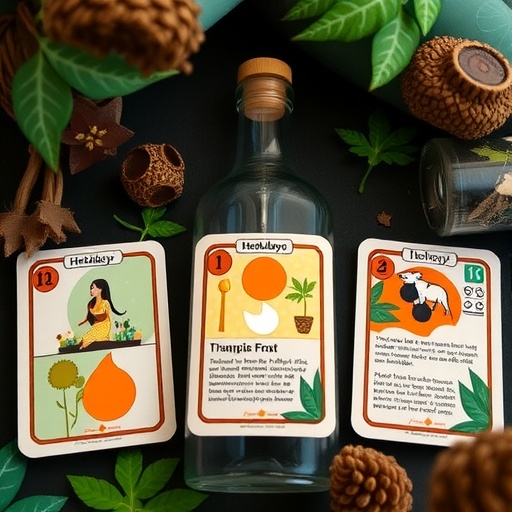
Filipino traditional medicine is often described as inherited wisdom, but a new approach from Ateneo de Manila University is revealing the science underneath that legacy. In the Philippines, widely used medicinal plants—from tawa-tawa for dengue support to aloe vera for skin soothing—have long been trusted through oral tradition. What was unclear to many students, however, was how to connect these remedies to the organic chemistry principles that explain why they may work.
That gap is the focus of an educational card game called Herbularyo. Designed for classroom use, the game invites players to act as folk healers while they match medicinal herbs with illnesses and identify the organic compounds associated with each plant. The learning goal is not memorization; it is pattern recognition grounded in molecular structure and chemical functionality.
Each deck centers on plants drawn from the Encyclopedia of Common Medicinal Plants of the Philippines Volume 3, a reference supported by the Philippine Institute of Traditional and Alternative Health Care (PITAHC). The encyclopedia compiles both ethnomedicinal usage and scientific evidence for therapeutic properties, creating a bridge between culturally familiar remedies and research-backed chemistry.
During gameplay, players encounter compounds as interactive clues rather than abstract textbook content. By linking herb cards to illness outcomes and then tracing them to active organic constituents, students practice the kinds of chemical reasoning commonly required in organic chemistry—only in a context that feels immediate and relevant.
The game’s design also incorporates narrative elements inspired by Filipino healing beliefs, including binat (relapse), sumpa (curse), and himala (miracle). These cards add strategy while reflecting how folk frameworks influence the interpretation of health and treatment outcomes. For players, that cultural layer makes the scientific content easier to engage with—and harder to forget.
In classroom testing involving both high school and college students, Herbularyo produced significant learning gains. Participants also described the experience as enjoyable, suggesting that motivation is a major lever for science education when the subject matter is traditionally seen as distant.
Co-developer Maryjane Magsino emphasized that the project aims to show how organic chemistry and Filipino medical traditions can inform each other. The team also highlighted the accessibility of herbal knowledge found in everyday environments, from backyards to spice racks.
Ultimately, Herbularyo positions traditional medicine as a gateway into modern chemical understanding. By uncovering the compounds behind familiar plants, the game supports a viral-ready message: meaningful science learning can begin with what students already recognize—and can lead to broader awareness of complementary therapeutic options grounded in evidence.
Cite Scienmag News
Bethany Barker. (July 17, 2026). Herbularyo Card Game Marries Filipino Folklore With Organic Chemistry. Scienmag. https://scienmag.com/herbularyo-card-game-marries-filipino-folklore-with-organic-chemistry/
Bethany Barker. "Herbularyo Card Game Marries Filipino Folklore With Organic Chemistry." Scienmag, 17 July 2026, https://scienmag.com/herbularyo-card-game-marries-filipino-folklore-with-organic-chemistry/. Accessed 3 September 2026.
Bethany Barker. "Herbularyo Card Game Marries Filipino Folklore With Organic Chemistry." Scienmag. July 17, 2026. https://scienmag.com/herbularyo-card-game-marries-filipino-folklore-with-organic-chemistry/


