

Friday, July 17, 2026
Science
No Result
View All Result
  • Login
  • HOME
  • SCIENCE NEWS
  • CONTACT US
  • HOME
  • SCIENCE NEWS
  • CONTACT US
No Result
View All Result
Scienmag
No Result
View All Result
Home Science News Medicine

ASB2 reduces liver fat accumulation, boosting ILC1 balance and anti-tumor immunity

July 17, 2026
in Medicine
Reading Time: 2 mins read
0
ASB2 reduces liver fat accumulation, boosting ILC1 balance and anti-tumor immunity

ASB2 reduces liver fat accumulation, boosting ILC1 balance and anti-tumor immunity

65
SHARES
587
VIEWS
Share on FacebookShare on Twitter
ADVERTISEMENT

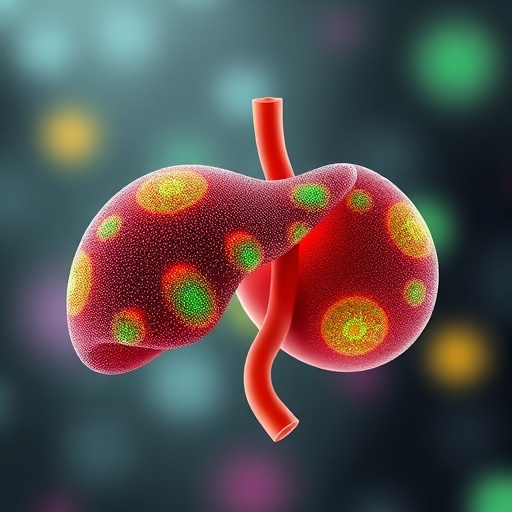
Viral Science News — A new study reports that an immune-regulating factor called ASB2 can reshape liver metabolism in a way that strengthens anti-tumor defense. In mouse models, researchers found that ASB2 directly counteracts lipid accumulation in the liver, a metabolic shift that can re-tune resident immune cells rather than merely limiting tumor growth indirectly.

The work focuses on ILC1 (innate lymphoid cells type 1), which act as rapid first responders against stressed or transformed cells. When the liver becomes lipid-laden, immune function can degrade, impairing the ability of ILC1 cells to maintain homeostasis. The study suggests ASB2 restores a healthier immune-metabolic balance, allowing ILC1 to remain fit and responsive.

Mechanistically, the team links ASB2 activity to pathways controlling lipid handling, reducing fat deposition and lowering the metabolic stress that normally compromises immune cell performance. This matters because lipid overload can alter signaling networks that govern cytokine programs and survival, pushing ILC1 cells toward dysfunction.

To test causality, the researchers manipulated ASB2 levels in mouse liver contexts and then assessed ILC1 homeostasis and function using immunological readouts. They observed that boosting ASB2 improved markers consistent with ILC1 fitness, while dampening ASB2 had the opposite effect, correlating with worse tumor control.

In tumor-challenge settings, ASB2’s lipid-suppressing role translated into measurable anti-tumor immunity. Enhanced ILC1 readiness supported stronger immune surveillance and improved outcomes compared with conditions that favored lipid accumulation.

The authors emphasize that the findings position ASB2 as a metabolic checkpoint connecting tissue lipid states to innate immune stability. This reframes anti-cancer strategies by suggesting that correcting organ-level metabolism can actively sustain the effectiveness of innate immune cells.

Overall, the study highlights a viral-science-worthy concept: immunotherapy may benefit from coupling immune modulation with metabolic rewiring. If similar mechanisms operate in humans, ASB2-linked pathways could inspire targeted interventions for liver-associated cancers.

Such an approach could be especially relevant where tumors exploit metabolic environments to blunt immunity. By turning down lipid accumulation, ASB2 may remove a barrier that ILC1 cells face inside the liver microenvironment.

Subject of Research: Liver metabolism and innate immune regulation (ILC1) in anti-tumor immunity

Article Title: ASB2 inhibits lipid accumulation to promote ILC1 homeostatic fitness and anti-tumor immunity in the mouse liver

Article References: Bao, B., Wang, X., Chen, Y. et al. ASB2 inhibits lipid accumulation to promote ILC1 homeostatic fitness and anti-tumor immunity in the mouse liver. Nat Commun (2026). https://doi.org/10.1038/s41467-026-75517-4

Tags: anti-tumor immunitycytokine regulationimmune cell homeostasisimmune regulationimmune-metabolic balanceinnate lymphoid cells ILC1lipid accumulation in liverlipid handling pathwaysliver fat metabolismliver immune responsemetabolic stress and immune dysfunctiontumor suppression mechanisms
Share26Tweet16
Previous Post

Extracellular Matrix Stiffness Guides Region-Specific Lung Epithelial Differentiation in Organoids

Next Post

Brain circuits could explain cognitive symptoms in progressive supranuclear palsy

Related Posts

T-box transcription factor misregulation disrupts BNP–NPR1 signaling, causing chronic itch
Medicine

T-box transcription factor misregulation disrupts BNP–NPR1 signaling, causing chronic itch

July 17, 2026
Lancet Definition of Clinical Obesity Applied to MASLD Patients
Medicine

Lancet Definition of Clinical Obesity Applied to MASLD Patients

July 17, 2026
New DNA approach offers a strategy to fight gum disease
Medicine

New DNA approach offers a strategy to fight gum disease

July 17, 2026
Brain circuits could explain cognitive symptoms in progressive supranuclear palsy
Medicine

Brain circuits could explain cognitive symptoms in progressive supranuclear palsy

July 17, 2026
Extracellular Matrix Stiffness Guides Region-Specific Lung Epithelial Differentiation in Organoids
Medicine

Extracellular Matrix Stiffness Guides Region-Specific Lung Epithelial Differentiation in Organoids

July 17, 2026
Repetitive Neuronal Stimulation Reprograms Mature Neurons Into Immature States
Medicine

Repetitive Neuronal Stimulation Reprograms Mature Neurons Into Immature States

July 17, 2026
Next Post
Brain circuits could explain cognitive symptoms in progressive supranuclear palsy

Brain circuits could explain cognitive symptoms in progressive supranuclear palsy

  • Mothers who receive childcare support from maternal grandparents show more

    Mothers who receive childcare support from maternal grandparents show more parental warmth, finds NTU Singapore study

    27656 shares
    Share 11059 Tweet 6912
  • University of Seville Breaks 120-Year-Old Mystery, Revises a Key Einstein Concept

    1061 shares
    Share 424 Tweet 265
  • Bee body mass, pathogens and local climate influence heat tolerance

    682 shares
    Share 273 Tweet 171
  • Researchers record first-ever images and data of a shark experiencing a boat strike

    546 shares
    Share 218 Tweet 137
  • Groundbreaking Clinical Trial Reveals Lubiprostone Enhances Kidney Function

    531 shares
    Share 212 Tweet 133
Science

Embark on a thrilling journey of discovery with Scienmag.com—your ultimate source for cutting-edge breakthroughs. Immerse yourself in a world where curiosity knows no limits and tomorrow’s possibilities become today’s reality!

RECENT NEWS

  • T-box transcription factor misregulation disrupts BNP–NPR1 signaling, causing chronic itch
  • Lancet Definition of Clinical Obesity Applied to MASLD Patients
  • Flexible thin-film electronics that reposition and connect themselves
  • New DNA approach offers a strategy to fight gum disease

Categories

  • Agriculture
  • Anthropology
  • Archaeology
  • Athmospheric
  • Biology
  • Biotechnology
  • Blog
  • Bussines
  • Cancer
  • Chemistry
  • Climate
  • Earth Science
  • Editorial Policy
  • Marine
  • Mathematics
  • Medicine
  • Pediatry
  • Policy
  • Psychology & Psychiatry
  • Science Education
  • Social Science
  • Space
  • Technology and Engineering

Subscribe to Blog via Email

Enter your email address to subscribe to this blog and receive notifications of new posts by email.

Join 5,146 other subscribers

© 2025 Scienmag - Science Magazine

Welcome Back!

Login to your account below

Forgotten Password?

Retrieve your password

Please enter your username or email address to reset your password.

Log In
No Result
View All Result
  • HOME
  • SCIENCE NEWS
  • CONTACT US

© 2025 Scienmag - Science Magazine

Discover more from Science

Subscribe now to keep reading and get access to the full archive.

Continue reading
