

Wednesday, July 15, 2026
Science
No Result
View All Result
  • Login
  • HOME
  • SCIENCE NEWS
  • CONTACT US
  • HOME
  • SCIENCE NEWS
  • CONTACT US
No Result
View All Result
Scienmag
No Result
View All Result
Home Science News Medicine

Butyrate epigenetically sustains intestinal epithelial–T cell signaling for tolerance

July 15, 2026
in Medicine
Reading Time: 2 mins read
0
Butyrate epigenetically sustains intestinal epithelial–T cell signaling for tolerance

Butyrate epigenetically sustains intestinal epithelial–T cell signaling for tolerance

65
SHARES
587
VIEWS
Share on FacebookShare on Twitter
ADVERTISEMENT

A new study published in Nature Communications reports that butyrate—an abundant gut microbial metabolite—can epigenetically “license” prolonged conversations between intestinal epithelial cells and T cells. The findings help explain how immune tolerance is maintained in the gut despite constant exposure to dietary and microbial antigens.

Researchers focused on epithelial–immune crosstalk, a process that determines whether local immune responses remain calm or escalate into inflammation. While prior work linked short-chain fatty acids to immune modulation, this study emphasizes a longer-term mechanism: durable epigenetic programming within epithelial cells.

Using experimental models of gut immune regulation, the team showed that butyrate availability altered gene regulatory states in epithelial cells in ways consistent with epigenetic control rather than transient signaling alone. The epithelial cells maintained an altered transcriptional landscape that supported sustained interactions with T cells over time.

Mechanistically, the work points to chromatin-level changes that affect how epithelial cells present cues to T cells. By reshaping accessibility at key regulatory regions, butyrate promoted epithelial programs associated with immune tolerance, sustaining a beneficial epithelial tone even as immune cells continuously traffic through the tissue environment.

The study also links this licensing effect to epithelial support of T-cell functions that prevent runaway inflammation. In tolerant conditions, T cells receive signals that favor controlled reactivity, enabling the intestine to remain immunologically vigilant without becoming destructive.

Crucially, the butyrate effect appears to be conditional on the integrity of epithelial programs that can be “re-written” by metabolic inputs. When these epigenetic instructions are disrupted, the epithelial–T cell communication shifts toward states more compatible with inflammatory failure.

From a translational perspective, the results strengthen the rationale for dietary and microbial interventions aimed at increasing butyrate in the colon. They also suggest that therapeutic strategies might target epigenetic pathways in epithelial cells to restore immune equilibrium.

As viral science news readers might appreciate, the gut ecosystem’s metabolic outputs are increasingly recognized as regulators of immune fate through gene regulation. Here, butyrate acts like a molecular editor, tuning epithelial chromatin to sustain tolerance-promoting dialogues with T cells.

Subject of Research: Intestinal immune tolerance; epithelial–T cell crosstalk; butyrate and epigenetic regulation

Article Title: Butyrate epigenetically licenses sustained epithelial-T cell crosstalk for intestinal immune tolerance.

Article References: Yu, T., Yang, W., Bilotta, A.J. et al. Butyrate epigenetically licenses sustained epithelial-T cell crosstalk for intestinal immune tolerance. Nature Communications (2026). https://doi.org/10.1038/s41467-026-75600-w

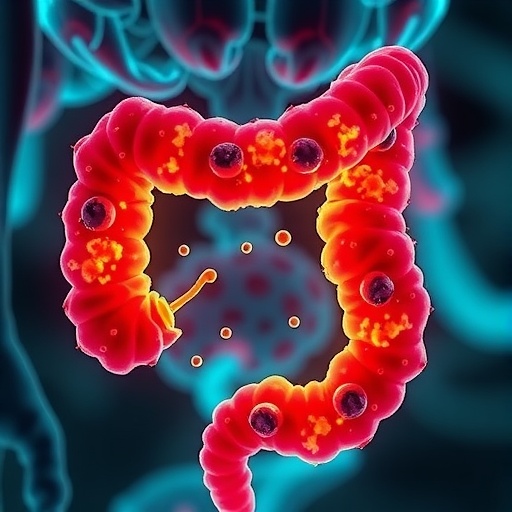
Image Credits: AI Generated

DOI: 10.1038/s41467-026-75600-w

Keywords: butyrate; epigenetics; intestinal epithelium; T cells; immune tolerance; chromatin regulation; short-chain fatty acids; metabolic signaling

Tags: butyrate and immune tolerancechromatin accessibility in gut epitheliumdietary short-chain fatty acids and immune responseepigenetic programming in gut epithelial cellsepigenetic regulation of intestinal epithelial cellsepithelial–immune cell crosstalk mechanismsgut immune homeostasis and inflammation preventionGut microbial metabolitelong-term gut immune modulationmicrobial metabolites influencing immune signalingtranscriptional regulation of epithelial–T cell interactions
Share26Tweet16
Previous Post

Designing Rational Home-Based Studies to Assess Infants’ Sleep Patterns

Next Post

Economic Optimal Timing and Mix of Europe’s Coastal Adaptation to 2150

Related Posts

Researchers Urge Renaming Polycystic Ovary Syndrome to Better Reflect the Condition
Medicine

Researchers Urge Renaming Polycystic Ovary Syndrome to Better Reflect the Condition

July 15, 2026
Braiding and Fusion Enable Universal Gates for Anyons on Quantum Hardware
Medicine

Braiding and Fusion Enable Universal Gates for Anyons on Quantum Hardware

July 15, 2026
IL7-Receptor–Targeted CAR T Therapy Targets T-Cell Acute Lymphoblastic Leukemia
Medicine

IL7-Receptor–Targeted CAR T Therapy Targets T-Cell Acute Lymphoblastic Leukemia

July 15, 2026
Virtual Reality Meditation Reduces Stress in Neonatal Intensive Care Parents and Staff
Medicine

Virtual Reality Meditation Reduces Stress in Neonatal Intensive Care Parents and Staff

July 15, 2026
Sex and multimorbidity link to higher dementia readmissions in England study
Medicine

Sex and multimorbidity link to higher dementia readmissions in England study

July 15, 2026
Food System Transformation Could Reshape Global Agriculture, Experts Say
Medicine

Food System Transformation Could Reshape Global Agriculture, Experts Say

July 15, 2026
Next Post
Economic Optimal Timing and Mix of Europe’s Coastal Adaptation to 2150

Economic Optimal Timing and Mix of Europe’s Coastal Adaptation to 2150

  • Mothers who receive childcare support from maternal grandparents show more

    Mothers who receive childcare support from maternal grandparents show more parental warmth, finds NTU Singapore study

    27656 shares
    Share 11059 Tweet 6912
  • University of Seville Breaks 120-Year-Old Mystery, Revises a Key Einstein Concept

    1061 shares
    Share 424 Tweet 265
  • Bee body mass, pathogens and local climate influence heat tolerance

    682 shares
    Share 273 Tweet 171
  • Researchers record first-ever images and data of a shark experiencing a boat strike

    546 shares
    Share 218 Tweet 137
  • Groundbreaking Clinical Trial Reveals Lubiprostone Enhances Kidney Function

    531 shares
    Share 212 Tweet 133
Science

Embark on a thrilling journey of discovery with Scienmag.com—your ultimate source for cutting-edge breakthroughs. Immerse yourself in a world where curiosity knows no limits and tomorrow’s possibilities become today’s reality!

RECENT NEWS

  • Tiny Water Droplets May Unlock Solutions for Global Plastic Waste Dissolving
  • Researchers Urge Renaming Polycystic Ovary Syndrome to Better Reflect the Condition
  • Machine Learning Enables Safer Testing of Chemical Threats to Endangered Fish
  • Analysis Reveals Publication Prestige Depends Most on Topic and Location

Categories

  • Agriculture
  • Anthropology
  • Archaeology
  • Athmospheric
  • Biology
  • Biotechnology
  • Blog
  • Bussines
  • Cancer
  • Chemistry
  • Climate
  • Earth Science
  • Editorial Policy
  • Marine
  • Mathematics
  • Medicine
  • Pediatry
  • Policy
  • Psychology & Psychiatry
  • Science Education
  • Social Science
  • Space
  • Technology and Engineering

Subscribe to Blog via Email

Enter your email address to subscribe to this blog and receive notifications of new posts by email.

Join 5,146 other subscribers

© 2025 Scienmag - Science Magazine

Welcome Back!

Login to your account below

Forgotten Password?

Retrieve your password

Please enter your username or email address to reset your password.

Log In
No Result
View All Result
  • HOME
  • SCIENCE NEWS
  • CONTACT US

© 2025 Scienmag - Science Magazine

Discover more from Science

Subscribe now to keep reading and get access to the full archive.

Continue reading
