

Thursday, September 3, 2026
Science
No Result
View All Result
  • Login
  • HOME
  • SCIENCE NEWS
  • CONTACT US
  • HOME
  • SCIENCE NEWS
  • CONTACT US
No Result
View All Result
Scienmag
No Result
View All Result
Home Science News Medicine

Older Adults’ Hip Abduction and Ankle Dorsiflexion Differences After Falls

July 15, 2026
in Medicine
Ophelia Keating
By Ophelia Keating Scienmag Editorial Profile - Health Services Research
Reading Time: 2 mins read
0
Older Adults’ Hip Abduction and Ankle Dorsiflexion Differences After Falls

Older Adults’ Hip Abduction and Ankle Dorsiflexion Differences After Falls

65
SHARES
587
VIEWS
Share on FacebookShare on Twitter
ADVERTISEMENT

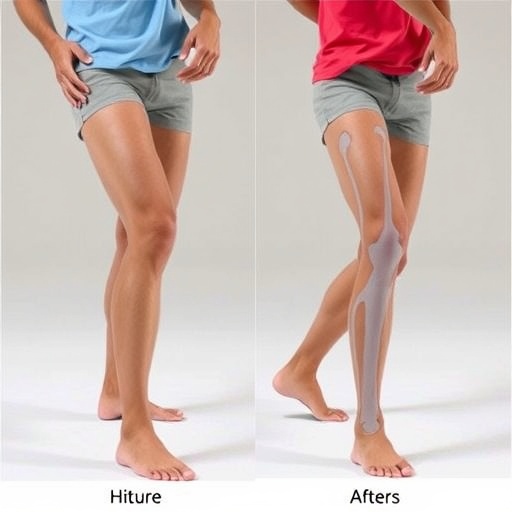
A new study is turning attention to a subtle mix of joint function that may help explain why some older adults are more likely to fall. Researchers compared hip abduction range of motion and strength, alongside ankle dorsiflexion ability, in seniors with a history of falls and in those without such history.

The work centers on the biomechanical idea that stability during stance and stepping depends on coordinated control from the pelvis to the foot. Hip abduction supports lateral pelvic alignment and influences how weight shifts over one leg. If that strength or movement capacity is reduced, compensations can increase instability. Meanwhile, ankle dorsiflexion affects the ability to keep the knee progressing appropriately over the foot during gait.

To test these relationships, the team measured hip abduction motion and muscular capacity, then assessed ankle dorsiflexion range in older participants. By pairing these metrics within the same cohort, the researchers aimed to detect whether fall history aligns with specific functional limits across multiple joints rather than a single impairment.

The findings suggest that older adults with prior falls may show measurable differences in hip abduction performance and ankle dorsiflexion compared with peers who have not fallen. Such patterns point toward an interlinked “mobility–strength–control” chain that could degrade balance responses during daily activities.

From a clinical perspective, the study provides a practical framework: fall risk assessment might benefit from looking beyond fear of falling or general balance testing alone. Targeted evaluations of hip abduction capacity and ankle mobility could reveal modifiable constraints.

The implications are significant for rehabilitation design. If hip and ankle impairments act together to challenge postural control, training programs that combine hip strengthening with ankle dorsiflexion-focused mobility work may be more effective than approaches aimed at a single site.

In viral science news terms, this research adds a compelling new angle to a familiar public concern: falls. It also emphasizes that “prevention” can be grounded in measurable biomechanics, potentially enabling earlier intervention before falls occur.

This study was published in BMC Geriatr and is indexed under DOI link provided by the authors.

Subject of Research: Falls risk biomechanics in older adults (hip abduction and ankle dorsiflexion)

Article Title: Comparison of hip abduction range of motion and strength and ankle dorsiflexion in older adults with and without a history of falls.

Article References: Al-Sayyid Salman, Z. A. A. N., & Roshani, S. (2026). Comparison of hip abduction range of motion and strength and ankle dorsiflexion in older adults with and without a history of falls. BMC Geriatrics. https://doi.org/10.1186/s12877-026-07940-7

Image Credits: AI Generated

DOI: 10.1186/s12877-026-07940-7

Keywords: Falls; hip abduction; dorsiflexion; older adults; range of motion; strength

Cite Scienmag News

Ophelia Keating. (July 15, 2026). Older Adults’ Hip Abduction and Ankle Dorsiflexion Differences After Falls. Scienmag. https://scienmag.com/older-adults-hip-abduction-and-ankle-dorsiflexion-differences-after-falls/

Ophelia Keating. "Older Adults’ Hip Abduction and Ankle Dorsiflexion Differences After Falls." Scienmag, 15 July 2026, https://scienmag.com/older-adults-hip-abduction-and-ankle-dorsiflexion-differences-after-falls/. Accessed 3 September 2026.

Ophelia Keating. "Older Adults’ Hip Abduction and Ankle Dorsiflexion Differences After Falls." Scienmag. July 15, 2026. https://scienmag.com/older-adults-hip-abduction-and-ankle-dorsiflexion-differences-after-falls/


Tags: age-related decline in joint flexibilityankle dorsiflexion and fall preventionbiomechanical factors in elderly fallsfall history and biomechanical deficitsgait stability and lower limb flexibilityhip abduction strength in seniorsimpact of joint range of motion on fall riskjoint mobility and balance in older adultslower limb muscle function in seniorsmobility control and fall prevention strategiesOlder adults fall riskpelvic stability and fall susceptibility
Share26Tweet16
Previous Post

Astronomers Discover Nearby Planets: Small, Weird, and Completely Uninhabitable

Next Post

Laryngoscopy attempts during transition linked to severe intraventricular hemorrhage in extreme preterms

Related Posts

Recurrent Pulmonary Alveolar Proteinosis Challenges Care After Double Lung Transplant
Medicine

Recurrent Pulmonary Alveolar Proteinosis Challenges Care After Double Lung Transplant

September 3, 2026
Blue-Light Blocking Glasses and Morning Light Shift Young Adults’ Body Clocks Earlier
Medicine

Blue-Light Blocking Glasses and Morning Light Shift Young Adults’ Body Clocks Earlier

September 3, 2026
New eIF4E inhibitor halts tumor growth by rewiring lipid metabolism
Medicine

New eIF4E inhibitor halts tumor growth by rewiring lipid metabolism

September 3, 2026
Horses, Forests and Healing: How Nature-Based Therapy Embodies Mental Health Recovery
Medicine

Horses, Forests and Healing: How Nature-Based Therapy Embodies Mental Health Recovery

September 3, 2026
Wearable monitor improves diagnosis of heart rhythm disorders after fainting
Medicine

Wearable monitor improves diagnosis of heart rhythm disorders after fainting

September 3, 2026
Visualisation of magnetic field-induced nanoparticle clusters and mechanical property changes in a breast phantom for inductive moderate hyperthermia
Medicine

Visualisation of magnetic field-induced nanoparticle clusters and mechanical property changes in a breast phantom for inductive moderate hyperthermia

September 3, 2026
Next Post
Laryngoscopy attempts during transition linked to severe intraventricular hemorrhage in extreme preterms

Laryngoscopy attempts during transition linked to severe intraventricular hemorrhage in extreme preterms

  • Mothers who receive childcare support from maternal grandparents show more optimized

    Mothers who receive childcare support from maternal grandparents show more parental warmth, finds NTU Singapore study

    27656 shares
    Share 11059 Tweet 6912
  • University of Seville Breaks 120-Year-Old Mystery, Revises a Key Einstein Concept

    1061 shares
    Share 424 Tweet 265
  • Bee body mass, pathogens and local climate influence heat tolerance

    682 shares
    Share 273 Tweet 171
  • Researchers record first-ever images and data of a shark experiencing a boat strike

    546 shares
    Share 218 Tweet 137
  • Groundbreaking Clinical Trial Reveals Lubiprostone Enhances Kidney Function

    531 shares
    Share 212 Tweet 133
Science

Embark on a thrilling journey of discovery with Scienmag.com—your ultimate source for cutting-edge breakthroughs. Immerse yourself in a world where curiosity knows no limits and tomorrow’s possibilities become today’s reality!

RECENT NEWS

  • Recurrent Pulmonary Alveolar Proteinosis Challenges Care After Double Lung Transplant
  • New Plasmonic Nanobiosensor Spots Fuel Adulteration at Record Sensitivity
  • Industrial Waste and Designer Biochar Join Forces to Rescue the World’s Dying Soils
  • Earthworm Tests Reveal Hidden Risks of Widely Used Herbicide Glufosinate

Categories

  • Agriculture
  • Anthropology
  • Archaeology
  • Athmospheric
  • Biology
  • Biotechnology
  • Blog
  • Bussines
  • Cancer
  • Chemistry
  • Climate
  • Earth Science
  • Editorial Policy
  • Marine
  • Mathematics
  • Medicine
  • Pediatry
  • Policy
  • Psychology & Psychiatry
  • Science Education
  • Social Science
  • Space
  • Technology and Engineering

Subscribe to Blog via Email

Enter your email address to subscribe to this blog and receive notifications of new posts by email.

Join 5,151 other subscribers

© 2025 Scienmag - Science Magazine

Welcome Back!

Login to your account below

Forgotten Password?

Retrieve your password

Please enter your username or email address to reset your password.

Log In
No Result
View All Result
  • HOME
  • SCIENCE NEWS
  • CONTACT US

© 2025 Scienmag - Science Magazine

Discover more from Science

Subscribe now to keep reading and get access to the full archive.

Continue reading