

Wednesday, July 15, 2026
Science
No Result
View All Result
  • Login
  • HOME
  • SCIENCE NEWS
  • CONTACT US
  • HOME
  • SCIENCE NEWS
  • CONTACT US
No Result
View All Result
Scienmag
No Result
View All Result
Home Science News Medicine

Fragmented European wetlands face uneven restoration needs and patchy recovery efforts

July 15, 2026
in Medicine, Technology and Engineering
Reading Time: 2 mins read
0
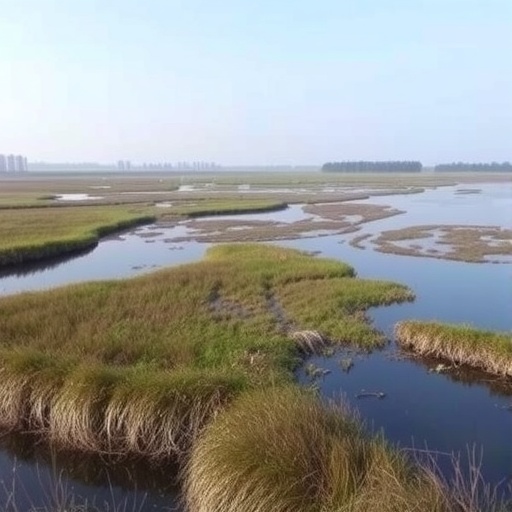
Fragmented European wetlands face uneven restoration needs and patchy recovery efforts

Fragmented European wetlands face uneven restoration needs and patchy recovery efforts

65
SHARES
587
VIEWS
Share on FacebookShare on Twitter
ADVERTISEMENT

European countries are being asked to restore degraded wetlands, but a new analysis shows that the burden will fall very unevenly—largely because the distribution of wetland types and the extent of human disturbance vary widely across borders. Using criteria aligned with the EU Habitats Directive, researchers treated land-use disturbance as a practical red flag for areas unlikely to meet “good condition” requirements, which include both the site’s ecological structure and its characteristic vegetation.

The team converted these compliance assumptions into “scenario-based” restoration targets. Rather than representing exact legal obligations or implementation plans, the method creates stylized targets that assume a fixed share of disturbed seminatural open wetlands is restored to reach Article 4 percentage goals. For each country and wetland type, restoration area was computed as the mandated proportion applied to the estimated disturbed wetland area.

Disturbed areas were assembled from country-level datasets, with uncertainty carried through the analysis. The study used Monte Carlo propagation (n = 5,000 draws) to produce confidence intervals, reflecting variability in the underlying wetland area estimates and in the disturbance-to-allocation procedure.

Across the EEA38 region, the results suggest that by 2030 about 2.66 million hectares of wetlands need restoration. On average, that translates to roughly 70,000 hectares per country, but several nations require far more. The United Kingdom tops the list with 403,700 ± 99,300 hectares, followed by Ireland (290,300 ± 73,600), Turkey (237,500 ± 100,400), and Romania (200,700 ± 68,400).

The pattern is not simply about land size. Germany, for example, would need 105,600 ± 52,200 hectares—less than the UK by nearly a factor of four—while France (173,900 ± 57,400), Denmark (144,400 ± 51,200), and Norway (141,700 ± 33,500) also exceed the regional mean.

In northern Europe, peatbogs strongly shape demand. Peatbog-specific restoration targets reach 234,000 ± 71,300 hectares in the UK and 256,900 ± 64,900 hectares in Ireland, with Sweden (91,600 ± 35,100) and Norway (38,000 ± 14,600) also showing substantial peatland components. Countries with limited peatbog extent—such as Turkey and Romania—show large overall targets driven instead by inland marsh systems.

Overall, the study links restoration “demand” to the spatial mix of seminatural wetland types and how frequently they are disturbed. It also highlights a policy challenge: without harmonized, spatially detailed wetland datasets, comparing restoration commitments across countries may be difficult to do robustly.

Subject of Research: EU wetland restoration targets under Habitats Directive Article 4, based on disturbed seminatural wetlands.

Article Title: Highly fragmented European wetlands with uneven restoration needs.

Article References: Kovács, G.M., Tong, X., Gominski, D. et al. Highly fragmented European wetlands with uneven restoration needs. Nature (2026). https://doi.org/10.1038/s41586-026-10760-9

Image Credits: AI Generated

DOI: https://doi.org/10.1038/s41586-026-10760-9

Keywords: wetlands, restoration targets, Habitats Directive, seminatural wetlands, peatbogs, disturbance, Europe, Monte Carlo uncertainty, biodiversity policy

Tags: cross-border environmental challengesdegraded wetlandsecological recoveryEU Habitats DirectiveEuropean wetland restorationhabitat conservationhabitat management policiesland-use disturbanceMonte Carlo uncertainty analysisrestoration targets and scenarioswetland ecosystem serviceswetland types and distribution
Share26Tweet16
Previous Post

Self-Aligned Heterogeneous Integration Advances Quantum Photonics Fabrication

Next Post

New study maps climate measures for Berlin and heat protection for Tirana

Related Posts

Butyrate epigenetically sustains intestinal epithelial–T cell signaling for tolerance
Medicine

Butyrate epigenetically sustains intestinal epithelial–T cell signaling for tolerance

July 15, 2026
Designing Rational Home-Based Studies to Assess Infants’ Sleep Patterns
Technology and Engineering

Designing Rational Home-Based Studies to Assess Infants’ Sleep Patterns

July 15, 2026
Correction: NLRP3 pyroptosis worsens mouse cardiac hypertrophy; irisin is protective
Medicine

Correction: NLRP3 pyroptosis worsens mouse cardiac hypertrophy; irisin is protective

July 15, 2026
Laryngoscopy attempts during transition linked to severe intraventricular hemorrhage in extreme preterms
Medicine

Laryngoscopy attempts during transition linked to severe intraventricular hemorrhage in extreme preterms

July 15, 2026
Older Adults’ Hip Abduction and Ankle Dorsiflexion Differences After Falls
Medicine

Older Adults’ Hip Abduction and Ankle Dorsiflexion Differences After Falls

July 15, 2026
GPS satellite data calibrated for improved space weather research
Technology and Engineering

GPS satellite data calibrated for improved space weather research

July 15, 2026
Next Post
New study maps climate measures for Berlin and heat protection for Tirana

New study maps climate measures for Berlin and heat protection for Tirana

  • Mothers who receive childcare support from maternal grandparents show more

    Mothers who receive childcare support from maternal grandparents show more parental warmth, finds NTU Singapore study

    27656 shares
    Share 11059 Tweet 6912
  • University of Seville Breaks 120-Year-Old Mystery, Revises a Key Einstein Concept

    1061 shares
    Share 424 Tweet 265
  • Bee body mass, pathogens and local climate influence heat tolerance

    682 shares
    Share 273 Tweet 171
  • Researchers record first-ever images and data of a shark experiencing a boat strike

    546 shares
    Share 218 Tweet 137
  • Groundbreaking Clinical Trial Reveals Lubiprostone Enhances Kidney Function

    531 shares
    Share 212 Tweet 133
Science

Embark on a thrilling journey of discovery with Scienmag.com—your ultimate source for cutting-edge breakthroughs. Immerse yourself in a world where curiosity knows no limits and tomorrow’s possibilities become today’s reality!

RECENT NEWS

  • Economic Optimal Timing and Mix of Europe’s Coastal Adaptation to 2150
  • Butyrate epigenetically sustains intestinal epithelial–T cell signaling for tolerance
  • Designing Rational Home-Based Studies to Assess Infants’ Sleep Patterns
  • Correction: NLRP3 pyroptosis worsens mouse cardiac hypertrophy; irisin is protective

Categories

  • Agriculture
  • Anthropology
  • Archaeology
  • Athmospheric
  • Biology
  • Biotechnology
  • Blog
  • Bussines
  • Cancer
  • Chemistry
  • Climate
  • Earth Science
  • Editorial Policy
  • Marine
  • Mathematics
  • Medicine
  • Pediatry
  • Policy
  • Psychology & Psychiatry
  • Science Education
  • Social Science
  • Space
  • Technology and Engineering

Subscribe to Blog via Email

Enter your email address to subscribe to this blog and receive notifications of new posts by email.

Join 5,146 other subscribers

© 2025 Scienmag - Science Magazine

Welcome Back!

Login to your account below

Forgotten Password?

Retrieve your password

Please enter your username or email address to reset your password.

Log In
No Result
View All Result
  • HOME
  • SCIENCE NEWS
  • CONTACT US

© 2025 Scienmag - Science Magazine

Discover more from Science

Subscribe now to keep reading and get access to the full archive.

Continue reading
