


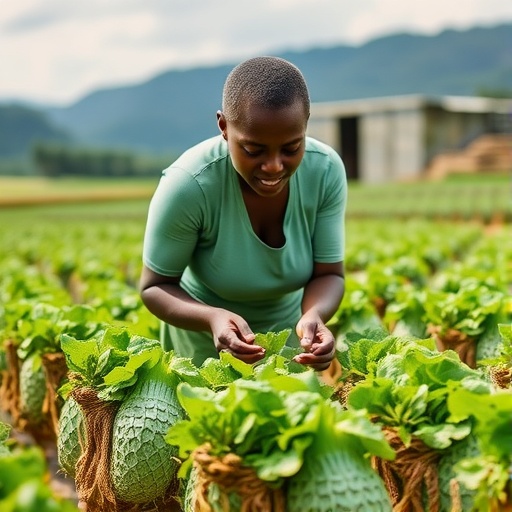
Shifting global food systems toward healthier and more sustainable diets is increasingly urgent. A 2025 EAT–Lancet Commission assessment suggests that widespread adoption of a flexitarian “Planetary Health Diet” could avert roughly 15 million premature adult deaths each year. The stakes are not only public health. Food systems contribute about one third of global anthropogenic greenhouse gas emissions and drive five planetary boundary transgressions. At the same time, around one third of food is lost or wasted, and about half of habitable land is used for agriculture—largely for livestock and animal feed.
To quantify what a transition could mean, researchers applied ten global food system models. They compared a “business-as-usual” pathway through 2050 with a “transformation scenario” defined by three changes: healthier dietary patterns, improved agricultural productivity, and halving food waste. The modeling framework tracked how production, land use, and emissions evolve under different demand and supply assumptions.
In the business-as-usual case, demand shifts lead to more animals, expanded harvested areas, and higher output volumes, increasing environmental pressures. Production dynamics also translate into greater greenhouse gas emissions and higher nitrogen fertilisation across models.
Under the transformation scenario, however, a larger fraction of agricultural output is routed directly to human food, while less is diverted to animal feed. The pathway projects reduced production of meat, dairy, cereal and sugar crops, fewer livestock, and reduced land pressure, along with lower production costs and producer prices in affected sectors.
The findings point to a land-use contraction: global agricultural land use declines by 9% by 2050 relative to business-as-usual. Meanwhile, livestock production value falls sharply—by about 60%—reflecting the reduction in animal numbers and feed demand.
Total agricultural output is estimated to drop by 17%, largely driven by livestock-related changes. These losses are partially offset by growth elsewhere: vegetables, fruits, nuts and legumes show a median increase in economic production value of 23% by mid-century.
The climate implications are substantial. Net CO₂ emissions from agriculture-related land-use change decline by 76% by 2050 under transformation, while direct non-CO₂ greenhouse gas emissions from agricultural production fall by one third compared with business-as-usual.
The authors stress that benefits and burdens will not be evenly distributed. Livestock-oriented rural economies may experience adverse impacts, even as environmental and health gains are more broadly shared. They argue that coherent food and agriculture policies and inclusive stakeholder dialogues will be essential to manage structural challenges.
Ultimately, the scale of the transition implied by the models demands policy ambition “commensurate” with the transformation. Bold decisions now could both protect vulnerable groups and maximise the gains of a reshaped food system.
Cite Scienmag News
Alan Morgan. (July 15, 2026). New Study Quantifies How Healthier, Sustainable Diets Could Reshape Global Agriculture. Scienmag. https://scienmag.com/new-study-quantifies-how-healthier-sustainable-diets-could-reshape-global-agriculture/
Alan Morgan. "New Study Quantifies How Healthier, Sustainable Diets Could Reshape Global Agriculture." Scienmag, 15 July 2026, https://scienmag.com/new-study-quantifies-how-healthier-sustainable-diets-could-reshape-global-agriculture/. Accessed 4 September 2026.
Alan Morgan. "New Study Quantifies How Healthier, Sustainable Diets Could Reshape Global Agriculture." Scienmag. July 15, 2026. https://scienmag.com/new-study-quantifies-how-healthier-sustainable-diets-could-reshape-global-agriculture/


