


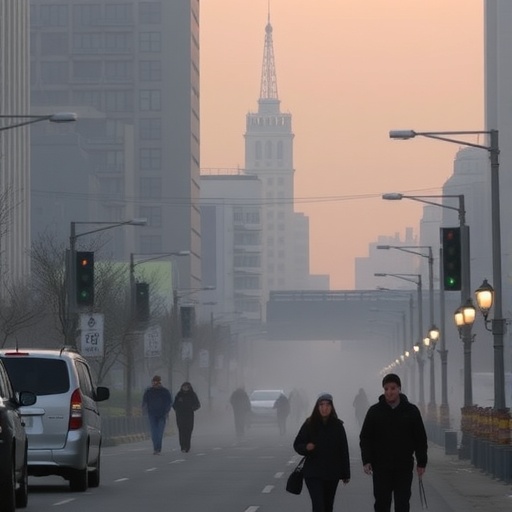
Unregulated ultrafine particles—tiny enough to slip through the body’s normal defenses—may be responsible for millions of premature deaths worldwide, according to a new analysis led by researchers at the Max Planck Institute for Chemistry. Unlike PM2.5, ultrafine particles are not covered by legal air-quality limits in the EU or the US, despite being ubiquitous in urban air.
Their hazard stems from size: ultrafine particles have a very large surface area per unit mass. This physical feature helps them penetrate deep into the lungs, cross into the bloodstream, and—through the nose—reach the brain via the olfactory pathway. As a result, they behave differently from larger particulate matter that is more effectively trapped by respiratory barriers.
To quantify long-term exposure, the study fused satellite observations, land-use data, and measurements from 155 global sites. Machine-learning models produced a high-resolution map (1 km) of ultrafine particle exposure for 2010–2019, estimating annual mean concentrations that often fall in the range of 10,000–30,000 particles per cubic centimetre in cities.
Health impacts were assessed by combining exposure estimates with mortality findings derived from a meta-analysis of major European and North American cohort studies. The researchers estimate 1.99 million premature deaths globally, with a 95% confidence interval spanning 0.81 to 3.89 million.
Mortality is not evenly distributed. In Europe, the mortality density reaches 35.7 (confidence interval: 15.8–65.5) per 100,000 people per year, while North America shows 27.4 (12.9–47.4). Southern and Eastern Europe exhibit particularly high exposure and associated risk.
The team also reports that about 91% of ultrafine particle-related excess deaths occur in urban and suburban areas, with 78% concentrated in densely populated city centers—highlighting the role of everyday emissions rather than background pollution alone.
Mechanistically, the cardiovascular system appears especially vulnerable. The particles can drive systemic oxidative stress, endothelial dysfunction, and atherosclerosis, and they are linked with hypertension, diabetes, heart failure, myocardial infarction, and impaired coronary microcirculation.
Combustion emerges as the dominant source. Black and organic carbon—typical byproducts of combustion—account for most ultrafine particle pollution, with fossil fuels responsible for roughly 75% globally and over 90% in high-income countries. In lower-income settings, domestic wood burning also makes a substantial contribution.
Modeling suggests that setting an annual limit value of 5,000 particles per cubic centimetre could reduce global excess mortality by about 45%. The authors argue for binding limits, routine monitoring, and targeted reductions in emissions from traffic, industry, and energy production to curb a major, previously “blind spot” health risk.
Keywords
- Ultrafine particles
- Air pollution epidemiology
- Cardiovascular risk
- Satellite-based exposure mapping
- Combustion emissions
- Machine learning
Cite Scienmag News
Russell Cooper. (July 14, 2026). Global study links ultrafine air particles to nearly two million premature deaths annually. Scienmag. https://scienmag.com/global-study-links-ultrafine-air-particles-to-nearly-two-million-premature-deaths-annually/
Russell Cooper. "Global study links ultrafine air particles to nearly two million premature deaths annually." Scienmag, 14 July 2026, https://scienmag.com/global-study-links-ultrafine-air-particles-to-nearly-two-million-premature-deaths-annually/. Accessed 3 September 2026.
Russell Cooper. "Global study links ultrafine air particles to nearly two million premature deaths annually." Scienmag. July 14, 2026. https://scienmag.com/global-study-links-ultrafine-air-particles-to-nearly-two-million-premature-deaths-annually/


