

Tuesday, July 14, 2026
Science
No Result
View All Result
  • Login
  • HOME
  • SCIENCE NEWS
  • CONTACT US
  • HOME
  • SCIENCE NEWS
  • CONTACT US
No Result
View All Result
Scienmag
No Result
View All Result
Home Science News Social Science

Detecting Exclusionary Nationalism in Prewar Japan Through Language Analysis

July 14, 2026
in Social Science
Reading Time: 2 mins read
0
Detecting Exclusionary Nationalism in Prewar Japan Through Language Analysis

Detecting Exclusionary Nationalism in Prewar Japan Through Language Analysis

65
SHARES
587
VIEWS
Share on FacebookShare on Twitter
ADVERTISEMENT

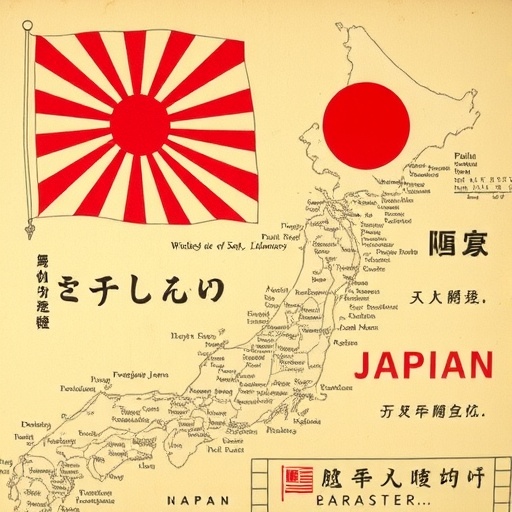
In a groundbreaking study published in PLOS One, researchers from Tokyo University of Science have unveiled a novel linguistic method to track surges in exclusionary nationalism by analyzing prewar Japanese newspapers. This approach sheds light on the complex evolution of nationalist sentiment in Japan between 1912 and 1943, revealing fluctuations rather than a linear rise leading up to World War II.

Exclusionary nationalism, the ideology asserting the superiority of one’s nation while marginalizing others, often manifests in language. The team led by Associate Professor Tomoko Matsumoto scrutinized over 300,000 Japanese newspaper articles to track how foreign place names were represented linguistically. Specifically, they examined the use of katakana, a phonetic script used for foreign words, versus ateji, a kanji-based transliteration method that phonetically adapts foreign names into traditional Chinese characters.

The significance of this research lies in the Japanese writing system’s unique ability to clearly differentiate native from foreign words. This allowed the researchers to use the preference for ateji over katakana as a proxy for rising nationalist resistance to foreign influence. The statistical tool singular spectrum transformation enabled them to monitor monthly shifts in writing styles, with a focus on countries that later became Japan’s allies (Germany and Italy) and enemies (the United States and United Kingdom).

Findings indicate that nationalist attitudes were not simply on an upward trajectory but ebbed and flowed, coinciding with major political developments such as the military coups of 1932 and 1936, withdrawal from the League of Nations in 1933, and Japan’s National Mobilization Law in 1938. Notably, the use of katakana for German and Italian place names remained prevalent, highlighting Japan’s nuanced perception of allies versus enemies well before wartime hostilities commenced.

This study demonstrates how subtle shifts in language usage serve as early indicators of societal divisions and international conflict, offering a powerful tool where traditional public opinion data may be absent. Through quantitative linguistic analysis, it becomes possible to detect the early formation of exclusionary ideologies, providing a potential early warning system for emerging geopolitical tensions.

Moreover, these results emphasize the importance of computational linguistics and political science collaboration in historical and contemporary contexts. As nations grapple with rising nationalism today, tracking language patterns in media and social platforms could help policymakers and researchers anticipate and potentially mitigate conflict.

Professor Matsumoto concludes, “Our methodology quantifies the intangible shifts in nationalism as reflected in everyday language, offering insights into the complex dynamics of friend–enemy distinctions during fraught political times.” This innovative approach opens new avenues for interdisciplinary research into the interplay between language, identity, and conflict worldwide.


Subject of Research: Not applicable
Article Title: Identifying surge of exclusionary nationalism: A case study of prewar Japan
News Publication Date: 8-Jul-2026
References: DOI: 10.1371/journal.pone.0349895
Image Credits: Associate Professor Tomoko Matsumoto, Tokyo University of Science, Japan
Keywords: Political science, computational linguistics, exclusionary nationalism, prewar Japan, language analysis

Tags: evolution of nationalist sentiment in Japanexclusionary nationalism detectionhistorical analysis of Japanese foreign language representationhistorical newspaper content analysisJapan's foreign influence language markersJapanese newspaper linguistic studyJapanese writing system and nationalist rhetoriclanguage analysis in historical newspaperslinguistic indicators of political ideologyPrewar Japanese nationalismsingular spectrum transformation in linguistic researchuse of katakana and ateji in nationalism
Share26Tweet16
Previous Post

Europe advances integrated charging and energy systems for optimal V2G deployment

Next Post

Seasonal Cycle Balances Tropical Rain-Band Asymmetry

Related Posts

China’s Resource Cities Face Divergent Wealth Paths and Policy Challenges
Social Science

China’s Resource Cities Face Divergent Wealth Paths and Policy Challenges

July 14, 2026
Improving Climate Change Education in Egyptian Universities: Challenges and Awareness
Social Science

Improving Climate Change Education in Egyptian Universities: Challenges and Awareness

July 14, 2026
Scientists’ credibility varies with audience and perceived intentions
Social Science

Scientists’ credibility varies with audience and perceived intentions

July 13, 2026
Robot umpires reduce bias against star baseball hitters
Social Science

Robot umpires reduce bias against star baseball hitters

July 13, 2026
Teen autism brains respond less to unfamiliar voices, study shows
Social Science

Teen autism brains respond less to unfamiliar voices, study shows

July 13, 2026
Asian House Shrew Reveals Secret Maritime Trade Network
Social Science

Asian House Shrew Reveals Secret Maritime Trade Network

July 13, 2026
Next Post
Seasonal Cycle Balances Tropical Rain-Band Asymmetry

Seasonal Cycle Balances Tropical Rain-Band Asymmetry

  • Mothers who receive childcare support from maternal grandparents show more

    Mothers who receive childcare support from maternal grandparents show more parental warmth, finds NTU Singapore study

    27656 shares
    Share 11059 Tweet 6912
  • University of Seville Breaks 120-Year-Old Mystery, Revises a Key Einstein Concept

    1061 shares
    Share 424 Tweet 265
  • Bee body mass, pathogens and local climate influence heat tolerance

    682 shares
    Share 273 Tweet 171
  • Researchers record first-ever images and data of a shark experiencing a boat strike

    546 shares
    Share 218 Tweet 137
  • Groundbreaking Clinical Trial Reveals Lubiprostone Enhances Kidney Function

    531 shares
    Share 212 Tweet 133
Science

Embark on a thrilling journey of discovery with Scienmag.com—your ultimate source for cutting-edge breakthroughs. Immerse yourself in a world where curiosity knows no limits and tomorrow’s possibilities become today’s reality!

RECENT NEWS

  • Space launch costs may drop over 90% by 2040, revolutionizing space market
  • New Tick-Borne Viruses Evade Human Immune System Defense Mechanisms
  • China’s water quality improvements impact agricultural productivity negatively
  • Vacuum-Deposited Perovskite Solar Cells Enhanced by Controlled Crystallization

Categories

  • Agriculture
  • Anthropology
  • Archaeology
  • Athmospheric
  • Biology
  • Biotechnology
  • Blog
  • Bussines
  • Cancer
  • Chemistry
  • Climate
  • Earth Science
  • Editorial Policy
  • Marine
  • Mathematics
  • Medicine
  • Pediatry
  • Policy
  • Psychology & Psychiatry
  • Science Education
  • Social Science
  • Space
  • Technology and Engineering

Subscribe to Blog via Email

Enter your email address to subscribe to this blog and receive notifications of new posts by email.

Join 5,146 other subscribers

© 2025 Scienmag - Science Magazine

Welcome Back!

Login to your account below

Forgotten Password?

Retrieve your password

Please enter your username or email address to reset your password.

Log In
No Result
View All Result
  • HOME
  • SCIENCE NEWS
  • CONTACT US

© 2025 Scienmag - Science Magazine

Discover more from Science

Subscribe now to keep reading and get access to the full archive.

Continue reading
