


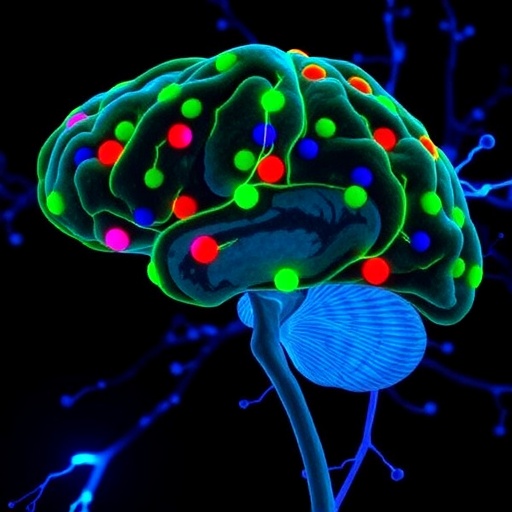
In a groundbreaking study published in Translational Psychiatry, researchers have uncovered the neural mechanisms behind repetitive behaviors linked to a specific genetic mutation. The team led by Liu et al. focused on the Cry1Δ11 mutation, a genetic alteration associated with neurological and psychiatric disorders characterized by compulsive and repetitive actions.
The study zeroes in on the dorsolateral striatum, a brain region critical for motor control and habit formation. Within this region, the researchers identified a significant increase in the activity of dopamine receptor D1-expressing medium spiny neurons (DRD1-MSNs). These neurons play a pivotal role in regulating movement and behavioral flexibility, and their dysregulation is increasingly implicated in neuropsychiatric conditions.
Using advanced electrophysiological techniques, the research team demonstrated that the Cry1Δ11 mutation hyperactivates DRD1-MSNs. This hyperactivation appears to disrupt normal signaling pathways, leading to the emergence of repetitive motor behaviors commonly observed in disorders such as obsessive-compulsive disorder (OCD) and Tourette syndrome. The findings suggest a direct link between genetic mutations affecting circadian rhythm genes—Cry1 is a core component of the circadian clock—and alterations in neural circuits governing behavior.
Intriguingly, the researchers employed in vivo recordings combined with optogenetics to establish the causal role of DRD1-MSN activity in driving these repetitive behaviors. By selectively modulating these neurons’ activity, they were able to reverse the phenotype in animal models, providing a promising therapeutic avenue. This study bridges a crucial gap between genetic mutations and their behavioral manifestations by pinpointing specific neuronal populations responsible for the symptoms.
Moreover, the team’s work sheds light on the interplay between circadian regulation and dopaminergic signaling in the striatum, emphasizing how disruptions in biological rhythms might exacerbate neurological symptoms. Such insights contribute to a more nuanced understanding of the pathophysiology underlying repetitive behaviors and potentially expand treatment strategies beyond dopamine antagonists.
This research underscores the importance of targeting neural circuit dynamics in developing interventions for neuropsychiatric disorders. By dissecting the role of DRD1-MSNs in the context of genetic mutations like Cry1Δ11, the study opens avenues for precision medicine approaches that tailor treatments to individual genetic and neurophysiological profiles.
Moving forward, Liu and colleagues propose further exploration into how other circadian gene mutations influence neural circuitry and behavior. They also advocate for clinical studies to assess whether modulation of striatal pathways could translate into effective therapies for patients with OCD and related conditions.
Ultimately, the study heralds a new era of integrative neuroscience that combines genetics, neurophysiology, and behavior analysis to unravel complex brain disorders, offering hope for improved diagnostics and targeted treatments for compulsive repetitive behaviors.
Cite Scienmag News
Juliet Wilcox. (July 14, 2026). DRD1-MSNs Hyperactivity in Striatum Causes Repetitive Behaviors in Cry1Δ11 Mutation. Scienmag. https://scienmag.com/drd1-msns-hyperactivity-in-striatum-causes-repetitive-behaviors-in-cry1%ce%b411-mutation/
Juliet Wilcox. "DRD1-MSNs Hyperactivity in Striatum Causes Repetitive Behaviors in Cry1Δ11 Mutation." Scienmag, 14 July 2026, https://scienmag.com/drd1-msns-hyperactivity-in-striatum-causes-repetitive-behaviors-in-cry1%ce%b411-mutation/. Accessed 3 September 2026.
Juliet Wilcox. "DRD1-MSNs Hyperactivity in Striatum Causes Repetitive Behaviors in Cry1Δ11 Mutation." Scienmag. July 14, 2026. https://scienmag.com/drd1-msns-hyperactivity-in-striatum-causes-repetitive-behaviors-in-cry1%ce%b411-mutation/


