

Saturday, September 5, 2026
Science
No Result
View All Result
  • Login
  • HOME
  • SCIENCE NEWS
  • CONTACT US
  • HOME
  • SCIENCE NEWS
  • CONTACT US
No Result
View All Result
Scienmag
No Result
View All Result
Home Science News Biology

Early RNA Life May Have Repaired Genomes, Shedding Light on Origins

July 13, 2026
in Biology
Drew Townsend
By Drew Townsend Scienmag Editorial Profile - Cell Biology
Reading Time: 2 mins read
0
Early RNA Life May Have Repaired Genomes, Shedding Light on Origins

Early RNA Life May Have Repaired Genomes, Shedding Light on Origins

65
SHARES
587
VIEWS
Share on FacebookShare on Twitter
ADVERTISEMENT

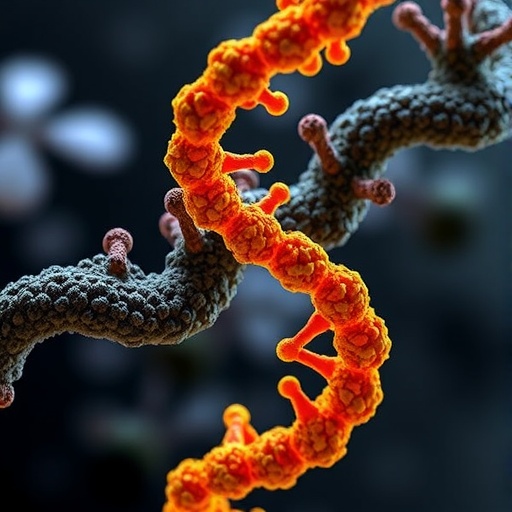
In a groundbreaking study published in Nature Communications, researchers from the University of Notre Dame have engineered a novel ribozyme capable of selectively recognizing and repairing broken RNA strands. This discovery sheds new light on the RNA World hypothesis and offers promising applications in modern biotechnology.

The RNA World hypothesis posits that early life forms relied solely on RNA molecules for both genetic information storage and catalysis, predating the evolution of DNA and proteins. A critical question has long remained: how could fragile RNA genomes have survived damage in primordial environments without protein-based repair systems? The newly identified ribozyme addresses this by distinguishing between intact RNA strands terminating in hydroxyl groups and damaged strands bearing terminal phosphate groups.

Unlike modern DNA repair enzymes, this engineered ribozyme ligase specifically targets RNA molecules with a 3′ terminal phosphate at the break site, effectively “healing” them by catalyzing ligation. This activity suggests that ancient RNA-based life forms could have sustained their genetic information autonomously, without reliance on proteins. Such a mechanism would have been essential to maintaining the integrity of RNA genomes exposed to environmental stressors like heat or alkaline pH, which commonly cause strand cleavage.

The team employed in vitro evolution, an experimental approach simulating natural selection in the lab, to screen trillions of RNA sequences and isolate ribozymes with this unique function. While initially aiming to modify known ribozyme classes, serendipitous results led them to this novel ligase activity. “The existence of this ribozyme has fascinating implications for our understanding of life’s chemical origins,” remarked lead researcher Saurja DasGupta.

Beyond evolutionary insights, this ribozyme could revolutionize RNA analysis in biomedicine. Broken RNA fragments are prevalent in viral infections and certain cancers but are often undetected by current sequencing techniques because these methods fail to attach necessary chemical tags to damaged RNA ends. By selectively binding to terminal phosphate groups, the enzyme can isolate and prepare cleaved RNA strands for sequencing, potentially unveiling novel biomarkers of disease.

Currently, efforts are underway to enhance the enzyme’s efficiency and expand its specificity toward a broader array of RNA substrates. The dual relevance of this ribozyme—from primordial RNA repair to cutting-edge diagnostics—highlights the enduring value of understanding ancient molecular processes through modern biochemical innovation.

This unexpected discovery underscores the power of experimental evolution and the intricate chemistry at the heart of the origin of life. As research continues, the boundary between ancient molecular biology and contemporary biotechnology grows ever more blurred, promising exciting frontiers ahead.


Subject of Research: RNA repair mechanisms and the origins of life
Article Title: A ribozyme ligase that requires a 3′ terminal phosphate on its RNA substrate
News Publication Date: 13-Jul-2026
Web References: http://dx.doi.org/10.1038/s41467-026-74622-8
Image Credits: Photo by Matt Cashore/University of Notre Dame
Keywords: Ribozymes, RNA structure, RNA, Evolutionary biology

Article Title: Early RNA Life May Have Repaired Genomes, Shedding Light on Origins

Article References: Original research article

Image Credits: AI Generated

DOI: Not provided

Keywords: ancient RNA-based life and genome stability, implications for origin of life research, in vitro evolution of functional ribozymes, modern biotechnological applications of RNA repair, primordial environmental stressors impacting RNA integrity, ribozymes and RNA World hypothesis, RNA catalysis and self-healing properties, RNA damage recognition and enzymatic repair, RNA repair mechanisms in early life, RNA strand break repair and ligation, role of phosphate groups in RNA damage and repair

Cite Scienmag News

Drew Townsend. (July 13, 2026). Early RNA Life May Have Repaired Genomes, Shedding Light on Origins. Scienmag. https://scienmag.com/early-rna-life-may-have-repaired-genomes-shedding-light-on-origins/

Drew Townsend. "Early RNA Life May Have Repaired Genomes, Shedding Light on Origins." Scienmag, 13 July 2026, https://scienmag.com/early-rna-life-may-have-repaired-genomes-shedding-light-on-origins/. Accessed 5 September 2026.

Drew Townsend. "Early RNA Life May Have Repaired Genomes, Shedding Light on Origins." Scienmag. July 13, 2026. https://scienmag.com/early-rna-life-may-have-repaired-genomes-shedding-light-on-origins/


Tags: ancient RNA-based life and genome stabilityimplications for origin of life researchin vitro evolution of functional ribozymesmodern biotechnological applications of RNA repairprimordial environmental stressors impacting RNA integrityribozymes and RNA World hypothesisRNA catalysis and self-healing propertiesRNA damage recognition and enzymatic repairRNA repair mechanisms in early lifeRNA strand break repair and ligationrole of phosphate groups in RNA damage and repair
Share26Tweet16
Previous Post

Blocking TMEM141 Reduces MASH and Fibrosis Through ROS-HNF4α Pathway

Next Post

FDA Warning Impacts Probiotics Use in Preterm Infant Gut Disease

Related Posts

Male bumblebees show greater activity and behavioural flexibility than workers
Biology

Male bumblebees show greater activity and behavioural flexibility than workers

September 5, 2026
Organoid co-cultures expose epithelial and fibroblast diversity in pancreatic cancer and pancreatitis
Biology

Organoid co-cultures expose epithelial and fibroblast diversity in pancreatic cancer and pancreatitis

September 5, 2026
Road expansion has quadrupled fragmentation of Siberian intact forests since 2000
Biology

Road expansion has quadrupled fragmentation of Siberian intact forests since 2000

September 5, 2026
Genome-wide study across ancestries reveals genetic roots of Hashimoto’s thyroiditis
Biology

Genome-wide study across ancestries reveals genetic roots of Hashimoto’s thyroiditis

September 5, 2026
Chromatin hub mapping reveals Id proteins drive exhausted CD8+ T cell fate
Biology

Chromatin hub mapping reveals Id proteins drive exhausted CD8+ T cell fate

September 5, 2026
GHT-SELEX reveals strong sequence specificity in human transcription factors
Biology

GHT-SELEX reveals strong sequence specificity in human transcription factors

September 5, 2026
Next Post
FDA Warning Impacts Probiotics Use in Preterm Infant Gut Disease

FDA Warning Impacts Probiotics Use in Preterm Infant Gut Disease

  • Mothers who receive childcare support from maternal grandparents show more optimized

    Mothers who receive childcare support from maternal grandparents show more parental warmth, finds NTU Singapore study

    27656 shares
    Share 11059 Tweet 6912
  • University of Seville Breaks 120-Year-Old Mystery, Revises a Key Einstein Concept

    1061 shares
    Share 424 Tweet 265
  • Bee body mass, pathogens and local climate influence heat tolerance

    682 shares
    Share 273 Tweet 171
  • Researchers record first-ever images and data of a shark experiencing a boat strike

    546 shares
    Share 218 Tweet 137
  • Groundbreaking Clinical Trial Reveals Lubiprostone Enhances Kidney Function

    531 shares
    Share 212 Tweet 133
Science

Embark on a thrilling journey of discovery with Scienmag.com—your ultimate source for cutting-edge breakthroughs. Immerse yourself in a world where curiosity knows no limits and tomorrow’s possibilities become today’s reality!

RECENT NEWS

  • Depression linked to higher heart attack risk in NHANES 2005–2020 analysis
  • Severe mental illness linked to higher skin disease rates in psychiatric hospital study
  • Jaw bone death risk in osteoporosis patients on antiresorptive drugs
  • Rapid method predicts propeller aircraft noise levels in communities

Categories

  • Agriculture
  • Anthropology
  • Archaeology
  • Athmospheric
  • Biology
  • Biotechnology
  • Blog
  • Bussines
  • Cancer
  • Chemistry
  • Climate
  • Earth Science
  • Editorial Policy
  • Marine
  • Mathematics
  • Medicine
  • Pediatry
  • Policy
  • Psychology & Psychiatry
  • Science Education
  • Social Science
  • Space
  • Technology and Engineering

Subscribe to Blog via Email

Enter your email address to subscribe to this blog and receive notifications of new posts by email.

Join 5,151 other subscribers

© 2025 Scienmag - Science Magazine

Welcome Back!

Login to your account below

Forgotten Password?

Retrieve your password

Please enter your username or email address to reset your password.

Log In
No Result
View All Result
  • HOME
  • SCIENCE NEWS
  • CONTACT US

© 2025 Scienmag - Science Magazine

Discover more from Science

Subscribe now to keep reading and get access to the full archive.

Continue reading