


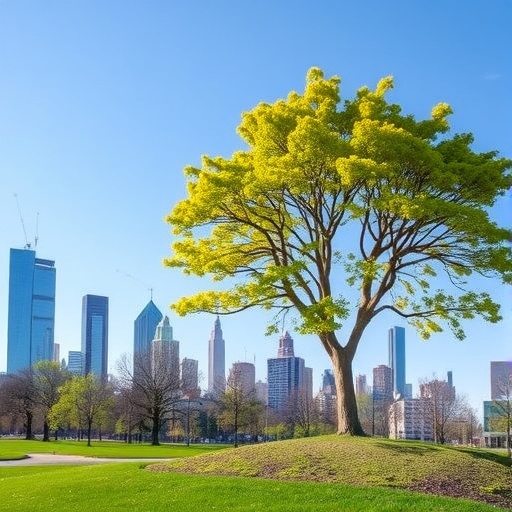
A groundbreaking tool promises to revolutionize urban tree planting strategies by integrating ecological, social, and economic considerations into city planning. Developed through collaboration between researchers and community members across multiple UK cities, this innovative approach aims to maximize the multifaceted benefits of urban trees, from climate mitigation to societal wellbeing.
Urban trees play a crucial role in addressing climate change by sequestering carbon and mitigating urban heat island effects through shading and temperature regulation. However, current planning and investment often prioritize measurable outcomes like carbon storage or aesthetics, neglecting complex human-nature relationships. Recognizing this gap, researchers have designed a novel framework that emphasizes deeper social connections alongside environmental and economic values.
The new interactive platform, Tree Value Visions, employs four distinct conceptual models envisioning urban treescapes as interconnected systems encompassing place identity, resource availability, ecological networks, and community bonds. This multidimensional perspective encourages stakeholders—including policymakers, planners, and residents—to engage in inclusive dialogues that recognize trees as integral components of urban life, shaping experiences and fostering ecosystem resilience.
Field testing in cities such as Cardiff, Milton Keynes, Edinburgh, York, and Camden involved diverse community representatives to ensure the tool’s real-world applicability. By identifying priority interventions that simultaneously meet various policy objectives—ranging from housing and transportation to climate adaptation—Tree Value Visions enhances resource allocation efficiency, crucial for budget-constrained local authorities.
This initiative builds on the Intergovernmental Platform on Biodiversity and Ecosystem Services (IPBES) Values Assessment, advancing its framework to operationalize diverse nature values within urban contexts. Supported by a consortium of universities and environmental institutes, the research underscores the necessity of integrating ecological economics with deliberative methods to capture pluralistic values around urban green infrastructure.
The platform also offers an accessible online training course created in partnership with The Open University, facilitating capacity-building among councils and community groups. This educational component enhances stakeholder understanding of the complex interplay between urban forestry and sustainable development goals.
This paradigm shift represents a critical evolution in urban environmental policy, moving beyond solely quantifiable ecosystem services toward inclusive approaches that respect the cultural and emotional significance of trees. By embedding ecological, social, and economic considerations into planning processes, Tree Value Visions provides a scalable, evidence-based solution to foster resilient and vibrant urban ecosystems worldwide.
Cite Scienmag News
Sloane Callahan. (July 13, 2026). New Tree Planting Strategy Boosts Community Role in Cooling Cities. Scienmag. https://scienmag.com/new-tree-planting-strategy-boosts-community-role-in-cooling-cities/
Sloane Callahan. "New Tree Planting Strategy Boosts Community Role in Cooling Cities." Scienmag, 13 July 2026, https://scienmag.com/new-tree-planting-strategy-boosts-community-role-in-cooling-cities/. Accessed 4 September 2026.
Sloane Callahan. "New Tree Planting Strategy Boosts Community Role in Cooling Cities." Scienmag. July 13, 2026. https://scienmag.com/new-tree-planting-strategy-boosts-community-role-in-cooling-cities/


