

Thursday, August 27, 2026
Science
No Result
View All Result
  • Login
  • HOME
  • SCIENCE NEWS
  • CONTACT US
  • HOME
  • SCIENCE NEWS
  • CONTACT US
No Result
View All Result
Scienmag
No Result
View All Result
Home Science News Science Education

Global Study Reveals Variations in Dementia Risk Factors

July 12, 2026
in Science Education
Reading Time: 2 mins read
0
Global Study Reveals Variations in Dementia Risk Factors

Global Study Reveals Variations in Dementia Risk Factors

65
SHARES
587
VIEWS
Share on FacebookShare on Twitter
ADVERTISEMENT

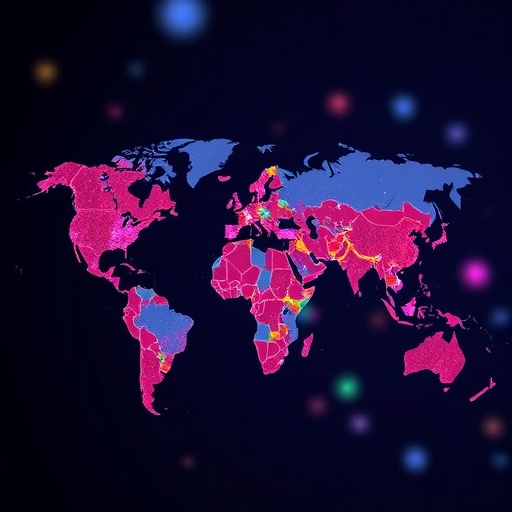
A landmark international study led by researchers at the University of Southern California has unveiled significant variations—and surprising consistencies—in the modifiable risk factors associated with dementia across 14 countries and regions. By analyzing harmonized aging data from more than 214,000 older adults spanning diverse socioeconomic backgrounds, the team challenges the prevailing assumption that dementia prevention strategies can be universally applied.

The study, published in The Lancet Healthy Longevity and presented at the Alzheimer’s Association International Conference 2026 in London, addresses a critical knowledge gap. Previous dementia research has largely focused on high-income Western countries, yet most global dementia cases arise in low- and middle-income regions. This research bridges that divide, revealing stark differences in how common risk factors like educational attainment, body mass index (BMI), and cardiometabolic parameters manifest worldwide.

For instance, low educational attainment affected 85.6% of older adults in China, contrasted with just 12.0% in the United States. Conversely, high BMI was prevalent in 44.9% of Americans but only 13.3% of Indians faced this risk. Such discrepancies underscore the futility of a “one-size-fits-all” dementia prevention blueprint. Importantly, however, the researchers uncovered consistent clustering of risk factors globally, with cardiovascular risks (such as hypertension and elevated cholesterol) and behavioral risks (including smoking and alcohol consumption) frequently co-occurring irrespective of geography.

Emma Nichols, the study’s lead author and a research scientist at USC Schaeffer Institute’s Center for Economic and Social Research, emphasized this pattern’s implications. “The consistent clustering of risk factors suggests interconnected biological and social mechanisms that transcend borders, presenting both challenges and opportunities for targeted interventions,” Nichols said.

Drawing on data from the Gateway to Global Aging Data project, the analysis incorporated 12 modifiable risk factors identified by the Lancet Commission on dementia prevention—including hearing loss, depression, physical inactivity, and social isolation—adjusting for age, sex, and education variables to map prevalence and co-occurrence.

This granular, cross-national perspective highlights the necessity of population-specific strategies. For example, interventions focusing solely on diabetes care could be expanded to address related cardiometabolic conditions simultaneously, enhancing efficacy. Moreover, Nichols points out that dementia risk “is not predetermined,” but modifiable over the life course through both individual actions and societal support.

Future research will likely integrate emerging risk factors, such as poor sleep quality, and expand geographic coverage to include countries like Kenya and Egypt, as new harmonized datasets become available. This evolving global dataset promises to refine our understanding of dementia’s complex etiology and foster more equitable brain health worldwide.

This study serves as a pivotal step towards precision public health in neurodegenerative disease prevention, advocating for tailored, culturally cognizant interventions that recognize the intricate interplay between genetic, environmental, and social determinants of dementia risk.

—

Subject of Research: People
Article Title: Differences in the prevalence and patterns of dementia risk factors: a harmonized cross-national comparison of 14 geographies using data from the Gateway to Global Aging
News Publication Date: 12-Jul-2026
Web References: https://doi.org/10.1016/j.lanhl.2026.100867
References: The Lancet Healthy Longevity (2026)
Keywords: Neurodegenerative diseases, dementia prevention, risk factors, global aging, public health

Article Title: Global Study Reveals Variations in Dementia Risk Factors

Article References: Original research article

Image Credits: AI Generated

DOI: Not provided

Keywords: age-related health disparities in dementia, cross-cultural variations in dementia risk factors, dementia research in low- and middle-income countries, dementia risk factors across countries, global dementia prevention strategies, global health study on aging populations, impact of education on dementia risk, international dementia risk factor disparities, modifiable dementia risk factors worldwide, personalized approaches to dementia prevention, prevalence of BMI and cardiometabolic risks in older adults, socioeconomic influences on dementia risk

Tags: age-related health disparities in dementiacross-cultural variations in dementia risk factorsdementia research in low- and middle-income countriesdementia risk factors across countriesglobal dementia prevention strategiesglobal health study on aging populationsimpact of education on dementia riskinternational dementia risk factor disparitiesmodifiable dementia risk factors worldwidepersonalized approaches to dementia preventionprevalence of BMI and cardiometabolic risks in older adultssocioeconomic influences on dementia risk
Share26Tweet16
Previous Post

YEARS Algorithm Enhances Pulmonary Embolism Diagnosis in Cancer Patients

Next Post

Living Alone and Poverty Heighten Risks for Older Nigerians in Cities

Related Posts

Study Tests Whether Marginal and Conditional Results Remain Stable Across Model Specifications
Science Education

Study Tests Whether Marginal and Conditional Results Remain Stable Across Model Specifications

August 26, 2026
UT San Antonio School of Nursing earns second Center of Excellence designation
Science Education

UT San Antonio School of Nursing earns second Center of Excellence designation

August 25, 2026
Can Higher Early Childhood Education Participation Narrow Primary Students’ SES Reading Gap?
Science Education

Can Higher Early Childhood Education Participation Narrow Primary Students’ SES Reading Gap?

August 25, 2026
Higher intelligence predicts deeper wine knowledge, study finds
Science Education

Higher intelligence predicts deeper wine knowledge, study finds

August 25, 2026
Neural Networks and Regression Mitigate Bias in TIMSS Math and Science Scores
Science Education

Neural Networks and Regression Mitigate Bias in TIMSS Math and Science Scores

August 25, 2026
Study finds AI cannot yet replace traditional language learning
Science Education

Study finds AI cannot yet replace traditional language learning

August 25, 2026
Next Post
Living Alone and Poverty Heighten Risks for Older Nigerians in Cities

Living Alone and Poverty Heighten Risks for Older Nigerians in Cities

  • Mothers who receive childcare support from maternal grandparents show more

    Mothers who receive childcare support from maternal grandparents show more parental warmth, finds NTU Singapore study

    27656 shares
    Share 11059 Tweet 6912
  • University of Seville Breaks 120-Year-Old Mystery, Revises a Key Einstein Concept

    1061 shares
    Share 424 Tweet 265
  • Bee body mass, pathogens and local climate influence heat tolerance

    682 shares
    Share 273 Tweet 171
  • Researchers record first-ever images and data of a shark experiencing a boat strike

    546 shares
    Share 218 Tweet 137
  • Groundbreaking Clinical Trial Reveals Lubiprostone Enhances Kidney Function

    531 shares
    Share 212 Tweet 133
Science

Embark on a thrilling journey of discovery with Scienmag.com—your ultimate source for cutting-edge breakthroughs. Immerse yourself in a world where curiosity knows no limits and tomorrow’s possibilities become today’s reality!

RECENT NEWS

  • Isolated SACSIN HEPN Domain Exhibits RNA-Binding Activity
  • TUDCA restores maturation of aged eggs in vitro by reducing ER stress
  • UIDDA Unifies Model and Classifier Inputs to Predict Drug-Disease Associations
  • Geochemical Constraints Shaping Sediment Microbiomes in Gypsum Caves Revealed

Categories

  • Agriculture
  • Anthropology
  • Archaeology
  • Athmospheric
  • Biology
  • Biotechnology
  • Blog
  • Bussines
  • Cancer
  • Chemistry
  • Climate
  • Earth Science
  • Editorial Policy
  • Marine
  • Mathematics
  • Medicine
  • Pediatry
  • Policy
  • Psychology & Psychiatry
  • Science Education
  • Social Science
  • Space
  • Technology and Engineering

Subscribe to Blog via Email

Enter your email address to subscribe to this blog and receive notifications of new posts by email.

Join 5,150 other subscribers

© 2025 Scienmag - Science Magazine

Welcome Back!

Login to your account below

Forgotten Password?

Retrieve your password

Please enter your username or email address to reset your password.

Log In
No Result
View All Result
  • HOME
  • SCIENCE NEWS
  • CONTACT US

© 2025 Scienmag - Science Magazine

Discover more from Science

Subscribe now to keep reading and get access to the full archive.

Continue reading
