

Saturday, July 11, 2026
Science
No Result
View All Result
  • Login
  • HOME
  • SCIENCE NEWS
  • CONTACT US
  • HOME
  • SCIENCE NEWS
  • CONTACT US
No Result
View All Result
Scienmag
No Result
View All Result
Home Science News Medicine

Glycocholic Acid Accelerates Colitis by Suppressing Intestinal Stem Cells

July 11, 2026
in Medicine
Reading Time: 2 mins read
0
Glycocholic Acid Accelerates Colitis by Suppressing Intestinal Stem Cells

Glycocholic Acid Accelerates Colitis by Suppressing Intestinal Stem Cells

65
SHARES
587
VIEWS
Share on FacebookShare on Twitter
ADVERTISEMENT

A newly identified molecular mechanism reveals how glycocholic acid, a bile acid derivative, accelerates colitis progression by targeting intestinal stem cell renewal—a discovery that could reshape therapeutic approaches for inflammatory bowel diseases.

Colitis, characterized by chronic inflammation of the colon, remains a significant clinical challenge with complex underlying molecular pathways. In groundbreaking research published in Nature Communications, Shang et al. uncover the pivotal role of glycocholic acid in disrupting intestinal homeostasis by inhibiting the TRIB3-ID1 signaling axis, thereby impeding the regenerative capacity of intestinal stem cells.

At the core of this discovery lies the TRIB3-ID1 axis, a regulatory pathway critical for maintaining the renewal and function of intestinal stem cells (ISCs). ISCs are essential for epithelial repair and regeneration following injury or inflammation. The study demonstrates that glycocholic acid exposure reduces TRIB3 expression, which subsequently downregulates ID1, a transcriptional regulator known to promote ISC proliferation.

Mechanistically, TRIB3 functions as a pseudokinase involved in diverse cellular processes, including stress response and apoptosis regulation. By suppressing TRIB3, glycocholic acid indirectly diminishes ID1-driven transcriptional programs essential for sustaining the intestinal stem cell pool. This disruption impairs epithelial renewal, thereby aggravating mucosal damage and promoting colitis progression.

Importantly, the research team employed a combination of in vitro organoid cultures and in vivo murine colitis models to delineate these molecular interactions. In organoids derived from intestinal tissues, glycocholic acid treatment markedly reduced stem cell marker expression and proliferation rates. Similarly, mice subjected to glycocholic acid administration exhibited worsened colitis symptoms alongside decreased ISC numbers, underscoring the translational relevance of these findings.

This study challenges traditional views on bile acids solely as digestive agents by highlighting their nuanced role in modulating inflammation and tissue regeneration. Glycocholic acid’s capacity to interfere with intestinal stem cell dynamics positions it as a potential endogenous mediator of colitis severity, offering a novel angle to understand disease exacerbation.

The clinical implications are profound; targeting the glycocholic acid-TRIB3-ID1 pathway could pave the way for new therapeutic strategies aimed at restoring ISC function and enhancing mucosal healing. Pharmacological modulation to preserve or enhance TRIB3 and ID1 activity might mitigate colitis progression in affected patients.

Further investigations are warranted to explore whether variations in bile acid composition contribute to individual differences in colitis susceptibility and response to treatment. Additionally, understanding the interplay between diet, microbiota, and bile acid metabolism may reveal broader implications for gastrointestinal health.

As inflammatory bowel diseases continue to affect millions worldwide, this study marks a vital step in unraveling the molecular crosstalk that underpins disease pathology, opening doors to innovative, targeted interventions with improved patient outcomes.


Subject of Research: Molecular mechanisms underlying colitis progression, focusing on intestinal stem cell renewal and bile acid signaling pathways.

Article Title: Glycocholic acid inhibits TRIB3-ID1 axis to accelerate colitis progression via suppressing intestinal stem cell renewal.

Article References:

Shang, S., Liu, J., Dai, Sy. et al. Glycocholic acid inhibits TRIB3-ID1 axis to acelerate colitis progression via suppressing intestinal stem cell renewal. Nat Commun (2026). https://doi.org/10.1038/s41467-026-74713-6

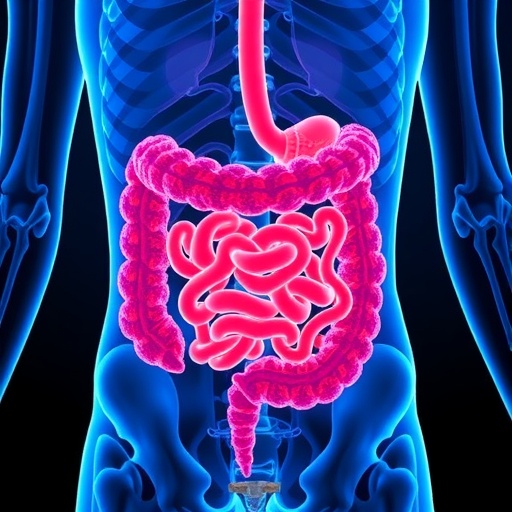
Image Credits: AI Generated

Tags: Bile acid derivatives in inflammatory bowel diseaseBile acid metabolism and inflammatory bowel diseaseDisruption of intestinal homeostasis by bile acidsGlycocholic acid and intestinal stem cell regulationGut mucosal healing and regenerationImpact of bile acids on epithelial repairMechanisms of epithelial injury and repair in colitisMolecular mechanisms of colitis progressionRole of intestinal stem cells in colitisTherapeutic targets for inflammatory bowel diseasesTRIB3-ID1 signaling pathway in gut regeneration
Share26Tweet16
Previous Post

Volcanism Alters Carbon Cycle and Oxygen Levels in Mesoproterozoic Era

Next Post

Brain Connectivity Shifts in OCD After Exposure and Response Therapy

Related Posts

Single-Cell Multi-Omics Reveals Cancer-Associated Fibroblast Programs in Breast Cancer
Medicine

Single-Cell Multi-Omics Reveals Cancer-Associated Fibroblast Programs in Breast Cancer

July 11, 2026
Real-Time Tracking of Pathogen Spread Using Wastewater Analysis
Medicine

Real-Time Tracking of Pathogen Spread Using Wastewater Analysis

July 11, 2026
Long-Term Air Pollution Linked to Increased Chronic Kidney Disease Risk
Medicine

Long-Term Air Pollution Linked to Increased Chronic Kidney Disease Risk

July 11, 2026
Wild Carnivores in Netherlands Reveal West Nile and Usutu Virus Infection
Medicine

Wild Carnivores in Netherlands Reveal West Nile and Usutu Virus Infection

July 11, 2026
Akkermansia massiliensis and FcRL3 Gene Linked to Multiple Sclerosis Protection
Medicine

Akkermansia massiliensis and FcRL3 Gene Linked to Multiple Sclerosis Protection

July 11, 2026
Calcineurin/NFAT Pathway Links Calcium Stress to Neurodegeneration Timing
Medicine

Calcineurin/NFAT Pathway Links Calcium Stress to Neurodegeneration Timing

July 11, 2026
Next Post
Brain Connectivity Shifts in OCD After Exposure and Response Therapy

Brain Connectivity Shifts in OCD After Exposure and Response Therapy

  • Mothers who receive childcare support from maternal grandparents show more

    Mothers who receive childcare support from maternal grandparents show more parental warmth, finds NTU Singapore study

    27656 shares
    Share 11059 Tweet 6912
  • University of Seville Breaks 120-Year-Old Mystery, Revises a Key Einstein Concept

    1061 shares
    Share 424 Tweet 265
  • Bee body mass, pathogens and local climate influence heat tolerance

    682 shares
    Share 273 Tweet 171
  • Researchers record first-ever images and data of a shark experiencing a boat strike

    546 shares
    Share 218 Tweet 137
  • Groundbreaking Clinical Trial Reveals Lubiprostone Enhances Kidney Function

    531 shares
    Share 212 Tweet 133
Science

Embark on a thrilling journey of discovery with Scienmag.com—your ultimate source for cutting-edge breakthroughs. Immerse yourself in a world where curiosity knows no limits and tomorrow’s possibilities become today’s reality!

RECENT NEWS

  • Single-Cell Multi-Omics Reveals Cancer-Associated Fibroblast Programs in Breast Cancer
  • Real-Time Tracking of Pathogen Spread Using Wastewater Analysis
  • Long-Term Air Pollution Linked to Increased Chronic Kidney Disease Risk
  • Brain Connectivity Shifts in OCD After Exposure and Response Therapy

Categories

  • Agriculture
  • Anthropology
  • Archaeology
  • Athmospheric
  • Biology
  • Biotechnology
  • Blog
  • Bussines
  • Cancer
  • Chemistry
  • Climate
  • Earth Science
  • Editorial Policy
  • Marine
  • Mathematics
  • Medicine
  • Pediatry
  • Policy
  • Psychology & Psychiatry
  • Science Education
  • Social Science
  • Space
  • Technology and Engineering

Subscribe to Blog via Email

Enter your email address to subscribe to this blog and receive notifications of new posts by email.

Join 5,146 other subscribers

© 2025 Scienmag - Science Magazine

Welcome Back!

Login to your account below

Forgotten Password?

Retrieve your password

Please enter your username or email address to reset your password.

Log In
No Result
View All Result
  • HOME
  • SCIENCE NEWS
  • CONTACT US

© 2025 Scienmag - Science Magazine

Discover more from Science

Subscribe now to keep reading and get access to the full archive.

Continue reading
