


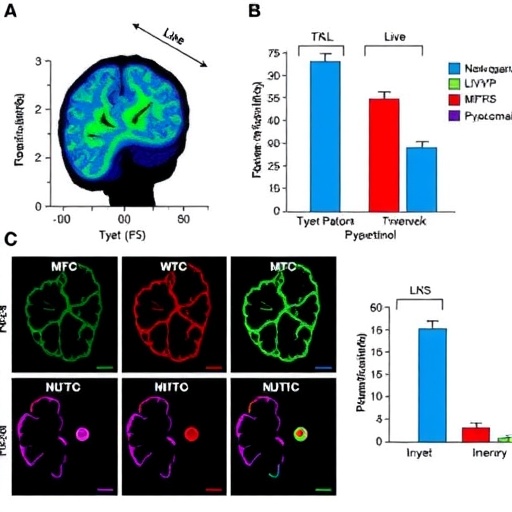
In a groundbreaking new study, researchers have unveiled the neuroprotective and hepatoprotective potential of Pycnogenol against thioacetamide-induced toxicity, opening promising avenues for multi-target therapeutic strategies. Thioacetamide (TAA), a well-known hepatotoxic chemical, has been extensively used to model liver damage and associated neurobehavioral impairments in laboratory settings, providing insights into the underlying molecular disruptions caused by toxic insults.
The study, published in BMC Pharmacology and Toxicology, explores how Pycnogenol, a potent antioxidant derived from French maritime pine bark, mitigates the complex pathophysiology induced by TAA. Through a detailed molecular investigation, the researchers demonstrated that Pycnogenol exerts its protective effects by modulating several cellular signaling pathways simultaneously—addressing oxidative stress, inflammation, and apoptotic mechanisms that collectively drive neurobehavioral and hepatic dysfunction.
Oxidative stress is a primary culprit in TAA toxicity, characterized by excessive reactive oxygen species (ROS) production that damages cellular lipids, proteins, and DNA. Pycnogenol’s rich polyphenolic content enhances endogenous antioxidant defenses by upregulating enzymes like superoxide dismutase (SOD) and catalase, thereby restoring redox balance within affected tissues. This molecular balancing act helps preserve neuronal integrity and ameliorate cognitive impairments seen in the TAA model.
Moreover, neuroinflammation, often triggered by hepatotoxic injury, exacerbates neuronal damage through the release of pro-inflammatory cytokines such as TNF-α and IL-6. The study highlights Pycnogenol’s ability to suppress these inflammatory mediators, likely through the inhibition of nuclear factor kappa B (NF-κB) signaling, a master transcription factor orchestrating inflammatory responses. This dual antioxidant and anti-inflammatory action culminates in marked improvements in behavioral outcomes related to memory, coordination, and locomotor activity.
Hepatic injury manifests through disrupted liver enzymes, lipid peroxidation, and histopathological abnormalities following TAA exposure. Encouragingly, Pycnogenol treatment reversed these detrimental changes, normalizing serum biomarkers like alanine aminotransferase (ALT) and aspartate aminotransferase (AST), and promoting hepatocyte regeneration. This underscores the compound’s potential as a hepatoprotective agent in chemical-induced liver damage.
Importantly, the multi-target molecular modulation observed indicates that Pycnogenol does not rely on a single pathway but engages a network of signaling cascades to exert its therapeutic effects. This polypharmacology approach may be particularly advantageous in treating complex diseases where oxidative stress, inflammation, and apoptosis are intertwined, such as neurodegenerative disorders and chronic liver diseases.
The findings raise the possibility of translating these preclinical results into clinical applications, providing a natural adjunct or alternative to conventional treatments that often carry significant side effects. Future investigations exploring optimal dosages, long-term safety, and efficacy in human subjects will be critical to fully harness Pycnogenol’s therapeutic potential.
As our understanding of the intricate molecular mechanisms governing neurobehavioral and hepatic toxicities deepens, such studies highlight the untapped power of phytochemicals like Pycnogenol in combating multifaceted pathologies. This research paves the way for innovative, multi-mechanistic therapeutic strategies that could transform patient outcomes in toxic liver injury and associated neurological complications.
Cite Scienmag News
Ophelia Keating. (July 11, 2026). Pycnogenol Reduces Neurobehavioral and Liver Damage from Thioacetamide Exposure. Scienmag. https://scienmag.com/pycnogenol-reduces-neurobehavioral-and-liver-damage-from-thioacetamide-exposure/
Ophelia Keating. "Pycnogenol Reduces Neurobehavioral and Liver Damage from Thioacetamide Exposure." Scienmag, 11 July 2026, https://scienmag.com/pycnogenol-reduces-neurobehavioral-and-liver-damage-from-thioacetamide-exposure/. Accessed 4 September 2026.
Ophelia Keating. "Pycnogenol Reduces Neurobehavioral and Liver Damage from Thioacetamide Exposure." Scienmag. July 11, 2026. https://scienmag.com/pycnogenol-reduces-neurobehavioral-and-liver-damage-from-thioacetamide-exposure/


