

Friday, July 10, 2026
Science
No Result
View All Result
  • Login
  • HOME
  • SCIENCE NEWS
  • CONTACT US
  • HOME
  • SCIENCE NEWS
  • CONTACT US
No Result
View All Result
Scienmag
No Result
View All Result
Home Science News Technology and Engineering

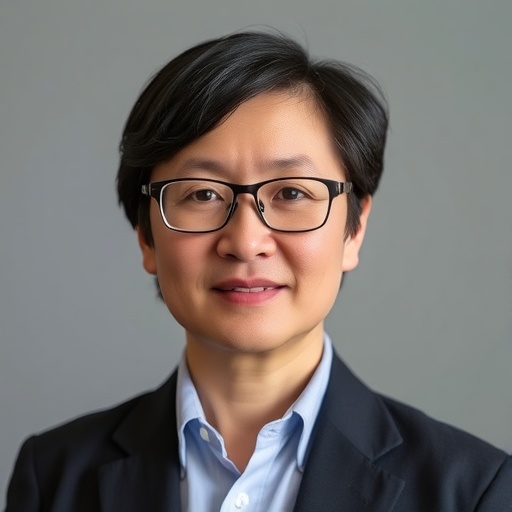
Meet Professor Zhanshan Wang: A Pioneer in Light Studies

July 10, 2026
in Technology and Engineering
Reading Time: 2 mins read
0
Meet Professor Zhanshan Wang: A Pioneer in Light Studies

Meet Professor Zhanshan Wang: A Pioneer in Light Studies

65
SHARES
587
VIEWS
Share on FacebookShare on Twitter
ADVERTISEMENT

In the rapidly evolving landscape of photonics and optical science, Prof. Zhanshan Wang stands out as a visionary whose contributions are shaping the future of light-based technologies. Recently featured in Light: Science & Applications, Wang’s innovative work is expanding the frontiers of how light interacts with matter, promising transformative advancements across multiple disciplines.

Wang’s research primarily emphasizes the manipulation and control of light at the nanoscale—an area that continues to challenge even the most sophisticated optical systems. By tailoring the behavior of photons with unprecedented precision, his team has achieved remarkable feats in photonic device performance. This involves exploiting novel materials and nanofabrication techniques to engineer optical properties that were once considered impossible to realize.

A notable aspect of Wang’s approach is the integration of artificial intelligence to optimize light-matter interactions. This interdisciplinary synergy accelerates the discovery of new photonic structures by analyzing massive datasets and predicting optimal configurations. The fusion of AI with nanophotonics opens pathways to devices that are not only efficient but also adaptive to changing environmental and operational conditions.

One of the groundbreaking outcomes of Wang’s work is the development of ultra-compact optical components with enhanced functionalities. These include high-sensitivity sensors capable of detecting molecular signatures with exceptional accuracy, potentially revolutionizing fields such as environmental monitoring and medical diagnostics. Moreover, his innovations contribute to the advancement of quantum photonics, where controlling single photons is essential for quantum computing and secure communications.

Wang’s insights extend to improving light-based energy conversion systems. By engineering materials that manipulate light absorption and emission at the nanoscale, his research enhances the efficiency of solar cells and light-emitting devices. This progress directly supports the global push towards sustainable energy solutions, leveraging the fundamental interplay between photons and electrons.

The breadth of Wang’s impact is also evident in fundamental physics. His studies have deepened the understanding of light propagation in complex media, shedding light on phenomena like non-linear optics and topological photonics. These advancements not only enrich scientific knowledge but also lay the groundwork for next-generation technologies such as optical isolators and robust photonic circuits.

As the scientific community continues to explore the boundless possibilities of light, Prof. Zhanshan Wang’s leadership offers a beacon guiding transformative innovations. His relentless pursuit of excellence and collaboration across disciplines underscores the dynamic evolution of photonics, inspiring both researchers and industry alike.

The feature on Prof. Zhanshan Wang in Light: Science & Applications marks a significant acknowledgment of his pioneering role. It encapsulates a journey defined by curiosity, ingenuity, and an unwavering commitment to harnessing light’s power to redefine technological horizons.

Subject of Research:
Nanoscale manipulation and control of light, integration of artificial intelligence in photonics, and development of advanced photonic devices.

Article Title:
Light People: Prof. Zhanshan Wang.

Article References:
Huang, Q., Zhang, R. Light People: Prof. Zhanshan Wang. Light Sci Appl 15, 310 (2026). https://doi.org/10.1038/s41377-026-02387-2

Image Credits: AI Generated

DOI:
https://doi.org/10.1038/s41377-026-02387-2

Tags: advanced nanofabrication techniquesAI-optimized photonicsfuture of light-based applicationshigh sensitivity optical sensorsinterdisciplinary optical sciencelight-based technologieslight-matter interactionNanophotonicsnanoscale light manipulationoptical device innovationphotonic materials developmentultra-compact optical components
Share26Tweet16
Previous Post

Distinct Spatiotemporal Patterns in Brain Networks Linked to PTSD

Next Post

Innovative Ligand Design Enhances Nanocluster Catalyst Activity

Related Posts

AI Enhanced with Cerebellum-Like Function for Improved Learning
Technology and Engineering

AI Enhanced with Cerebellum-Like Function for Improved Learning

July 10, 2026
First Human Trial Explores Immune-Engineered Cell Therapy for Type 1 Diabetes
Technology and Engineering

First Human Trial Explores Immune-Engineered Cell Therapy for Type 1 Diabetes

July 10, 2026
Ultrafast Semiconductor Lasers Generate Self-Starting Harmonic Frequency Combs
Technology and Engineering

Ultrafast Semiconductor Lasers Generate Self-Starting Harmonic Frequency Combs

July 10, 2026
Durable CNT@Ag-MXene Sensor Resists Corrosion Under High Strain
Technology and Engineering

Durable CNT@Ag-MXene Sensor Resists Corrosion Under High Strain

July 10, 2026
Regolith-Polymer Composites Enable Structural Components for Space Missions
Technology and Engineering

Regolith-Polymer Composites Enable Structural Components for Space Missions

July 10, 2026
PolyU creates smart traffic signal system funded by Smart Traffic Fund
Technology and Engineering

PolyU creates smart traffic signal system funded by Smart Traffic Fund

July 10, 2026
Next Post
Innovative Ligand Design Enhances Nanocluster Catalyst Activity

Innovative Ligand Design Enhances Nanocluster Catalyst Activity

  • Mothers who receive childcare support from maternal grandparents show more

    Mothers who receive childcare support from maternal grandparents show more parental warmth, finds NTU Singapore study

    27656 shares
    Share 11059 Tweet 6912
  • University of Seville Breaks 120-Year-Old Mystery, Revises a Key Einstein Concept

    1061 shares
    Share 424 Tweet 265
  • Bee body mass, pathogens and local climate influence heat tolerance

    682 shares
    Share 273 Tweet 171
  • Researchers record first-ever images and data of a shark experiencing a boat strike

    546 shares
    Share 218 Tweet 137
  • Groundbreaking Clinical Trial Reveals Lubiprostone Enhances Kidney Function

    531 shares
    Share 212 Tweet 133
Science

Embark on a thrilling journey of discovery with Scienmag.com—your ultimate source for cutting-edge breakthroughs. Immerse yourself in a world where curiosity knows no limits and tomorrow’s possibilities become today’s reality!

RECENT NEWS

  • Hassen Elected Fellow of American Society for Nondestructive Testing
  • Dirk Leuffen Named Incoming Rector of University of Konstanz
  • Bacteriophages Enable Next-Gen Smart Pathogen Detection Sensors
  • Polyvinyl chloride boosts liver cancer radioresistance by blocking CD8⁺ T cells

Categories

  • Agriculture
  • Anthropology
  • Archaeology
  • Athmospheric
  • Biology
  • Biotechnology
  • Blog
  • Bussines
  • Cancer
  • Chemistry
  • Climate
  • Earth Science
  • Editorial Policy
  • Marine
  • Mathematics
  • Medicine
  • Pediatry
  • Policy
  • Psychology & Psychiatry
  • Science Education
  • Social Science
  • Space
  • Technology and Engineering

Subscribe to Blog via Email

Enter your email address to subscribe to this blog and receive notifications of new posts by email.

Join 5,146 other subscribers

© 2025 Scienmag - Science Magazine

Welcome Back!

Login to your account below

Forgotten Password?

Retrieve your password

Please enter your username or email address to reset your password.

Log In
No Result
View All Result
  • HOME
  • SCIENCE NEWS
  • CONTACT US

© 2025 Scienmag - Science Magazine

Discover more from Science

Subscribe now to keep reading and get access to the full archive.

Continue reading
