

Friday, July 10, 2026
Science
No Result
View All Result
  • Login
  • HOME
  • SCIENCE NEWS
  • CONTACT US
  • HOME
  • SCIENCE NEWS
  • CONTACT US
No Result
View All Result
Scienmag
No Result
View All Result
Home Science News Medicine

Efficient In Vivo Cytosine Base Editing via Virus-Like Particles and Uracil DNA Glycosylase Inhibition

July 10, 2026
in Medicine
Reading Time: 3 mins read
0
Efficient In Vivo Cytosine Base Editing via Virus-Like Particles and Uracil DNA Glycosylase Inhibition

Efficient In Vivo Cytosine Base Editing via Virus-Like Particles and Uracil DNA Glycosylase Inhibition

65
SHARES
587
VIEWS
Share on FacebookShare on Twitter
ADVERTISEMENT

Advancements in Virus-Like Particle-Mediated Cytosine Base Editing Show Promising In Vivo Efficacy

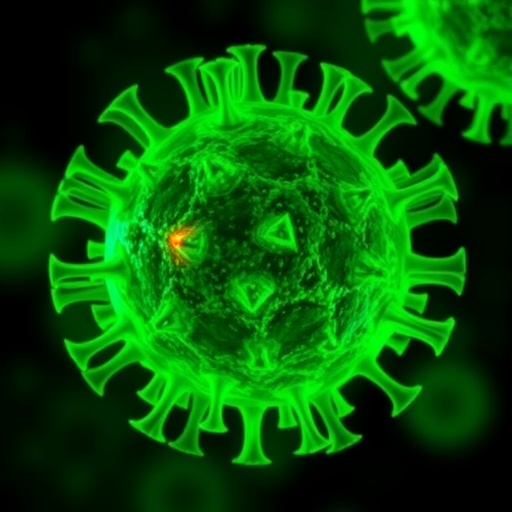
Virus-like particles (VLPs) have long been heralded as a promising vehicle for delivering genome editors with high precision. However, their application for cytosine base editing (CBE) in living organisms has faced significant obstacles, primarily due to low editing efficiencies. Recent research now unveils a critical bottleneck in this process—insufficient inhibition of uracil DNA glycosylases (UDGs)—which degrade edited sites and limit the durability of CBE efficiency.

A team led by Zhu et al. addressed this challenge by engineering a novel cytosine base editor termed transformer base editor (tBE), which was optimized to robustly inhibit UDG activity within cells. This improved mechanism safeguards the uracil intermediates generated during C-to-T conversion, thus enhancing editing persistence and effectiveness. The tBE was subsequently packaged into VLPs to facilitate precise in vivo delivery.

In their rigorous animal models, tBE-VLPs demonstrated remarkable editing efficiencies. A single systemic injection in mice led to average editing rates of 46.0% at the mouse Pcsk9 locus and 64.2% at the Hpd locus within the liver. Furthermore, targeted delivery to the retinal pigment epithelium achieved an average 24.2% editing at the Vegfa gene, underscoring the platform’s versatility across diverse tissue types.

These editing rates translated to meaningful therapeutic outcomes in mouse disease models. Pcsk9 editing is known to reduce cholesterol levels, while Hpd editing can alleviate symptoms of hereditary tyrosinemia. Vegfa editing in the eye is associated with modulating vascular growth, relevant to diseases such as age-related macular degeneration. The study confirmed that tBE-VLP treatment produced beneficial physiological effects aligned with gene correction.

A key advantage of this approach is its superior specificity. Off-target editing events were undetectable both in vitro and in vivo, addressing a major concern associated with base editor delivery methods. Comparison with adeno-associated virus (AAV) vectors and lipid nanoparticle (LNP) mRNA delivery highlighted the enhanced precision of tBE-VLPs, underscoring their safety profile for potential translational applications.

Mechanistically, the enhancement comes from the improved recruitment of uracil DNA glycosylase inhibitor proteins within the tBE editing complex. By preventing excision of uracil bases, the tBE maintains base conversions until DNA replication or repair solidifies the desired C-to-T substitutions. This insight into enzymatic inhibition marks a critical step forward for base editing technology.

Beyond demonstrating robust editing in challenging tissues like the retina and liver, the study’s findings open avenues for broadening the therapeutic landscape of base editing. The modularity of VLPs combined with the refined inhibitor design promises scalable, transient, and safe genome editing interventions without viral genome integration risks.

Zhu and colleagues’ work represents a milestone in genome engineering, establishing transformer base editor VLPs as an efficient and accurate in vivo cytosine base editing system. As the field advances, this platform may catalyze novel treatments for genetic diseases with precision previously unachievable using traditional delivery methods.

With exciting potential for human therapeutic development, tBE-VLPs stand poised to revolutionize the future of gene editing by marrying efficacy, specificity, and safety in a virus-inspired delivery system.


Subject of Research: In vivo cytosine base editing with virus-like particles and uracil DNA glycosylase inhibition

Article Title: Efficient in vivo cytosine base editing using virus-like particles with uracil DNA glycosylase inhibition

Article References:
Zhu, J., Ding, L., Liu, KM. et al. Efficient in vivo cytosine base editing using virus-like particles with uracil DNA glycosylase inhibition. Nat Biotechnol (2026). https://doi.org/10.1038/s41587-026-03227-9

Image Credits: AI Generated

DOI: https://doi.org/10.1038/s41587-026-03227-9

Tags: gene editing for disease treatmenthigh-efficiency base editing in animal modelsin vivo genome editingliver-specific gene editingoptimization of base editors for in vivo useretinal pigment epithelium genome modificationsystemic delivery of genome editorstissue-specific delivery of cytosine base editorstransformer base editor developmenturacil DNA glycosylase inhibitionVirus-like particle-mediated cytosine base editingVLP-based gene therapy
Share26Tweet16
Previous Post

Indian Slab Underthrusting Drives Exhumation Differences in Tibet Regions

Next Post

EU Tariffs on Chinese EVs Affect Prices Across Europe

Related Posts

Measles Vaccine Usage Trends in Children Aged 12-47 Months, 2015-2025
Medicine

Measles Vaccine Usage Trends in Children Aged 12-47 Months, 2015-2025

July 10, 2026
Exercise-Induced Microbial Metabolites Protect Against Muscle Loss in Female Mice
Medicine

Exercise-Induced Microbial Metabolites Protect Against Muscle Loss in Female Mice

July 10, 2026
Supine Hypertension Identified in Parkinson’s Neurogenic Orthostatic Hypotension Patients
Medicine

Supine Hypertension Identified in Parkinson’s Neurogenic Orthostatic Hypotension Patients

July 10, 2026
Insilico Medicine to Present Longevity and AI Drug Innovations at BIO Asia-Taiwan 2026
Medicine

Insilico Medicine to Present Longevity and AI Drug Innovations at BIO Asia-Taiwan 2026

July 10, 2026
Brain Circuit Between Dentate Gyrus and Cortex Controls Bone Healing in Mice
Medicine

Brain Circuit Between Dentate Gyrus and Cortex Controls Bone Healing in Mice

July 10, 2026
Newborns Missing Vitamin K Shots Linked to Bleeding Risks and Predictors
Medicine

Newborns Missing Vitamin K Shots Linked to Bleeding Risks and Predictors

July 10, 2026
Next Post
EU Tariffs on Chinese EVs Affect Prices Across Europe

EU Tariffs on Chinese EVs Affect Prices Across Europe

  • Mothers who receive childcare support from maternal grandparents show more

    Mothers who receive childcare support from maternal grandparents show more parental warmth, finds NTU Singapore study

    27656 shares
    Share 11059 Tweet 6912
  • University of Seville Breaks 120-Year-Old Mystery, Revises a Key Einstein Concept

    1061 shares
    Share 424 Tweet 265
  • Bee body mass, pathogens and local climate influence heat tolerance

    682 shares
    Share 273 Tweet 171
  • Researchers record first-ever images and data of a shark experiencing a boat strike

    546 shares
    Share 218 Tweet 137
  • Groundbreaking Clinical Trial Reveals Lubiprostone Enhances Kidney Function

    531 shares
    Share 212 Tweet 133
Science

Embark on a thrilling journey of discovery with Scienmag.com—your ultimate source for cutting-edge breakthroughs. Immerse yourself in a world where curiosity knows no limits and tomorrow’s possibilities become today’s reality!

RECENT NEWS

  • PolyU creates smart traffic signal system funded by Smart Traffic Fund
  • Machine Learning Speeds Radiopharmaceutical Discovery and Personalizes Dosimetry
  • Scientists create new method to control quantum states in 2D materials
  • Measles Vaccine Usage Trends in Children Aged 12-47 Months, 2015-2025

Categories

  • Agriculture
  • Anthropology
  • Archaeology
  • Athmospheric
  • Biology
  • Biotechnology
  • Blog
  • Bussines
  • Cancer
  • Chemistry
  • Climate
  • Earth Science
  • Editorial Policy
  • Marine
  • Mathematics
  • Medicine
  • Pediatry
  • Policy
  • Psychology & Psychiatry
  • Science Education
  • Social Science
  • Space
  • Technology and Engineering

Subscribe to Blog via Email

Enter your email address to subscribe to this blog and receive notifications of new posts by email.

Join 5,146 other subscribers

© 2025 Scienmag - Science Magazine

Welcome Back!

Login to your account below

Forgotten Password?

Retrieve your password

Please enter your username or email address to reset your password.

Log In
No Result
View All Result
  • HOME
  • SCIENCE NEWS
  • CONTACT US

© 2025 Scienmag - Science Magazine

Discover more from Science

Subscribe now to keep reading and get access to the full archive.

Continue reading
