

Friday, July 10, 2026
Science
No Result
View All Result
  • Login
  • HOME
  • SCIENCE NEWS
  • CONTACT US
  • HOME
  • SCIENCE NEWS
  • CONTACT US
No Result
View All Result
Scienmag
No Result
View All Result
Home Science News Biology

New Therapy Accelerates Bone Marrow Recovery by Targeting Microenvironment

July 10, 2026
in Biology
Reading Time: 2 mins read
0
New Therapy Accelerates Bone Marrow Recovery by Targeting Microenvironment

New Therapy Accelerates Bone Marrow Recovery by Targeting Microenvironment

65
SHARES
587
VIEWS
Share on FacebookShare on Twitter
ADVERTISEMENT

Activating YAP/TAZ Unleashes Bone Marrow’s Healing Power After Radiation

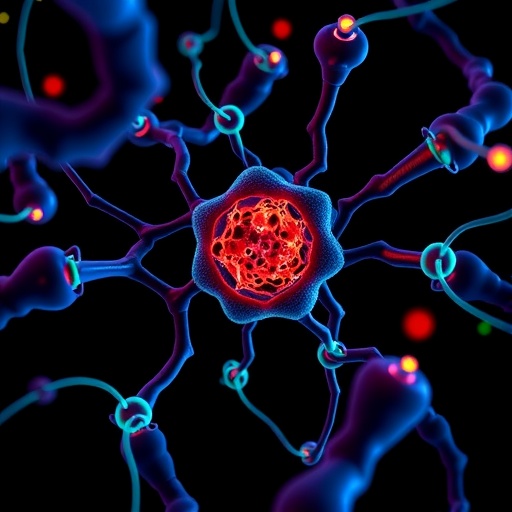
A groundbreaking study uncovers the pivotal role of transcription factors YAP and TAZ in orchestrating bone marrow (BM) regeneration following myeloablative therapies like radiation and chemotherapy. These treatments, while targeting cancerous cells, inadvertently damage hematopoietic stem cells (HSCs) and their supportive niche, often leading to dangerous myelosuppression. Researchers now reveal that pharmacological activation of YAP/TAZ can enhance regeneration of mesenchymal stromal cells (MSCs) and endothelial cells (ECs), key components of the BM niche, accelerating hematopoietic recovery.

Led by Professor Atsushi Iwama of The University of Tokyo, alongside collaborators from St. Jude Children’s Research Hospital and Nissan Chemical Corporation, the multi-institutional team employed genetically engineered mouse models to dissect YAP/TAZ’s role across BM niche cell types. Their findings, published in Blood (June 22, 2026), demonstrate that YAP/TAZ in MSCs is indispensable for maintaining HSC retention under normal conditions. Mice lacking YAP/TAZ specifically in MSCs exhibited a marked decrease in BM HSC numbers with increased stem cell egress into circulation.

Importantly, YAP/TAZ loss in MSCs impeded hematopoietic recovery after radiation injury, revealing its critical role in regenerative hematopoiesis. Concurrently, YAP/TAZ depletion in ECs caused abnormal dilation of BM blood vessels post-injury, underscoring their cooperative function in niche remodeling. Mechanistically, YAP/TAZ govern transcription factors such as Ebf1 and Ebf3 in MSCs, preserving their identity and enabling secretion of essential hematopoietic and angiogenic factors, including Cxcl12.

Capitalizing on this insight, the team identified GA-003, a small molecule inhibitor of LATS1/2 kinases, which activates YAP/TAZ signaling pharmacologically. Administering GA-003 to irradiated mice significantly enhanced BM niche restoration and hastened hematopoietic regeneration. Furthermore, GA-003 improved outcomes after HSC transplantation and synergized with granulocyte colony-stimulating factor (G-CSF), a standard neutropenia treatment, to boost white blood cell recovery.

This discovery paves the way for a novel therapeutic paradigm that targets the BM microenvironment rather than hematopoietic cells directly. Given the complexity of the niche and its influence on multi-lineage blood cell regeneration, enhancing YAP/TAZ activity offers a potent strategy to overcome current limitations in post-therapy hematopoietic recovery.

Prof. Iwama remarks, “Our study highlights the microenvironment’s central role in regeneration and provides a blueprint for developing niche-targeted therapies. This could revolutionize management of hematopoietic complications associated with chemotherapy, radiotherapy, and stem cell transplantation.”

Beyond hematology, these findings open new avenues in regenerative medicine by emphasizing the crosstalk between tissue niches and stem cell function. Pharmacological activation of YAP/TAZ might inspire therapeutic innovations in various organs, heralding a new era where manipulating the tissue microenvironment accelerates recovery after injury or disease.


Subject of Research: Animals
Article Title: Niche-targeted therapy via YAP/TAZ activation enhances hematopoietic regeneration
News Publication Date: June 2026
References: Uemura et al., Blood, 2026, DOI: 10.1182/blood.2025030831
Image Credits: Prof. Atsushi Iwama, The University of Tokyo; Dr. Taito Nishino, Nissan Chemical Corporation
Keywords: YAP, TAZ, bone marrow niche, hematopoietic stem cells, mesenchymal stromal cells, endothelial cells, hematopoietic regeneration, myelosuppression, GA-003, LATS1/2 kinase inhibitor, hematopoiesis, myeloablative therapy

Tags: bone marrow microenvironment regenerationbone marrow microenvironment repair mechanismsbone marrow niche cell regeneration after radiationendothelial cells contribution to bone marrow regenerationmesenchymal stromal cells role in bone marrow healingmouse models of bone marrow regenerationpharmacological activation of YAP/TAZ for myelosuppression recoverytargeted therapies for myelosuppressiontranscription factors YAP and TAZ in hematopoietic stem cell retentionYAP TAZ signaling in hematopoietic recovery
Share26Tweet16
Previous Post

Simplified Parameter Tuning Boosts Echo State Network Predictions

Next Post

Machine Learning Enhances Biosensor Accuracy for Freshwater Microcystin Monitoring

Related Posts

Study Challenges Rising Global Trade in Critically Endangered Sand Tiger Sharks
Biology

Study Challenges Rising Global Trade in Critically Endangered Sand Tiger Sharks

July 10, 2026
Drosophila as a Key Genetic Model for Studying Extracellular Vesicles
Biology

Drosophila as a Key Genetic Model for Studying Extracellular Vesicles

July 10, 2026
BU receives $4.6M grant to advance lung science research training
Biology

BU receives $4.6M grant to advance lung science research training

July 10, 2026
Unmedicated Depressed Women Show Reduced Heat Tolerance Compared to SSRI Users
Biology

Unmedicated Depressed Women Show Reduced Heat Tolerance Compared to SSRI Users

July 9, 2026
Balancing Pollinator Protection and Climate Change Efforts
Biology

Balancing Pollinator Protection and Climate Change Efforts

July 9, 2026
Genetic Adaptations Enable Survival of Earth’s Highest-Dwelling Mammal
Biology

Genetic Adaptations Enable Survival of Earth’s Highest-Dwelling Mammal

July 9, 2026
Next Post
Machine Learning Enhances Biosensor Accuracy for Freshwater Microcystin Monitoring

Machine Learning Enhances Biosensor Accuracy for Freshwater Microcystin Monitoring

  • Mothers who receive childcare support from maternal grandparents show more

    Mothers who receive childcare support from maternal grandparents show more parental warmth, finds NTU Singapore study

    27656 shares
    Share 11059 Tweet 6912
  • University of Seville Breaks 120-Year-Old Mystery, Revises a Key Einstein Concept

    1061 shares
    Share 424 Tweet 265
  • Bee body mass, pathogens and local climate influence heat tolerance

    682 shares
    Share 273 Tweet 171
  • Researchers record first-ever images and data of a shark experiencing a boat strike

    546 shares
    Share 218 Tweet 137
  • Groundbreaking Clinical Trial Reveals Lubiprostone Enhances Kidney Function

    531 shares
    Share 212 Tweet 133
Science

Embark on a thrilling journey of discovery with Scienmag.com—your ultimate source for cutting-edge breakthroughs. Immerse yourself in a world where curiosity knows no limits and tomorrow’s possibilities become today’s reality!

RECENT NEWS

  • Inappropriate Prescribing Linked to Drug Interactions in Elderly Patients
  • Enhancing Neural Network Quantum Monte Carlo Using Local Pseudopotentials
  • Soil Microbes’ Heterotrophic Respiration in a Changing Climate
  • Integrated policies may boost China’s soybean self-sufficiency and reduce land strain

Categories

  • Agriculture
  • Anthropology
  • Archaeology
  • Athmospheric
  • Biology
  • Biotechnology
  • Blog
  • Bussines
  • Cancer
  • Chemistry
  • Climate
  • Earth Science
  • Editorial Policy
  • Marine
  • Mathematics
  • Medicine
  • Pediatry
  • Policy
  • Psychology & Psychiatry
  • Science Education
  • Social Science
  • Space
  • Technology and Engineering

Subscribe to Blog via Email

Enter your email address to subscribe to this blog and receive notifications of new posts by email.

Join 5,146 other subscribers

© 2025 Scienmag - Science Magazine

Welcome Back!

Login to your account below

Forgotten Password?

Retrieve your password

Please enter your username or email address to reset your password.

Log In
No Result
View All Result
  • HOME
  • SCIENCE NEWS
  • CONTACT US

© 2025 Scienmag - Science Magazine

Discover more from Science

Subscribe now to keep reading and get access to the full archive.

Continue reading
