

Thursday, July 9, 2026
Science
No Result
View All Result
  • Login
  • HOME
  • SCIENCE NEWS
  • CONTACT US
  • HOME
  • SCIENCE NEWS
  • CONTACT US
No Result
View All Result
Scienmag
No Result
View All Result
Home Science News Medicine

Low Physical Activity Raises Fall Risk in Older Adults at High Altitudes

July 9, 2026
in Medicine
Reading Time: 2 mins read
0
Low Physical Activity Raises Fall Risk in Older Adults at High Altitudes

Low Physical Activity Raises Fall Risk in Older Adults at High Altitudes

65
SHARES
587
VIEWS
Share on FacebookShare on Twitter
ADVERTISEMENT

A new study raises critical concerns about the relationship between physical activity levels and the risk of falls in elderly populations living at high altitudes. Conducted in a remote district of Peru, researchers have unveiled data that highlight how reduced physical activity dramatically escalates the incidence of falls, a leading cause of injury and morbidity in aging individuals. This analysis stems from the secondary evaluation of data collected in the Aunqui-Andes study, a project dedicated to understanding the health dynamics of older adults in challenging environmental conditions.

Falls represent one of the most pressing public health issues for seniors worldwide, often resulting in fractures, prolonged hospitalizations, and increased mortality. The physiological and environmental challenges posed by high-altitude living—such as decreased oxygen saturation and rugged terrain—compound these risks, creating a complex landscape for geriatric care. This recent investigation meticulously quantifies the extent to which inactivity exacerbates vulnerability in this unique demographic.

The methodology involved an intricate statistical approach to secondary data, focusing on physical activity levels measured through validated questionnaires and health assessments tailored to the Andean context. Researchers correlated these levels with documented fall incidents, adjusting for confounding factors including age, gender, comorbidities, and altitude-related physiological stress. The nuanced analysis reveals that sedentary lifestyles undermine muscle strength, balance, and cardiovascular efficiency, pivotal elements in fall prevention.

Interestingly, the study highlights the interaction between environmental stressors at high altitude and decreased physical conditioning. Hypoxia-induced fatigue and impaired neuromuscular coordination, common in elevated terrains, were found to synergize negatively with inactivity. This convergence elucidates why older adults residing in such regions encounter disproportionately higher fall rates compared to lowland counterparts.

The implications of these findings are profound in the context of global aging. As populations are rapidly aging even in geographically isolated regions, understanding how environmental and behavioral factors interplay is paramount. Health interventions tailored to promote safe physical activity could markedly reduce injury rates, enhancing not only longevity but also quality of life for high-altitude elderly communities.

Policy makers and healthcare providers are urged to integrate altitude-sensitive fitness programs and fall-prevention strategies into their frameworks. These programs should consider the balance between encouraging activity to maintain functional capacity and accommodating limitations imposed by hypoxia and terrain. The creation of community-based initiatives that foster social engagement and education on safe exercise could further underpin these efforts.

Future research directions include prospective studies incorporating wearable technology for real-time monitoring of activity and fall risk, as well as the development of altitude-adapted rehabilitation protocols. The fine-tuning of such interventions holds promise for transforming geriatric care paradigms in mountain regions globally.

This investigation stands as a pivotal contribution to gerontology, unveiling the nuanced interplay between physical inactivity and frailty in one of the world’s most challenging environments. It underscores a vital message: sustaining movement is not merely beneficial but essential for safeguarding the elderly against debilitating falls, particularly at high altitudes where every step carries heightened risk.


Subject of Research: Physical activity levels and fall risk among older adults in a high-altitude district of Peru.

Article Title: Low physical activity and risk of falls among older adults in a high-altitude district of Peru: a secondary analysis of the Aunqui-Andes study.

Article References:
Huaracayo-Campos, J.A., Rojas-Astorayme, C., Rojas-Carranza, V.Y. et al. Low physical activity and risk of falls among older adults in a high-altitude district of Peru: a secondary analysis of the Aunqui-Andes study. BMC Geriatr (2026). https://doi.org/10.1186/s12877-026-07909-6

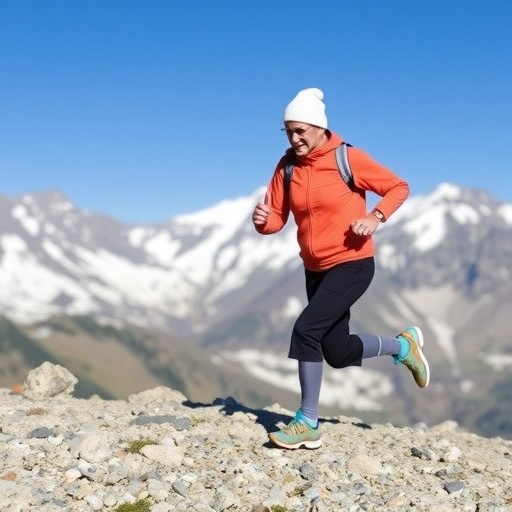
Image Credits: AI Generated

Tags: Andean population health studyelderly fall risk at high altitudesenvironmental factors affecting older adultsgeriatric fall prevention strategieshigh-altitude living health challengesimpact of altitude on elderly healthoxygen saturation and fall susceptibilityphysical activity and agingphysical inactivity and injury risk in seniorspublic health implications of high-altitude agingremote district elderly health assessmentstatistical analysis of fall risk factors
Share26Tweet16
Previous Post

Honey’s Anti-Aging Effects Revealed in Human Skin Cells Study

Next Post

Phylo-Plex Enables Low-Cost, High-Resolution Genomic Epidemiology Deployment

Related Posts

Epitope Editing Enables Safe Transplantation and In Vivo Cell Selection
Medicine

Epitope Editing Enables Safe Transplantation and In Vivo Cell Selection

July 9, 2026
Study shows lung tumors hijack nervous system to starve body
Medicine

Study shows lung tumors hijack nervous system to starve body

July 9, 2026
Former ONTPD Chairs Reflect on Two-Year Fellowship Proposal
Medicine

Former ONTPD Chairs Reflect on Two-Year Fellowship Proposal

July 9, 2026
Diet and Microbiome Influence Immunotherapy Success in Obesity
Medicine

Diet and Microbiome Influence Immunotherapy Success in Obesity

July 9, 2026
Phylo-Plex Enables Low-Cost, High-Resolution Genomic Epidemiology Deployment
Medicine

Phylo-Plex Enables Low-Cost, High-Resolution Genomic Epidemiology Deployment

July 9, 2026
Epigenetic Variation Shapes Chromatin in Acute Myeloid Leukemia
Medicine

Epigenetic Variation Shapes Chromatin in Acute Myeloid Leukemia

July 9, 2026
Next Post
Phylo-Plex Enables Low-Cost, High-Resolution Genomic Epidemiology Deployment

Phylo-Plex Enables Low-Cost, High-Resolution Genomic Epidemiology Deployment

  • Mothers who receive childcare support from maternal grandparents show more

    Mothers who receive childcare support from maternal grandparents show more parental warmth, finds NTU Singapore study

    27656 shares
    Share 11059 Tweet 6912
  • University of Seville Breaks 120-Year-Old Mystery, Revises a Key Einstein Concept

    1061 shares
    Share 424 Tweet 265
  • Bee body mass, pathogens and local climate influence heat tolerance

    682 shares
    Share 273 Tweet 171
  • Researchers record first-ever images and data of a shark experiencing a boat strike

    546 shares
    Share 218 Tweet 137
  • Groundbreaking Clinical Trial Reveals Lubiprostone Enhances Kidney Function

    531 shares
    Share 212 Tweet 133
Science

Embark on a thrilling journey of discovery with Scienmag.com—your ultimate source for cutting-edge breakthroughs. Immerse yourself in a world where curiosity knows no limits and tomorrow’s possibilities become today’s reality!

RECENT NEWS

  • Epitope Editing Enables Safe Transplantation and In Vivo Cell Selection
  • New Method Enables Electrical Control of Helimagnetic Structures
  • Study shows lung tumors hijack nervous system to starve body
  • Small PowerPoint tweaks greatly improve learning outcomes

Categories

  • Agriculture
  • Anthropology
  • Archaeology
  • Athmospheric
  • Biology
  • Biotechnology
  • Blog
  • Bussines
  • Cancer
  • Chemistry
  • Climate
  • Earth Science
  • Editorial Policy
  • Marine
  • Mathematics
  • Medicine
  • Pediatry
  • Policy
  • Psychology & Psychiatry
  • Science Education
  • Social Science
  • Space
  • Technology and Engineering

Subscribe to Blog via Email

Enter your email address to subscribe to this blog and receive notifications of new posts by email.

Join 5,147 other subscribers

© 2025 Scienmag - Science Magazine

Welcome Back!

Login to your account below

Forgotten Password?

Retrieve your password

Please enter your username or email address to reset your password.

Log In
No Result
View All Result
  • HOME
  • SCIENCE NEWS
  • CONTACT US

© 2025 Scienmag - Science Magazine

Discover more from Science

Subscribe now to keep reading and get access to the full archive.

Continue reading
