

Thursday, July 9, 2026
Science
No Result
View All Result
  • Login
  • HOME
  • SCIENCE NEWS
  • CONTACT US
  • HOME
  • SCIENCE NEWS
  • CONTACT US
No Result
View All Result
Scienmag
No Result
View All Result
Home Science News Chemistry

Honey’s Anti-Aging Effects Revealed in Human Skin Cells Study

July 9, 2026
in Chemistry
Reading Time: 2 mins read
0
Honey’s Anti-Aging Effects Revealed in Human Skin Cells Study

Honey’s Anti-Aging Effects Revealed in Human Skin Cells Study

65
SHARES
587
VIEWS
Share on FacebookShare on Twitter
ADVERTISEMENT

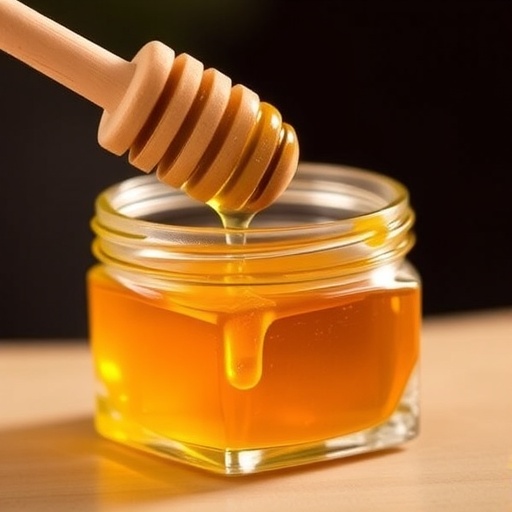
Researchers at the University of Sassari have unveiled compelling evidence that multifloral honey possesses significant protective effects against ultraviolet (UV) radiation–induced damage in human skin cells. This discovery advances the understanding of honey’s bioactive properties, positioning it as a potential candidate for future clinical and cosmetic applications aimed at preventing premature skin ageing and cellular damage.

Honey’s renowned antioxidant, antimicrobial, and anti-inflammatory characteristics have long been leveraged in medical-grade products such as wound dressings, gels, and ointments. Inspired by these established uses, Dr. Fikiye Fulya Kavak and her colleagues sought to investigate whether multifloral honey could similarly shield human skin cells from UV-induced stress, given the critical role of skin as the body’s primary defense against environmental hazards.

The team cultured three primary skin cell types—skin stem cells, fibroblasts, and keratinocytes—within a dynamic bioreactor system designed to emulate the physiological conditions of human skin. Prior to UV exposure, selected cultures were treated with a 1% multifloral honey solution for 48 hours. Subsequent analyses assessed cellular responses to UV stress, with a focus on molecular and genetic pathways.

Gene expression profiling via real-time quantitative PCR revealed that honey pretreatment significantly modulated markers related to cellular ageing, stress response, and tissue regeneration. Notably, in skin stem cells, honey elevated stemness markers while concurrently suppressing genes associated with ageing. This transcriptional regulation correlated with a reduction in nitric oxide release and an enhancement of antioxidant capacity—key indicators of mitigated oxidative stress.

Beyond genetic expression, multifloral honey influenced the balance of cell proliferation and renewal signals, promoting a controlled and protective cellular response rather than an excessive repair reaction. This nuanced effect suggests honey facilitates skin cell homeostasis following UV-induced insult, maintaining the delicate equilibrium between damage repair and cell function preservation.

While promising, the study remains preliminary, with ongoing efforts directed at protein-level validation to confirm that the observed mRNA changes translate into functional protein alterations. The researchers are also advancing delivery methods, developing nanofiber-based systems designed to provide controlled and biocompatible release of honey’s active components, which could revolutionize topical skin therapies.

Dr. Kavak cautions that despite these encouraging laboratory results, multifloral honey is not yet a substitute for sunscreen or clinical treatment. Further preclinical and human trials are imperative to establish safety, efficacy, and therapeutic protocols. Nonetheless, this research underscores the potential for natural bioactive substances in innovative dermatological solutions.

These findings spotlight the intricate interplay between natural compounds and skin biology, opening pathways for new cosmetic and medical products that harness the multifaceted benefits of multifloral honey. As research progresses, multifloral honey may emerge as a vital ally in protecting skin health against the pervasive threat of UV radiation.


Subject of Research: Protective and regulatory effects of multifloral honey on UV-induced stress in human skin cells
Article Title: Multifloral Honey as a Protective Agent Against UV-Induced Cellular Damage in Human Skin
News Publication Date: Not provided
Web References: Not provided
References: Not provided
Image Credits: Fulya Kavak

Keywords

Multifloral honey, UV radiation, skin ageing, oxidative stress, stem cell protection, antioxidant capacity, gene expression, nanofiber delivery system

Tags: anti-aging skin protectionbioactive compounds in honey for skin healthcosmetic applications of honey-derived ingredientshoney's antioxidant properties in dermatologyhoney's role in cellular regenerationhuman skin cell bioreactor researchmultifloral honey skin cell studynatural skincare anti-inflammatory agentsskin aging molecular pathwaysskin stem cell protection against UVUV radiation skin damage preventionwound healing and anti-aging effects
Share26Tweet16
Previous Post

Young gas giant Beta Pic B hides its origins from astronomers

Next Post

Low Physical Activity Raises Fall Risk in Older Adults at High Altitudes

Related Posts

High-Speed Movies Revolutionize Scientific Disease Research Techniques
Chemistry

High-Speed Movies Revolutionize Scientific Disease Research Techniques

July 9, 2026
Scientists Quantify Substances Extracted by Cupping Therapy from Skin
Chemistry

Scientists Quantify Substances Extracted by Cupping Therapy from Skin

July 9, 2026
Saitama University creates novel molecular ladders for advanced organic electronics
Chemistry

Saitama University creates novel molecular ladders for advanced organic electronics

July 9, 2026
Scientists Simulate Black Hole Phenomena in Laboratory Experiment
Chemistry

Scientists Simulate Black Hole Phenomena in Laboratory Experiment

July 9, 2026
Stacking semiconductor chips like skyscrapers to enhance performance
Chemistry

Stacking semiconductor chips like skyscrapers to enhance performance

July 9, 2026
New Approach Advances Eco-Friendly Negative Thermal Expansion Materials
Chemistry

New Approach Advances Eco-Friendly Negative Thermal Expansion Materials

July 8, 2026
Next Post
Low Physical Activity Raises Fall Risk in Older Adults at High Altitudes

Low Physical Activity Raises Fall Risk in Older Adults at High Altitudes

  • Mothers who receive childcare support from maternal grandparents show more

    Mothers who receive childcare support from maternal grandparents show more parental warmth, finds NTU Singapore study

    27656 shares
    Share 11059 Tweet 6912
  • University of Seville Breaks 120-Year-Old Mystery, Revises a Key Einstein Concept

    1061 shares
    Share 424 Tweet 265
  • Bee body mass, pathogens and local climate influence heat tolerance

    682 shares
    Share 273 Tweet 171
  • Researchers record first-ever images and data of a shark experiencing a boat strike

    546 shares
    Share 218 Tweet 137
  • Groundbreaking Clinical Trial Reveals Lubiprostone Enhances Kidney Function

    531 shares
    Share 212 Tweet 133
Science

Embark on a thrilling journey of discovery with Scienmag.com—your ultimate source for cutting-edge breakthroughs. Immerse yourself in a world where curiosity knows no limits and tomorrow’s possibilities become today’s reality!

RECENT NEWS

  • Diet and Microbiome Influence Immunotherapy Success in Obesity
  • Genetic Impact on Brain Activity During Emotional Face Matching Revealed by fMRI
  • Phylo-Plex Enables Low-Cost, High-Resolution Genomic Epidemiology Deployment
  • Low Physical Activity Raises Fall Risk in Older Adults at High Altitudes

Categories

  • Agriculture
  • Anthropology
  • Archaeology
  • Athmospheric
  • Biology
  • Biotechnology
  • Blog
  • Bussines
  • Cancer
  • Chemistry
  • Climate
  • Earth Science
  • Editorial Policy
  • Marine
  • Mathematics
  • Medicine
  • Pediatry
  • Policy
  • Psychology & Psychiatry
  • Science Education
  • Social Science
  • Space
  • Technology and Engineering

Subscribe to Blog via Email

Enter your email address to subscribe to this blog and receive notifications of new posts by email.

Join 5,147 other subscribers

© 2025 Scienmag - Science Magazine

Welcome Back!

Login to your account below

Forgotten Password?

Retrieve your password

Please enter your username or email address to reset your password.

Log In
No Result
View All Result
  • HOME
  • SCIENCE NEWS
  • CONTACT US

© 2025 Scienmag - Science Magazine

Discover more from Science

Subscribe now to keep reading and get access to the full archive.

Continue reading
