


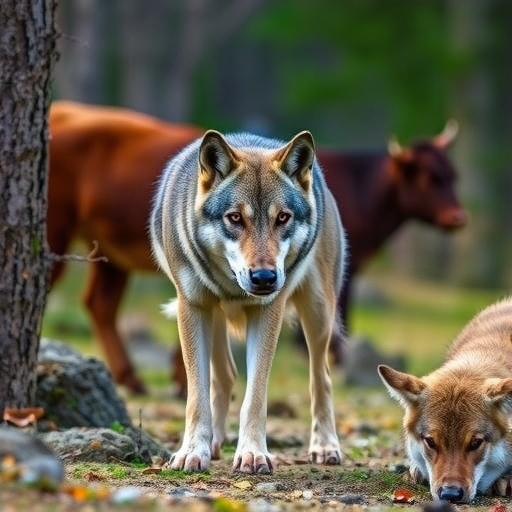
In a groundbreaking study investigating predator-prey dynamics within human-altered environments, researchers reveal that gray wolves in California predominantly consume cattle, accompanied by mule deer and smaller mammals. This dietary pattern challenges conventional understanding of wolf ecology and underscores the complex interface between wildlife and human activities.
The study, published in PLOS One, meticulously analyzed the stomach contents and scat samples of gray wolves inhabiting California’s human-dominated landscapes. Employing advanced molecular techniques to accurately identify prey species, the team confirmed cattle as the primary food source. This finding diverges from traditional wolf diet studies, which emphasize wild ungulates as dominant prey, suggesting that anthropogenic factors have substantially influenced wolf feeding behavior.
California’s landscape is a mosaic of ranches, urban areas, and fragmented natural habitats, creating a novel ecological context for apex predators. The high prevalence of cattle in the wolves’ diet reflects the abundant availability of domestic livestock juxtaposed with limited wild prey populations. This presents a critical conservation puzzle: balancing the ecological role of wolves with the protection of economically important cattle operations.
Ecologists emphasize that the reliance on cattle as prey may heighten human-wolf conflicts, posing formidable challenges for coexistence. Predation on livestock not only affects ranchers’ livelihoods but also triggers retaliatory killings, undermining wolf conservation efforts. The study advocates for integrative management strategies that consider predator behavior, livestock protection measures, and habitat restoration to support sustainable coexistence.
Technically, the research utilized isotope analysis combined with DNA metabarcoding—a cutting-edge approach—to dissect dietary composition with high resolution. These methodologies allowed researchers to differentiate between closely related prey species and quantify relative consumption rates, providing robust evidence for the unexpected dietary trends observed.
Funding for this investigation came from the Rustici Rangeland and Cattle Endowment and the California Cattle Council, highlighting a collaborative approach between academia and the agricultural sector. Importantly, the researchers maintained scientific independence, ensuring unbiased analysis and interpretation.
This study not only advances our understanding of gray wolf ecology in anthropogenic landscapes but also sparks essential discourse on wildlife management amidst expanding human footprint. As wolves adapt their diet to available resources, wildlife managers must innovate to foster harmonious human-predator relationships, preventing unnecessary losses on both sides.
Ultimately, insights from California’s gray wolves serve as a cautionary tale and a call to action for wildlife conservationists globally. The intricate food web changes driven by human presence require nuanced, adaptive management to preserve biodiversity while respecting socio-economic realities.
Cite Scienmag News
Margaret Porter. (July 9, 2026). California Gray Wolves Mainly Consume Cattle, Raising Human-Wildlife Conflicts. Scienmag. https://scienmag.com/california-gray-wolves-mainly-consume-cattle-raising-human-wildlife-conflicts/
Margaret Porter. "California Gray Wolves Mainly Consume Cattle, Raising Human-Wildlife Conflicts." Scienmag, 9 July 2026, https://scienmag.com/california-gray-wolves-mainly-consume-cattle-raising-human-wildlife-conflicts/. Accessed 4 September 2026.
Margaret Porter. "California Gray Wolves Mainly Consume Cattle, Raising Human-Wildlife Conflicts." Scienmag. July 9, 2026. https://scienmag.com/california-gray-wolves-mainly-consume-cattle-raising-human-wildlife-conflicts/


