

Thursday, July 9, 2026
Science
No Result
View All Result
  • Login
  • HOME
  • SCIENCE NEWS
  • CONTACT US
  • HOME
  • SCIENCE NEWS
  • CONTACT US
No Result
View All Result
Scienmag
No Result
View All Result
Home Science News Social Science

Storm Daniel Flooding in Libya Highlights Urgent Need for Rapid Assessments

July 8, 2026
in Social Science
Reading Time: 2 mins read
0
Storm Daniel Flooding in Libya Highlights Urgent Need for Rapid Assessments

Storm Daniel Flooding in Libya Highlights Urgent Need for Rapid Assessments

65
SHARES
587
VIEWS
Share on FacebookShare on Twitter
ADVERTISEMENT

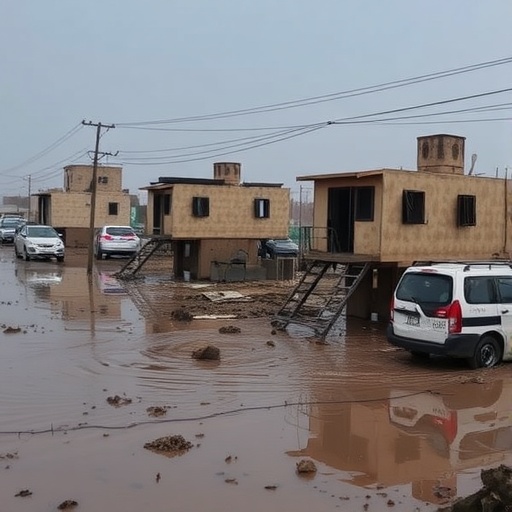
In late 2025, Storm Daniel unleashed catastrophic flooding across Libya, leaving a trail of destruction that exposed critical vulnerabilities in urban infrastructure and disaster response systems. A recent study published in npj Urban Sustainability by Fawzy, Heggy, Szabo, and colleagues presents a comprehensive analysis of the drivers behind this hydrological disaster and underscores the urgency for a state-of-the-art rapid assessment system to mitigate future risks.

Storm Daniel was characterized by an unprecedented convergence of climatic factors, including intense rainfall exceeding historical norms for the region. This was compounded by Libya’s unique topography – marked by arid landscapes with sparse vegetation, which typically limits water infiltration and promotes surface runoff. The combination of these elements resulted in flash floods that overwhelmed urban drainage systems, infrastructure, and flood defenses that were neither designed nor maintained for such extreme weather events.

The researchers detail how the storm’s aftermath unmasked systemic weaknesses in urban planning and water management. One of the most striking technical findings was the inadequate capacity of stormwater infrastructure to handle surges in volumetric flow rates, a consequence of rapid urban expansion without commensurate upgrades to critical physical systems. Moreover, sedimentation and debris accumulation further impaired water channels, amplifying flooding severity.

Through hydrodynamic modeling and remote sensing data, the study illustrates the spatiotemporal dynamics of flood propagation, revealing key flood hotspots where the combination of geomorphology and anthropogenic factors created bottlenecks. These insights highlight the necessity for integrating advanced geospatial technologies and sensor networks into urban flood monitoring frameworks.

The implications of the flooding extend beyond immediate physical damage. Severe disruptions to critical services such as water supply, electricity, and healthcare markedly affected resilience and recovery trajectories in affected communities. The authors argue that current disaster response protocols are ill-equipped to provide timely, data-driven decision support during fast-evolving crises like Storm Daniel.

To address these challenges, the article advocates for developing a rapid assessment system leveraging artificial intelligence, real-time hydrometeorological data, and community-based reporting mechanisms. Such a system would enable early warnings, dynamic risk assessments, and efficient resource deployment. Importantly, it calls for a multidisciplinary approach, uniting climatologists, urban planners, engineers, and policymakers to build adaptive, sustainable urban environments.

This study not only sheds light on the complex interplay of natural and anthropogenic factors fueling extreme flood events in arid urban landscapes but also serves as a clarion call for innovative solutions. As climate change continues to intensify weather extremes globally, Libya’s experience exemplifies the imperative of proactive resilience-building in vulnerable urban centers.

With its technical rigor and forward-looking recommendations, the work by Fawzy et al. sets a new benchmark in urban sustainability research, underscoring the transformative potential of rapid assessment technologies in safeguarding lives and infrastructure against future hydrometeorological disasters.


Subject of Research: Storm Daniel flooding aftermath in Libya, urban infrastructure vulnerabilities, and rapid assessment systems for flood disaster management.

Article Title: Storm Daniel flooding aftermath in Libya: drivers, implications, and the need for a rapid assessment system.

Article References:
Fawzy, M., Heggy, E., Szabo, G. et al. Storm Daniel flooding aftermath in Libya: drivers, implications, and the need for a rapid assessment system. npj Urban Sustain (2026). https://doi.org/10.1038/s42949-026-00429-7

Image Credits: AI Generated

Tags: climate resilience planning in arid regionsClimate-induced urban floodingeffects of climate change on Libyan weatherflood mitigation and resilience strategieshydrodynamic modeling of flash floodshydrological impact assessmentLibya storm disaster responserapid flood risk assessment systemssedimentation and debris in flood channelsstormwater drainage system deficienciesurban infrastructure vulnerabilitiesurban water management challenges
Share26Tweet16
Previous Post

Harnessing Neglected Livestock for Sustainable Food Systems in the Global South

Next Post

Linoleic Acid Promotes Osteoarthritis via Ferroptosis in Male Rat Cartilage

Related Posts

Stirling Review Reveals How Modern Design Strains the Brain
Social Science

Stirling Review Reveals How Modern Design Strains the Brain

July 9, 2026
Scientists develop AI to monitor smart vapes with digital displays
Social Science

Scientists develop AI to monitor smart vapes with digital displays

July 9, 2026
Center for BrainHealth Appoints Dr. Sexton to Lead Global Brain Health Initiatives
Social Science

Center for BrainHealth Appoints Dr. Sexton to Lead Global Brain Health Initiatives

July 9, 2026
East Asian Herbal Medicine Enhances Schizophrenia Treatment Outcomes
Social Science

East Asian Herbal Medicine Enhances Schizophrenia Treatment Outcomes

July 9, 2026
Small PowerPoint tweaks greatly improve learning outcomes
Social Science

Small PowerPoint tweaks greatly improve learning outcomes

July 9, 2026
USC Rossier Traces 250 Years of Youth-Led Educational Change
Social Science

USC Rossier Traces 250 Years of Youth-Led Educational Change

July 9, 2026
Next Post
Linoleic Acid Promotes Osteoarthritis via Ferroptosis in Male Rat Cartilage

Linoleic Acid Promotes Osteoarthritis via Ferroptosis in Male Rat Cartilage

  • Mothers who receive childcare support from maternal grandparents show more

    Mothers who receive childcare support from maternal grandparents show more parental warmth, finds NTU Singapore study

    27656 shares
    Share 11059 Tweet 6912
  • University of Seville Breaks 120-Year-Old Mystery, Revises a Key Einstein Concept

    1061 shares
    Share 424 Tweet 265
  • Bee body mass, pathogens and local climate influence heat tolerance

    682 shares
    Share 273 Tweet 171
  • Researchers record first-ever images and data of a shark experiencing a boat strike

    546 shares
    Share 218 Tweet 137
  • Groundbreaking Clinical Trial Reveals Lubiprostone Enhances Kidney Function

    531 shares
    Share 212 Tweet 133
Science

Embark on a thrilling journey of discovery with Scienmag.com—your ultimate source for cutting-edge breakthroughs. Immerse yourself in a world where curiosity knows no limits and tomorrow’s possibilities become today’s reality!

RECENT NEWS

  • Dental Chairs Pose Risks for Haemophilia Patients Without Proper Care
  • Hidden Metastases Uncover Clues to Colorectal Cancer Return
  • New Tool Accelerates Discovery of 2D Quantum Materials
  • Exploring Advanced Methods for Drug Delivery Systems

Categories

  • Agriculture
  • Anthropology
  • Archaeology
  • Athmospheric
  • Biology
  • Biotechnology
  • Blog
  • Bussines
  • Cancer
  • Chemistry
  • Climate
  • Earth Science
  • Editorial Policy
  • Marine
  • Mathematics
  • Medicine
  • Pediatry
  • Policy
  • Psychology & Psychiatry
  • Science Education
  • Social Science
  • Space
  • Technology and Engineering

Subscribe to Blog via Email

Enter your email address to subscribe to this blog and receive notifications of new posts by email.

Join 5,146 other subscribers

© 2025 Scienmag - Science Magazine

Welcome Back!

Login to your account below

Forgotten Password?

Retrieve your password

Please enter your username or email address to reset your password.

Log In
No Result
View All Result
  • HOME
  • SCIENCE NEWS
  • CONTACT US

© 2025 Scienmag - Science Magazine

Discover more from Science

Subscribe now to keep reading and get access to the full archive.

Continue reading
