


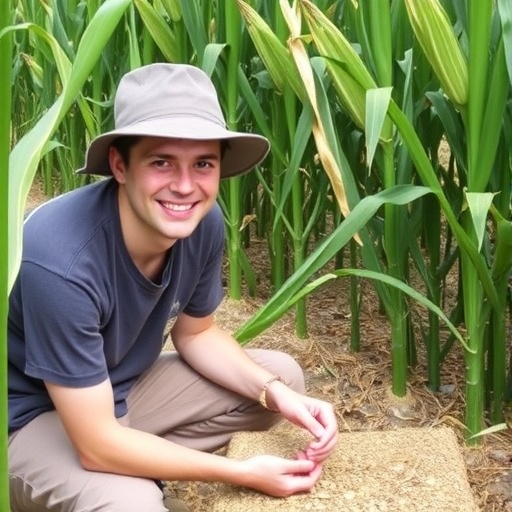
Maize, or corn, was a cornerstone of ancient Maya civilization, valued not only as a reliable food source but also woven deeply into their cultural and religious fabric. However, despite its prominence, maize poses a significant nutritional challenge: it is notably deficient in lysine, an essential amino acid critical for human tissue development and maintenance. Previous estimates suggested that up to 70% of ancient Maya protein intake came exclusively from maize, yet an adult would require consumption of an impractically large quantity—over 13 pounds of dry maize daily—to meet lysine needs.
Groundbreaking research led by Nadia Neff, a doctoral candidate at the University of New Mexico, provides novel insights into how early Mesoamerican communities circumvented this dietary hurdle. Published in the journal Science Advances, Neff’s study employs advanced amino acid isotope analysis and sophisticated statistical modeling to trace the movement of individual amino acids from maize, through domesticated animals, and into human diets dated as far back as 6,100 years ago.
The study reveals that animals such as turkeys, which were fed maize or consumed maize-growing environments, functioned as biological “protein concentrators.” These animals, capable of metabolizing large amounts of maize relative to their body size, converted maize’s lysine into high-quality animal protein. When consumed by humans, these animals provided access to concentrated lysine that maize alone could not supply.
This finding reshapes our understanding of early agricultural practices by highlighting a symbiotic relationship between maize cultivation and animal management. Rather than developing independently, these innovations emerged as complementary strategies that formed a resilient and nutritionally balanced food system. This adaptive food engineering demonstrates that early Maya farmers deliberately optimized their diets beyond caloric intake to target essential nutritional needs.
Neff’s initial data puzzled her: carbon stable isotope ratios in amino acids, especially lysine, were unexpectedly elevated in human bone collagen samples. Such ratios were inconsistent with a maize-only diet, prompting further investigation and interdisciplinary collaboration spanning archaeology, biochemistry, ecology, and nutrition science. This cross-disciplinary approach allowed the researchers to decode ancient dietary patterns with unprecedented precision.
Fieldwork conducted in Belize under the ROOTS archaeological project facilitated recovery of bone collagen samples for isotope analysis at UNM’s Center for Stable Isotopes. This facility is among the few capable of conducting fine-scale amino acid isotope studies that offer granular insights into ancient human nutrition and foodways.
Overall, Neff’s research not only revises timelines for early maize domestication and animal husbandry in the Neotropics but also underscores the power of isotopic methods in unraveling complex ancient food webs. It opens new avenues for understanding human dietary adaptation and offers lessons on creating nutritionally resilient food systems—knowledge that remains vital today amid global challenges in food security and agricultural sustainability.
Cite Scienmag News
Alan Morgan. (July 8, 2026). UNM Student Discovers New Insights into Ancient Maize Farming Practices. Scienmag. https://scienmag.com/unm-student-discovers-new-insights-into-ancient-maize-farming-practices/
Alan Morgan. "UNM Student Discovers New Insights into Ancient Maize Farming Practices." Scienmag, 8 July 2026, https://scienmag.com/unm-student-discovers-new-insights-into-ancient-maize-farming-practices/. Accessed 4 September 2026.
Alan Morgan. "UNM Student Discovers New Insights into Ancient Maize Farming Practices." Scienmag. July 8, 2026. https://scienmag.com/unm-student-discovers-new-insights-into-ancient-maize-farming-practices/


