

Saturday, May 16, 2026
Science
No Result
View All Result
  • Login
  • HOME
  • SCIENCE NEWS
  • CONTACT US
  • HOME
  • SCIENCE NEWS
  • CONTACT US
No Result
View All Result
Scienmag
No Result
View All Result
Home Science News Medicine

Want to feel less stressed? Try the Mediterranean diet

August 8, 2024
in Medicine
Reading Time: 2 mins read
0
Mediterranean diet
65
SHARES
594
VIEWS
Share on FacebookShare on Twitter
ADVERTISEMENT

Following the Mediterranean diet versus the traditional Western diet might make you feel like you’re under less stress, according to new research conducted by a team from Binghamton University, State University of New York.

Mediterranean diet

Credit: Alachua County

Following the Mediterranean diet versus the traditional Western diet might make you feel like you’re under less stress, according to new research conducted by a team from Binghamton University, State University of New York.

The findings suggest that people can lower their perception of how much stress they can tolerate by following a Mediterranean diet, said Lina Begdache, associate professor of health and wellness studies.

“Stress is recognized to be a precursor to mental distress, and research, including our own, has demonstrated that the Mediterranean diet lowers mental distress,” she said. “Thus, one element of the puzzle may be explained by the fact that the Mediterranean diet may be associated with a decrease in the negative components of perceived stress and an improvement in its positive attributes.”  

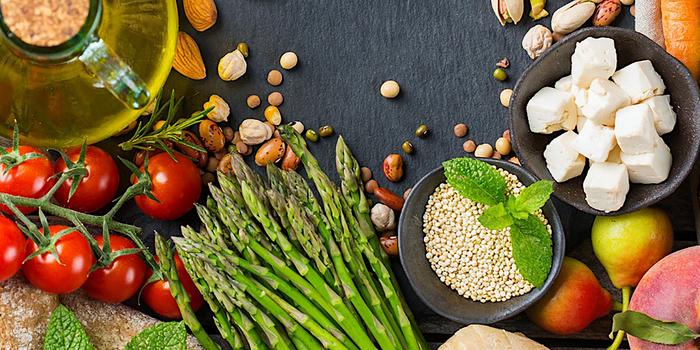
The Mediterranean diet is plant-based with healthy fats and mostly includes wholesome food and a spectrum of natural colors. The diet stands in sharp contrast to the Western diet, which is known for its high concentration of high-glycemic and low-quality processed foods.

While the Mediterranean diet is known for its benefits to both mental health and physical health, little is known about its effect on perceived stress, which is the idea of how much stress you are under at any particular time.

To assess this, Begdache and her students conducted a survey of over 1,500 people, asking them what types of foods they ate and assessing their levels of perceived stress. Using a machine learning model, the results show that consuming components of the Mediterranean diet is associated with lower levels of perceived stress and mental distress, while consuming Western dietary components is correlated with perceived stress and mental distress.

Begdache said that these results close a gap in the literature because the majority of studies on diet and stress focused on how stress affects dietary choices and quality. She and her team are looking at different aspects of brain function and behaviors in relation to dietary patterns.

The study, “Effects of Mediterranean and Western dietary patterns on perceived stress and mental distress,” was published in Nutrition and Health.


Journal

Nutrition and Health

DOI

10.1177/02601060241263375

Article Title

Effects of Mediterranean and Western dietary patterns on perceived stress and mental distress

Article Publication Date

25-Jul-2024

Share26Tweet16
Previous Post

TCR CDR3s and renalase-1 linked to increased melanoma survival

Next Post

Reconstruction of particle distribution for tomographic particle image velocimetry based on unsupervised learning method

Related Posts

Transitional Care Boosts Heart Failure Outcomes in Elders — Medicine
Medicine

Transitional Care Boosts Heart Failure Outcomes in Elders

May 16, 2026
Gymnopilus Mushrooms Yield Antibacterial Gymnopilin A10, Gymnoprenol B13 — Medicine
Medicine

Gymnopilus Mushrooms Yield Antibacterial Gymnopilin A10, Gymnoprenol B13

May 16, 2026
Metabolic Stress Worsens Parkinson’s via Mitochondrial Ferroptosis — Medicine
Medicine

Metabolic Stress Worsens Parkinson’s via Mitochondrial Ferroptosis

May 16, 2026
Validating B-IPQ Short Form for Older Colombians — Medicine
Medicine

Validating B-IPQ Short Form for Older Colombians

May 16, 2026
Four New Hydroxyl Fatty Acids from Bacillus sp. — Medicine
Medicine

Four New Hydroxyl Fatty Acids from Bacillus sp.

May 16, 2026
Mobile App Enhances Exercise for Older Adults’ Cognition — Medicine
Medicine

Mobile App Enhances Exercise for Older Adults’ Cognition

May 16, 2026
Next Post
Schematic diagram of the UnRTU model

Reconstruction of particle distribution for tomographic particle image velocimetry based on unsupervised learning method

  • Mothers who receive childcare support from maternal grandparents show more parental warmth, finds NTU Singapore study

    Mothers who receive childcare support from maternal grandparents show more parental warmth, finds NTU Singapore study

    27645 shares
    Share 11054 Tweet 6909
  • University of Seville Breaks 120-Year-Old Mystery, Revises a Key Einstein Concept

    1049 shares
    Share 420 Tweet 262
  • Bee body mass, pathogens and local climate influence heat tolerance

    678 shares
    Share 271 Tweet 170
  • Researchers record first-ever images and data of a shark experiencing a boat strike

    542 shares
    Share 217 Tweet 136
  • Groundbreaking Clinical Trial Reveals Lubiprostone Enhances Kidney Function

    528 shares
    Share 211 Tweet 132
Science

Embark on a thrilling journey of discovery with Scienmag.com—your ultimate source for cutting-edge breakthroughs. Immerse yourself in a world where curiosity knows no limits and tomorrow’s possibilities become today’s reality!

RECENT NEWS

  • Transitional Care Boosts Heart Failure Outcomes in Elders
  • Gymnopilus Mushrooms Yield Antibacterial Gymnopilin A10, Gymnoprenol B13
  • Low-Power Enhanced I2C Controller: RTL to GDSII
  • Longitudinal Study of Parent-Child Emotion Regulation

Categories

  • Agriculture
  • Anthropology
  • Archaeology
  • Athmospheric
  • Biology
  • Biotechnology
  • Blog
  • Bussines
  • Cancer
  • Chemistry
  • Climate
  • Earth Science
  • Editorial Policy
  • Marine
  • Mathematics
  • Medicine
  • Pediatry
  • Policy
  • Psychology & Psychiatry
  • Science Education
  • Social Science
  • Space
  • Technology and Engineering

Subscribe to Blog via Email

Success! An email was just sent to confirm your subscription. Please find the email now and click 'Confirm Follow' to start subscribing.

Join 5,146 other subscribers

© 2025 Scienmag - Science Magazine

Welcome Back!

Login to your account below

Forgotten Password?

Retrieve your password

Please enter your username or email address to reset your password.

Log In
No Result
View All Result
  • HOME
  • SCIENCE NEWS
  • CONTACT US

© 2025 Scienmag - Science Magazine
