


“These findings indicate that renalase-1 is a potential antigen for TCR recognition in melanoma and could be considered as a target for immunotherapy.”

Credit: 2024 Zaman et al.
“These findings indicate that renalase-1 is a potential antigen for TCR recognition in melanoma and could be considered as a target for immunotherapy.”
BUFFALO, NY- August 8, 2024 – A new research paper was published in Oncotarget’s Volume 15 on August 5, 2024, entitled, “Chemical complementarity of tumor resident, T-cell receptor CDR3s and renalase-1 correlates with increased melanoma survival.”
As mentioned in the Abstract of this study, overexpression of the secretory protein renalase-1 negatively impacts the survival of melanoma and pancreatic cancer patients, while inhibition of renalase-1 signaling drives tumor rejection by promoting T-cell activation.
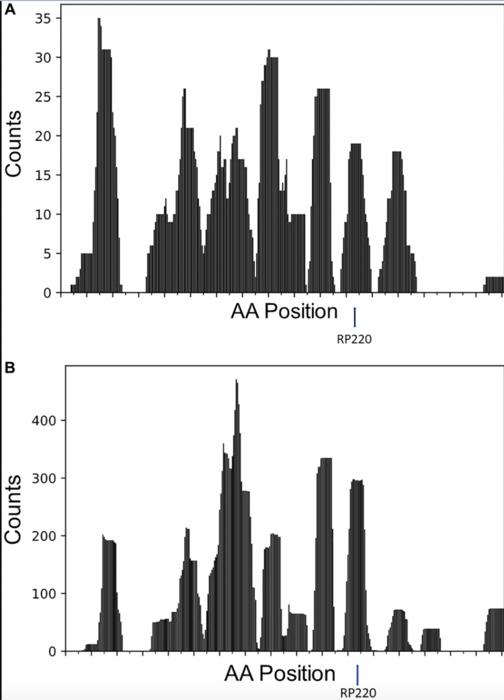
Thus, researchers Saif Zaman, Fred S. Gorelick, Andrea Chrobrutskiy, Boris I. Chobrutskiy, Gary V. Desir, and George Blanck from Yale School of Medicine, Veteran’s Administration Healthcare System, Oregon Health and Science University Hospital, Morsani College of Medicine, and H. Lee Moffitt Cancer Center and Research Institute, investigated the chemical complementarity between melanoma-resident, T-cell receptor (TCR) complementarity-determining region 3 (CDR3) amino acid sequences (AAs) and the renalase-1 protein.
“In this study, we asked whether the RNLS protein could potentially be a tumor antigen by examining chemical complementarity between melanoma tumor-resident TCR CDR3s and the AA sequence of RNLS.”
The results suggest that there could be biologically relevant antigenic interaction between RNLS epitopes and T-cell receptors (TCRs).
“We hypothesize that RNLS protein could be recognized by TCRs, leading to local immune responses against melanoma, similar to what we have previously demonstrated with wildtype cancer antigens in the melanoma and glioblastoma settings.”
Continue reading: DOI: https://doi.org/10.18632/oncotarget.28633
Correspondence to: George Blanck
Email: gblanck@usf.edu
Click here to sign up for free Altmetric alerts about this article.
About Oncotarget:
Oncotarget (a primarily oncology-focused, peer-reviewed, open access journal) aims to maximize research impact through insightful peer-review; eliminate borders between specialties by linking different fields of oncology, cancer research and biomedical sciences; and foster application of basic and clinical science.
Oncotarget is indexed and archived by PubMed/Medline, PubMed Central, Scopus, EMBASE, META (Chan Zuckerberg Initiative) (2018-2022), and Dimensions (Digital Science).
To learn more about Oncotarget, visit Oncotarget.com and connect with us on social media:
- X
- YouTube
- Spotify, and available wherever you listen to podcasts
Click here to subscribe to Oncotarget publication updates.
For media inquiries, please contact media@impactjournals.com.
Oncotarget Journal Office
6666 East Quaker Street., Suite 1
Orchard Park, NY 14127
Phone: 1-800-922-0957 (option 2)
Journal
Oncotarget
Method of Research
News article
Subject of Research
People
Article Title
Chemical complementarity of tumor resident, T-cell receptor CDR3s and renalase-1 correlates with increased melanoma survival
Article Publication Date
5-Aug-2024
COI Statement
SZ, FSG, BIC, AC, and GB have no conflicts of interests with this publication. GVD is a named inventor on several issued patents related to the discovery and therapeutic use of RNLS and the RNLS protein. RNLS related matters have been licensed to Bessor Pharma, and G. Desir holds an equity position in Bessor and its subsidiary Personal Therapeutics. Bessor Pharma has had no involvement in the preparation of this article or influenced its content.
Cite Scienmag News
Nathaniel Bowman. (August 8, 2024). TCR CDR3s and renalase-1 linked to increased melanoma survival. Scienmag. https://scienmag.com/tcr-cdr3s-and-renalase-1-linked-to-increased-melanoma-survival/
Nathaniel Bowman. "TCR CDR3s and renalase-1 linked to increased melanoma survival." Scienmag, 8 August 2024, https://scienmag.com/tcr-cdr3s-and-renalase-1-linked-to-increased-melanoma-survival/. Accessed 3 September 2026.
Nathaniel Bowman. "TCR CDR3s and renalase-1 linked to increased melanoma survival." Scienmag. August 8, 2024. https://scienmag.com/tcr-cdr3s-and-renalase-1-linked-to-increased-melanoma-survival/

