


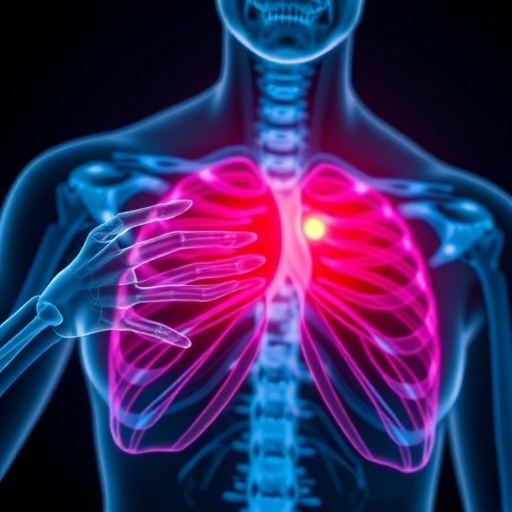
In a groundbreaking study poised to transform the landscape of neurodegenerative disease management, researchers have unveiled compelling evidence supporting the use of a sternum-worn vibrotactile device as an innovative therapeutic adjunct for Parkinson’s disease. This meticulously designed, randomized, double-blind, placebo-controlled pilot trial, recently published in npj Parkinson’s Disease, offers promising insights into non-pharmacological interventions aimed at alleviating motor symptoms in Parkinson’s patients, a neurodegenerative disorder notorious for its debilitating impact on quality of life.
Parkinson’s disease, characterized predominantly by tremors, rigidity, bradykinesia, and postural instability, affects millions worldwide, presenting both clinical and therapeutic challenges. Traditional treatment regimens often rely heavily on dopaminergic medications, which, despite offering symptomatic relief, are associated with long-term side effects and diminishing efficacy. In this context, the development of alternative or complementary therapies is of paramount importance, spurring research into neuromodulation devices that harness sensory stimulation to influence motor circuits and restore functional capacity.
The trial at the center of this study involved a cohort of Parkinson’s patients fitted with a novel vibrotactile device designed to be worn on the sternum. The device emits precise vibratory stimuli, hypothesized to engage the somatosensory system and subsequently modulate basal ganglia activity, a brain region critically impaired in Parkinson’s disease. The strategic placement of the device on the sternum takes advantage of the chest’s rich mechanoreceptive innervation, potentially facilitating widespread neural network engagement through peripheral stimulation.
Employing a robust randomized, double-blind, placebo-controlled methodology, the researchers ensured stringent measures to mitigate bias and validate efficacy. Participants were randomly assigned to either the active stimulation group or a placebo group, the latter receiving a device identical in appearance but devoid of effective vibratory output. Neither participants nor evaluators were aware of group assignments, preserving the objectivity of outcome assessments.
Over the course of the trial, clinical evaluations focusing on motor performance, including standardized scales such as the Unified Parkinson’s Disease Rating Scale (UPDRS), were conducted alongside patient-reported outcome measures. These assessments aimed to capture both objective motor improvements and subjective enhancements in functionality and well-being. The integration of quantitative and qualitative data provides a comprehensive understanding of treatment impact.
Crucially, the study elucidates the device’s capacity to deliver subtle yet consistent vibrotactile stimuli, designed to activate mechanoreceptors such as Pacinian corpuscles and Merkel cells, which funnel somatosensory input to central motor processing areas. This peripheral stimulation is theorized to facilitate neuroplastic changes or transiently normalize aberrant neural signaling pathways disrupted by Parkinsonian pathology. Early findings suggest a trend towards significant reduction in tremor amplitude and improved motor scores in the active device group compared to placebo.
Beyond symptomatic relief, the device boasts advantages of being non-invasive, easily wearable, and devoid of systemic side effects, addressing limitations inherent to pharmacological approaches. This portability also enables potential integration into daily routines, allowing continuous or intermittent stimulation tailored to individual symptom patterns. The study’s design included monitoring for adverse events, with results indicating excellent tolerability and safety.
The implications of these findings extend beyond symptom management, hinting at how peripheral sensory modulation may recalibrate disrupted neural oscillations implicated in Parkinson’s motor dysfunction. The vibrotactile signals may synchronize or entrain motor circuits, promoting more fluid and coordinated movement. This mechanistic insight opens avenues for deeper exploration into sensorimotor integration therapies and the brain’s capacity for adaptive plasticity in neurodegenerative conditions.
While the pilot nature of the trial necessitates caution in overgeneralization, the rigor of its design and promising outcomes furnish a compelling case for expanded investigations. Larger-scale, longer-duration studies are warranted to validate efficacy, optimize stimulation parameters, and explore combinational regimens integrating device usage with existing pharmacotherapies or physical rehabilitation.
Moreover, the technology’s adaptability invites exploration into other movement disorders and neurological conditions characterized by motor impairments. Its modular design allows customizable stimulation frequencies and patterns, potentially enabling personalized neuromodulation tailored to patient-specific neural signatures and symptomatology.
This pioneering work aligns with a broader shift in clinical neuroscience towards harnessing wearable technology and closed-loop systems to deliver targeted neural interventions outside traditional clinical settings. The fusion of engineering, neurobiology, and clinical expertise embodied in this research underscores the growing interdisciplinarity critical to innovation in disease management.
Ultimately, the development of a sternum-worn vibrotactile device introduces a novel dimension to Parkinson’s treatment paradigms, offering hope for enhanced autonomy and improved quality of life. Its success signals a promising future where wearable neuromodulation devices become standard adjuncts in managing chronic neurodegenerative disorders.
As the study’s authors emphasize, integrating patient perspectives and real-world usability into subsequent device iterations will be vital to maximizing therapeutic impact and adherence. User-friendly interfaces and adaptable protocols tailored to patient feedback can elevate the device’s practicality and acceptance.
In the context of an aging global population and increasing Parkinson’s disease prevalence, such innovations are timely and urgently needed. The harnessing of peripheral stimulation to modulate central nervous system function exemplifies an exciting frontier in neuromodulatory medicine, combining precision engineering with neurotherapeutic ambition.
While many challenges remain, including elucidating long-term neural effects and deciphering optimal stimulation paradigms, this trial serves as an evocative proof-of-concept that illuminates new pathways forward. The integration of vibrotactile technology into comprehensive Parkinson’s management programs may eventually redefine how clinicians approach this complex disease.
Future research will undoubtedly explore biomarker integration and real-time monitoring technologies paired with vibrotactile devices, enabling dynamic adjustments aligned with fluctuating motor symptoms. Such advancements could catalyze a new era of responsive, personalized neuromodulation therapies enhancing patient independence.
In summary, the evidence presented marks a significant stride towards expanding therapeutic options for Parkinson’s disease through innovative, non-invasive neuromodulation techniques. The sternum-worn vibrotactile device symbolizes a tangible leap into wearable medicine’s promise, fostering hope and tangible benefits for those grappling with this challenging neurological disorder.
Cite Scienmag News
Diana Fleming. (July 4, 2026). Vibrotactile Sternum Device Shows Promise for Parkinson’s. Scienmag. https://scienmag.com/vibrotactile-sternum-device-shows-promise-for-parkinsons/
Diana Fleming. "Vibrotactile Sternum Device Shows Promise for Parkinson’s." Scienmag, 4 July 2026, https://scienmag.com/vibrotactile-sternum-device-shows-promise-for-parkinsons/. Accessed 3 September 2026.
Diana Fleming. "Vibrotactile Sternum Device Shows Promise for Parkinson’s." Scienmag. July 4, 2026. https://scienmag.com/vibrotactile-sternum-device-shows-promise-for-parkinsons/


